
Ultimate Guide to Visitor Policies for Pathogen Control

Visitor policies in healthcare facilities are critical to controlling the spread of infections. They protect vulnerable patients and staff from pathogens visitors may unknowingly bring in. These policies outline hygiene practices, screening measures, and movement restrictions to minimize risks. Here's what you need to know:
- Main Risks: Visitors can transmit pathogens like COVID-19, flu, RSV, norovirus, and drug-resistant bacteria (e.g., MRSA).
- How Pathogens Spread: Physical contact, respiratory droplets, and inhalation are the primary transmission routes.
-
Key Policy Elements:
- Hand hygiene (soap for 40 seconds or sanitizer with 60%-70% alcohol).
- Symptom screening at entry points.
- Masking during respiratory virus seasons (October–April).
- Limiting visitor movement to patient rooms.
-
Extra Measures for Outbreaks:
- Restrict visitors to essential caregivers.
- Increase PPE requirements (e.g., gowns, gloves, or N95 masks).
- Promote remote communication (video calls) for non-urgent visits.
Facilities must also educate visitors, enforce compliance, and use tools like disposable bedding (e.g., PeelAways) to reduce contamination risks. Combining hygiene, screening, and practical solutions ensures safer environments for everyone.
Common Pathogens Visitors Can Transmit
Pathogens to Watch For
Visitors can unknowingly bring harmful pathogens into care facilities, posing risks to vulnerable patients. Respiratory viruses - such as SARS-CoV-2 (COVID-19), influenza, and Respiratory Syncytial Virus (RSV) - are particularly concerning, especially during their peak transmission season from October to April[2].
Another serious concern is Multi-Drug Resistant Organisms (MDROs). Pathogens like MRSA (Methicillin-resistant Staphylococcus aureus) and VRE (Vancomycin-resistant Enterococcus) can live harmlessly on a visitor's skin but may cause severe infections in patients with weaker immune systems[4]. Similarly, enteric pathogens like Norovirus and Clostridium difficile spread through contact with contaminated surfaces, leading to gastrointestinal outbreaks[4].
The CDC highlights the challenge of asymptomatic carriers:
"Colonization is when someone has germs on or in their body but does not have symptoms of an infection. Colonized people can still transmit the germs they carry"[5].
This silent carriage makes it difficult to identify risks, as even healthy-looking visitors can introduce dangerous germs. To address this, it’s essential to understand how these pathogens spread.
How Pathogens Spread Through Visitors
Knowing the risks of specific pathogens is just the first step; understanding how they spread is equally critical. Visitors primarily transmit pathogens through three main routes: physical contact, respiratory droplets, and inhalation.
Physical contact is a common way germs are transferred. Visitors touching contaminated surfaces - like bed rails, medical devices, or countertops - can spread pathogens to patients or other surfaces. High-touch areas are especially vulnerable, particularly when visitors interact with multiple patients during their stay[4][5].
Respiratory droplets and inhalation are another major concern. Infectious particles from coughing, sneezing, or even talking can settle on a patient’s face or be inhaled, leading to infection[5]. During times of high community transmission, visitors can act as carriers, introducing illnesses like influenza or COVID-19 into healthcare environments[1][2]. Even a single symptomatic visitor can release infectious droplets, significantly increasing the risk for patients and staff alike[1][5].
Your role in infection prevention and control when visiting an aged care service
Building Blocks of a Strong Visitor Policy
A well-designed visitor policy plays a key role in controlling the spread of pathogens, especially in healthcare settings. This section breaks down the essential elements of such a policy, each contributing to a layered approach to protect vulnerable patients.
Basic Hygiene Requirements for All Visitors
Hygiene forms the foundation of any effective visitor policy. Proper hand hygiene is non-negotiable - visitors should wash their hands with soap and water for at least 40 seconds or use a hand sanitizer containing 60% ethanol or 70% isopropanol for 20 seconds [1]. This should be done after any contact with respiratory secretions, before entering patient rooms, and upon leaving the facility.
Respiratory hygiene is equally important. Visitors should cover their mouths and noses with a tissue when sneezing or coughing, discard used tissues in no-touch trash cans, and wear masks if showing symptoms of illness [2]. During peak respiratory virus seasons, typically October through April, facilities might require universal masking for all visitors. To support this, areas like entrances and waiting rooms should be stocked with masks, tissues, hand sanitizers, and no-touch trash bins. Clear signage in multiple languages can help remind visitors to limit unnecessary movement by going directly to patient rooms and avoiding communal spaces.
These hygiene practices are the first line of defense, but effective screening measures add another critical layer of protection.
Screening and Access Restrictions
Screening visitors before they enter is essential to minimize the risk of introducing pathogens. This can involve self-screening via mobile tools, symptom checklists, or paper forms completed at check-in [6]. Key symptoms to monitor include fever, chills, new cough, shortness of breath, loss of taste or smell, muscle aches, and recent exposure to infected individuals.
"Visitors with symptoms of respiratory infection should be encouraged to defer non-urgent routine visits in favor of alternative mechanisms (e.g., video-call applications on cell phones or tablets) until they have recovered."
During outbreaks or times of high community transmission, facilities should limit access to essential visitors, such as caregivers for pediatric patients. Policies may also restrict the number of visitors to one per patient. In some cases, visitors might need to sign agreements to report positive test results within a certain timeframe. Using designated entrances for screening ensures consistency and efficiency.
While screening helps identify risks, educating visitors and maintaining thorough records are equally critical for a robust policy.
Visitor Education and Record Keeping
Educating visitors closes gaps in compliance and ensures they understand their role in infection prevention. Many visitors are unaware of proper precautions, with compliance rates often low [7]. Facilities should teach visitors how to recognize symptoms of respiratory illness, use personal protective equipment (PPE) correctly, and follow contact precautions.
Simple measures can significantly improve compliance. For instance, placing alcohol-based hand sanitizer dispensers with clear instructions in visible areas can boost hand hygiene rates. One hospital saw an increase from less than 1% to 12% just by adding a dispenser in the lobby. Similarly, motion-sensor audio reminders in an ICU improved compliance rates from 11% to 64% [7]. Pre-visit training delivered by dedicated staff ensures visitors are informed and prepared.
Record keeping is another vital aspect. Documenting visitor education, screening results, and communications about exposure risks aids in contact tracing, policy evaluation, and legal protection. As the Society for Healthcare Epidemiology of America (SHEA) advises:
"Hospitals should only consider writing policies regarding visitors when they can be realistically enforced and regularly evaluated for compliance."
Accurate documentation not only supports enforcement but also strengthens overall safety measures within the facility.
sbb-itb-45288fe
Environmental Measures That Support Visitor Policies
Environmental controls play a crucial role in reducing the spread of pathogens. These measures work alongside visitor screening and hygiene protocols to create a safer environment for everyone.
Cleaning and Disinfection Procedures
Keeping surfaces clean is a key step in controlling pathogens. The CDC outlines three levels of surface care: cleaning, which uses soap and water to remove dirt and germs; sanitizing, which reduces germs to safe levels with milder solutions; and disinfecting, which uses stronger chemicals to kill most remaining pathogens[8]. Importantly, surfaces must be cleaned before sanitizing or disinfecting since dirt can block chemicals from effectively reaching germs.
High-touch surfaces like bed rails, doorknobs, light switches, over-bed tables, and electronics need frequent disinfection due to constant use by patients and visitors. To maintain cleanliness, facilities should establish routine cleaning schedules for daily upkeep and terminal cleaning after a patient is discharged or transferred. Using tools like fluorescent markers or ATP assays can help verify cleaning effectiveness. Additionally, clear signage in multiple languages, along with accessible hand sanitizer dispensers and no-touch trash bins, encourages visitors to follow hygiene practices, reinforcing the facility's infection control efforts.
While surface disinfection is essential, managing linens requires its own set of precautions.
Using PeelAways to Prevent Cross-Contamination

Traditional linen handling involves several steps where pathogens can spread. Caregivers must wear protective gear, such as gloves, gowns, and masks, to handle soiled bedding. Contaminated linens are then transported through shared spaces and laundered at high temperatures - over 140°F - to kill resilient pathogens like Norovirus[9]. The CDC also advises using disposable or patient-dedicated equipment for those under Contact Precautions to reduce transmission risks[3].
PeelAways offers a straightforward solution with its multi-layered, disposable sheet system. Each set includes 5 to 7 waterproof, absorbent layers (depending on bed size). Caregivers simply peel off the soiled top layer to reveal a clean sheet underneath - no need to lift the mattress, handle contaminated linens, or rely on laundry cycles. This reduces the risk of pathogen exposure and eliminates concerns about whether washing temperatures are sufficient to kill germs[9].
PeelAways are available in a variety of sizes, from Crib to King, with options like Cot and Twin XL offering 7 layers for extended use. These disposable sheets provide an additional layer of protection, seamlessly integrating with existing disinfection protocols to support a comprehensive visitor policy.
Adjusting Visitor Policies for High-Risk Scenarios
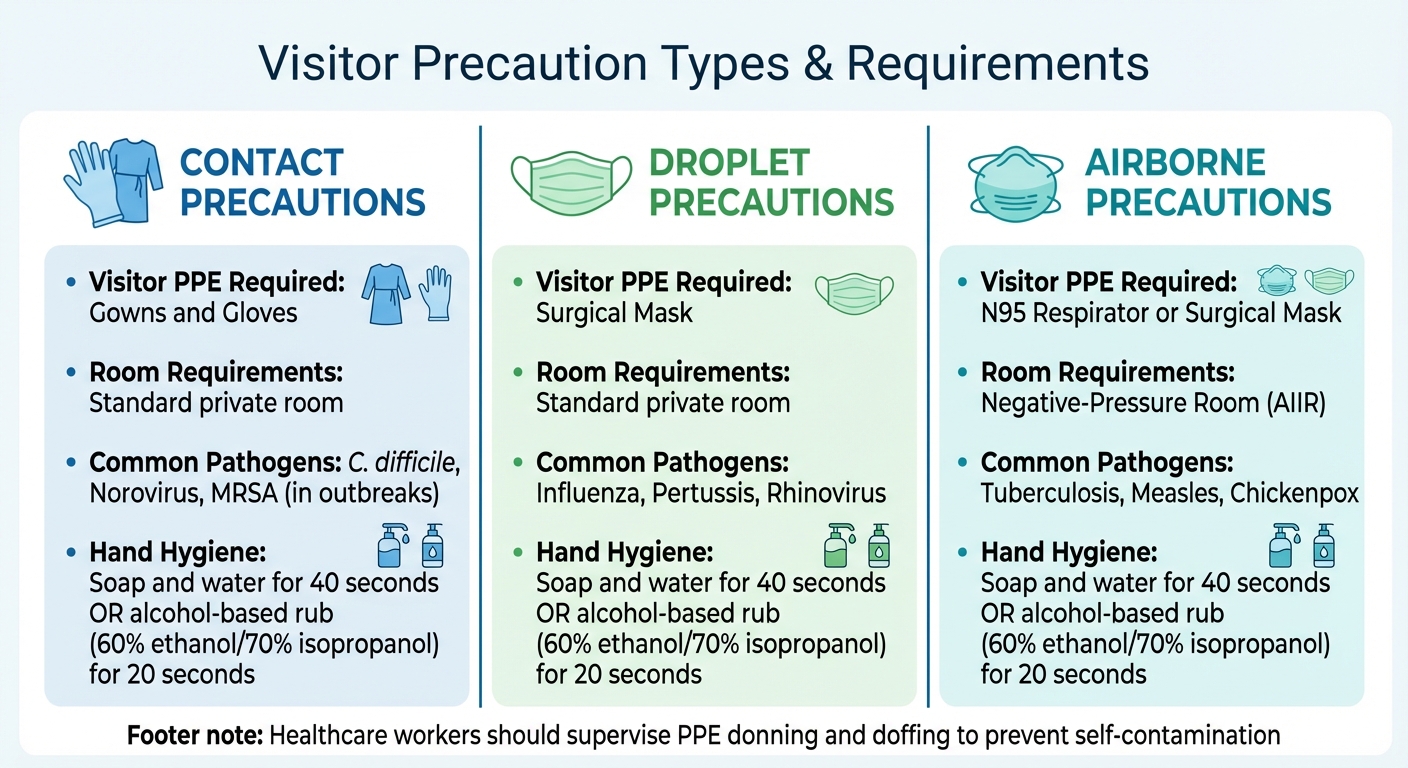
Visitor Precaution Types and PPE Requirements for Healthcare Facilities
High-risk situations - like disease outbreaks, peak respiratory virus seasons, or exposure to highly contagious pathogens - call for stricter visitor policies. These enhanced measures build on standard protocols to address elevated transmission risks effectively.
Additional Precautions for High-Risk Situations
When dealing with outbreaks or novel pathogens such as Ebola or MERS, facilities should limit access to essential visitors only - those involved in basic care, feeding, or pediatric care[1]. The Society for Healthcare Epidemiology of America highlights:
"In situations in which heightened horizontal transmission is detected (e.g. outbreak or increased baseline rates) or a novel, potentially virulent pathogen is suspected or identified... enforcing isolation precautions among visitors should be prioritized."[4]
Key steps include:
- Active screening: Use triage stations to check visitors for fever or respiratory symptoms.
- Universal masking: From October through April (the U.S. respiratory virus season), require masks for all visitors facility-wide. This policy can be lifted 14 days after no new cases are detected.
- Controlled movement: Direct visitors straight to the patient’s room to minimize exposure.
- Remote communication: Encourage non-urgent visits via video calls or phone during high-risk periods.
- Discourage high-risk visitors: Advise older adults and individuals with underlying health conditions to avoid visiting.
These precautions ensure a layered approach to protect patients, visitors, and staff during periods of heightened risk.
Managing Visitors Under Contact Precautions
Patients under contact precautions, such as those with C. difficile, norovirus, or drug-resistant organisms like CRE, require additional visitor protocols. Visitors must wear gowns and gloves and follow strict hand hygiene practices - washing with soap and water for 40 seconds or using an alcohol-based rub (with at least 60% ethanol or 70% isopropanol) for 20 seconds - before entering and after exiting the room.
| Precaution Type | Visitor PPE Requirement | Room Requirements | Common Pathogens |
|---|---|---|---|
| Contact | Gowns and Gloves | Standard private room | C. diff, Norovirus, MRSA (in outbreaks) |
| Droplet | Surgical Mask | Standard private room | Influenza, Pertussis, Rhinovirus |
| Airborne | N95 Respirator or Surgical Mask | Negative-Pressure Room (AIIR) | Tuberculosis, Measles, Chickenpox |
To ensure safety, healthcare workers should supervise visitors during the donning and doffing of PPE, helping prevent self-contamination. Clear, multilingual signage at room entrances can explain these requirements to visitors. For parents or guardians staying overnight with pediatric patients, full isolation precautions may be challenging to maintain. In such cases, emphasize strict hand hygiene unless dealing with a highly contagious or novel pathogen.
Conclusion: Protecting Vulnerable Populations Through Visitor Policies
As outlined earlier, effective visitor policies, combined with proper controls and education, play a key role in managing pathogen transmission. These policies are not just about setting rules - they work as layered defenses that bring together administrative actions, environmental measures, and educational efforts. For example, facilities that implement visitor screening, restrict movement, and provide training significantly reduce the risk of spreading infections. However, policies alone fall short if not supported by proper execution. Current data reveals that visitor hand hygiene compliance is only 10% during room entry and exit, while PPE compliance ranges between 40–60%[7]. This gap underscores the critical importance of enforcement and environmental support.
Action Steps for Caregivers and Administrators
To address these challenges, consider the following measures:
- Set up active screening at single access points for visitors to check for fever or respiratory symptoms[1].
- Ensure entrances are stocked with masks, tissues, and hand sanitizers, along with clear, multilingual signage[2].
- Maintain accurate records of visitor education and screening practices. This not only ensures safety but also meets medico-legal standards[7].
- Limit visitor movement to the patient’s room and discourage access to shared spaces to minimize cross-contamination[1].
- Promote alternatives like video calls or phone communication for non-urgent visits, especially during outbreaks or when visitors show symptoms[1][2].
Policies must also be practical. The SHEA Writing Group emphasizes:
"Hospitals should only consider writing policies regarding visitors when they can be realistically enforced and regularly evaluated for compliance"[7].
Inconsistently enforced rules can create confusion and weaken infection control efforts.
Combining Policies with Practical Solutions
The best defense comes from integrating administrative policies with environmental solutions. Measures like hand hygiene stations, better ventilation, and surface barriers work together to curb pathogen spread. Products like PeelAways complement these efforts by simplifying the handling of soiled bedding. Their peel-away design eliminates the need to lift mattresses or transport contaminated linens, reducing the risk of cross-contamination. This solution is especially valuable in managing infections like C. difficile, norovirus, or drug-resistant organisms. By addressing contamination at its source, such tools enhance a facility’s overall infection control strategy.
FAQs
What should a visitor policy include to effectively control pathogens?
Minimizing infection risks in healthcare settings requires a well-thought-out visitor policy. Here are some essential steps facilities can take to ensure safety:
- Hand hygiene: Encourage visitors to clean their hands thoroughly using soap and water or hand sanitizer before and after entering patient rooms. This simple step can significantly reduce the spread of germs.
- Personal Protective Equipment (PPE): Provide clear guidance on when and how to use items like masks, gloves, or gowns, tailored to the specific infectious risks present.
- Health screenings: Check visitors for symptoms of illness, such as fever or cough, and restrict access if they appear unwell. During outbreaks, stricter screening protocols may be necessary.
- Physical distancing and visitor limits: Limit the number of visitors and enforce distancing rules, especially in sensitive areas like intensive care units (ICUs).
These measures work together to lower the chance of spreading infections, helping to protect patients, staff, and visitors alike. Additionally, healthcare facilities can enhance cleanliness by using Peelaways disposable bed sheets. Their multi-layer design eliminates the need for laundering - simply peel away the top layer to reveal a fresh, clean surface, reducing the risk of cross-contamination.
How do healthcare facilities handle visitor restrictions during outbreaks or high-risk periods?
During times of outbreaks or heightened health risks, healthcare facilities often tighten visitor policies to help curb the spread of infections. These adjustments might include restricting visits to critical or compassionate scenarios, such as end-of-life care, and enforcing strict safety measures. Visitors may be required to wear personal protective equipment (PPE), adhere to proper hand hygiene practices, and maintain physical distancing.
Some facilities might also set up designated visitation areas, encourage outdoor visits when feasible, and improve ventilation to lower the chances of transmission. These policies are typically guided by local health recommendations and the severity of the situation, aiming to strike a balance between preventing infection and supporting the emotional needs of patients and their loved ones.
How does educating visitors help prevent the spread of infections?
Educating visitors plays a key role in stopping the spread of infections. It’s about helping them understand and stick to important health and safety practices. For example, visitors should know how to practice proper hand hygiene, when to wear personal protective equipment (PPE) like masks or gloves, and why it’s crucial to stay home if they’re feeling unwell.
When visitors follow these practices, they help lower the chances of carrying or spreading harmful pathogens - especially in high-risk places like hospitals or nursing homes. This kind of awareness and action not only protects vulnerable individuals but also strengthens overall infection control efforts, which is especially critical during outbreaks of contagious diseases.
Comments
0



SAVE MONEY & WATER
Professionals & Institutions save a fortune on labor/laundry.

SUPERIOR COMFORT
The first thing our customers notice is how soft our sheets are.

100% WATERPROOF
Each layer is 100% Waterproof, perfect for spills and accidents

SAVE TIME
Change the sheet in under 1 minute without stripping the bed.

Leave a comment