
Ultimate Guide to Bedding for Mobility-Impaired People

Choosing the right bedding for mobility-impaired individuals is key to improving comfort, reducing caregiver strain, and preventing health complications like pressure sores. This guide highlights practical solutions for bedding challenges, focusing on ease of use, hygiene, and safety.
- Key Problems: Pressure sores, incontinence, caregiver strain, and difficulty repositioning.
-
Solutions:
- Waterproof Sheets: Protect mattresses and skin from moisture.
- PeelAways Sheets: Multi-layer sheets that peel off for quick changes without lifting.
- Supportive Pillows: Reduce pressure points and improve airflow.
- Adjustable Bedding: Designed for profiling beds to ensure safe transfers and comfort.
- Caregiver Tips: Use tools like draw sheets, absorbent bedding, and positioning aids to simplify care and prevent injuries.
PeelAways sheets stand out for their multi-layer design, allowing for quick changes in under 60 seconds, reducing laundry, and improving hygiene. They’re available in multiple sizes and offer a practical solution for both users and caregivers.
For mobility-impaired individuals, choosing the right bedding isn’t just about comfort - it’s about health, safety, and making caregiving less demanding. Specialized products can also help maintain comfort and dignity in incontinence care.
Bedding Needs for Mobility-Impaired People
How Bedding Affects Mobility and Comfort
The right bedding plays a crucial role in mobility, skin protection, and overall health. For those who spend long hours in bed, pressure ulcers are a serious risk. These sores form when prolonged pressure on areas like the heels, hips, or tailbone reduces blood flow to the skin, potentially leading to damage that extends down to muscles, tendons, or even bones.
Specialized bedding helps by minimizing friction and shear, two key factors in skin breakdown. For example, smooth fabrics like sateen create a silky surface that reduces drag, making it easier for individuals to reposition themselves without excessive effort.
"These factors [sleep position and mattress firmness] can greatly impact quality of sleep and chronic pain." – Dr. Jennifer Miller, PT, DPT, Physical Therapist and Pelvic Health Specialist
Bedding also needs to provide a stable surface for safe movement. Overly soft materials can trap the user, making it hard to sit up or transfer to a wheelchair. Ideally, the mattress height should be between 18 and 24 inches from the floor (including the foundation) to allow for safe wheelchair transfers and reduce the risk of falls. Even small details like wrinkled sheets can create pressure points that lead to discomfort or skin issues.
What Caregivers Need to Know
Caregivers often face unique challenges when managing bedding for mobility-impaired individuals. Turning a nonresponsive person, for instance, requires proper tools and techniques to replace sheets on an occupied bed to avoid caregiver strain. A draw sheet placed under the shoulders and pelvis can help distribute weight evenly, making the process smoother and safer.
Quick bedding changes are vital during emergencies or incontinence. Traditional methods, which involve lifting the mattress and rolling the individual, can be both exhausting and time-consuming. To streamline care, it’s a good idea to keep at least three complete bedding sets in rotation: one in use, one being washed, and one ready as a backup.
Certain bedding features can make caregiving easier. Deep-pocket sheets (15 to 18 inches) ensure the sheets stay in place, even when adjustable beds are raised or lowered. Elastic hems add extra grip, while three-sided zippers on duvets simplify the process of inserting or removing the comforter without heavy lifting.
Preventing pressure sores requires regular repositioning, with medical experts advising position changes every two hours. Some caregivers use medical alert bracelets to track which side the individual should be turned to next, ensuring consistent pressure relief. Positioning aids, like wedge pillows, can also help maintain side-lying positions and reduce pressure on sensitive areas by "floating" the heels off the bed.
For overnight protection, high-capacity absorbent bedding capable of holding up to 8 cups of liquid is a practical solution. Reusable sheets made from long-staple cotton are a durable choice, as they resist pilling and tearing even after frequent high-temperature washes. Small details, such as side indicator tags, can speed up bed-making during late-night emergencies by helping caregivers quickly identify the correct orientation of the sheets.
These practical tips provide a foundation for exploring bedding options tailored to meet these needs effectively.
How A Caregiver Can Assist with Bed Mobility
Types of Bedding for Mobility-Impaired Users
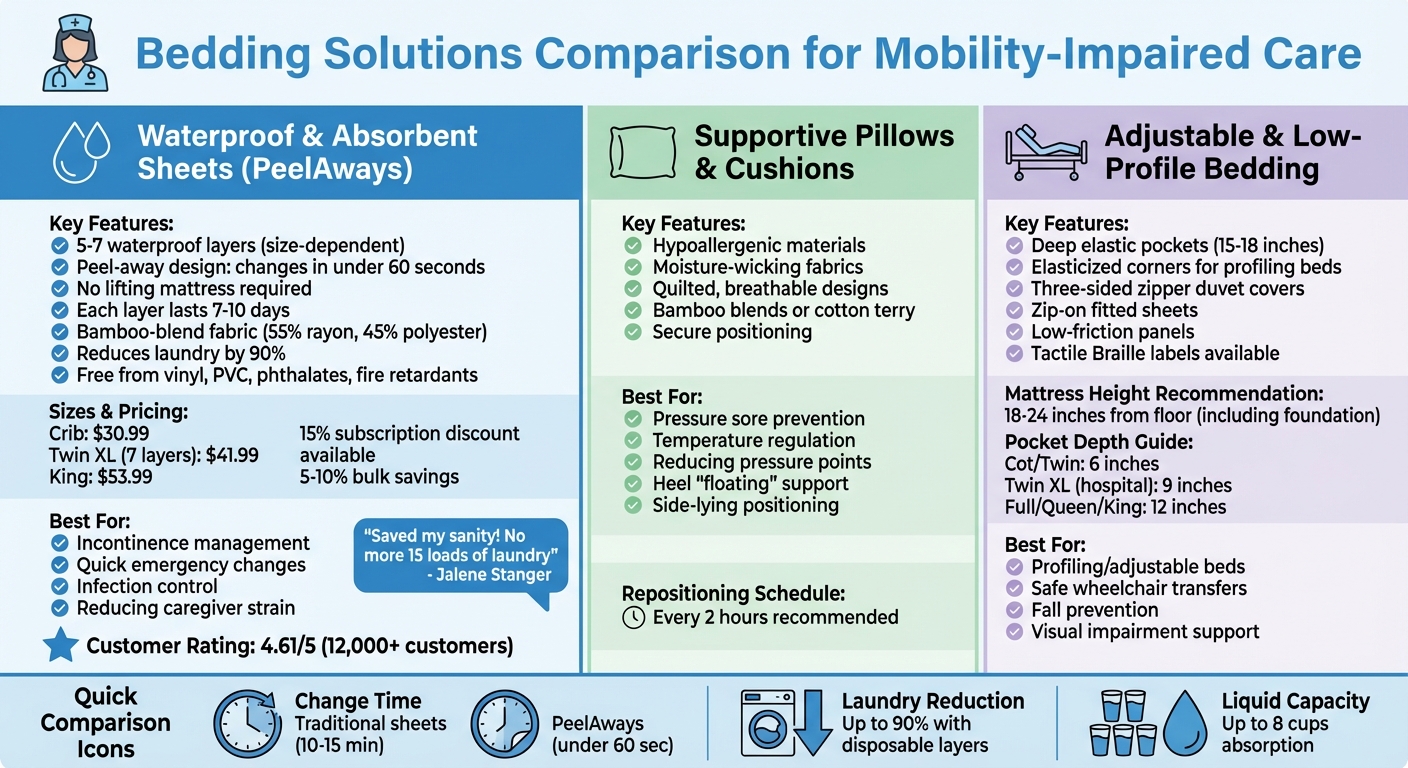
Bedding Solutions for Mobility-Impaired Individuals: Features and Benefits Comparison
The following bedding solutions are designed to address common challenges - ranging from moisture control to enhanced support - while ensuring safety and comfort for users with limited mobility.
Waterproof and Absorbent Bed Sheets
For individuals managing incontinence and its emotional challenges or frequent spills, bedding that protects both the mattress and the user's skin is essential. Waterproof sheets act as a barrier against moisture, while absorbent materials draw liquid away from the skin to prevent irritation and discomfort.
Disposable multi-layer sheets, like PeelAways, offer a practical option for caregivers. These sheets include 5–7 waterproof layers (depending on size) that can be peeled away in under a minute, eliminating the need to lift mattresses or deal with fitted corners. This design significantly reduces the physical strain involved in traditional bedding changes, which is especially helpful when caring for someone who cannot assist with transfers. Each layer is durable enough to last 7 to 10 days, and the bamboo-blend fabric offers a soft, breathable feel without the crinkly noise or texture often associated with plastic materials. PeelAways are available in sizes ranging from Crib ($30.99) to King ($53.99), with a Twin XL option featuring 7 layers for extended use ($41.99).
These disposable sheets are also ideal for infection control, helping to prevent cross-contamination in high-turnover care environments. Free from vinyl, PVC, phthalates, and fire retardants, they are safe for sensitive skin and respiratory health. With over 12,000 satisfied customers and a 4.61/5 rating, PeelAways are widely trusted for elder care, medical recovery, special needs, and even potty training.
Supportive Pillows and Cushions
Specialized pillows and cushions play a crucial role in reducing pressure on vulnerable areas of the body, helping to prevent pressure sores. Look for options made from hypoallergenic, moisture-wicking fabrics to minimize skin irritation. Quilted and breathable designs improve airflow, keeping the user cool and comfortable during extended periods of bedrest. Materials like bamboo blends or cotton terry are particularly effective at regulating body temperature and reducing sweating.
When selecting cushions, it’s important to choose designs that stay securely in place, ensuring consistent support throughout the night or during prolonged use.
Adjustable and Low-Profile Bedding
Adjustable bedding offers additional safety and convenience, particularly for users who require assistance with movement or transfers.
Motorized profiling beds allow for adjustments to the backrest, leg rest, and overall height, making transfers safer and improving circulation. Adjustable bed heights also reduce the risk of falls and make wheelchair transfers easier.
"The Opera profiling bed is a game-changer. It's not only stylish but also supports Niall's physiotherapy and overall comfort. The height adjustments make my caregiving tasks much easier." - Caroline, Carer for a spinal cord injury patient
For individuals at higher risk of falling, floor beds offer a safer alternative, particularly for those with cognitive impairments. When choosing profiling beds, look for models with locking mechanisms to restrict certain functions, ensuring safety for vulnerable users.
Bedding designed for adjustable frames should include sheets with deep elastic pockets (15 to 18 inches) and elasticized corners to stay securely in place during bed adjustments. Features like three-sided zippers on duvet covers can also reduce the physical effort required to insert or remove comforters. Similarly, zip-on fitted sheets eliminate the need to lift heavy mattresses, making them safer and more convenient for both users and caregivers.
Low-friction sheets with special panels can make repositioning easier, reducing skin shear and lowering the risk of pressure sores. For users with visual impairments, tactile bedding with Braille labels and corner markers can help identify sheet orientation and size, promoting greater independence. These thoughtful details not only enhance safety for mobility-impaired individuals but also alleviate some of the physical demands placed on caregivers.
sbb-itb-45288fe
Why PeelAways Works for Caregivers and Mobility-Impaired Users

PeelAways sheets bring a practical solution to caregiving challenges, combining thoughtful design with features that make daily tasks easier and more efficient.
Convenience and Ease of Use
Changing sheets for someone with limited mobility has never been simpler. With PeelAways, caregivers can replace bedding in under 60 seconds - no need to lift the mattress, wrestle with fitted corners, or reposition the individual in bed. Instead, the soiled layer is peeled away, revealing a clean, fresh sheet underneath.
Compare that to traditional sheet changes, which take 10 to 15 minutes and often require moving the patient - a process that increases the risk of falls and physical strain. PeelAways eliminate these challenges while also cutting down on laundry loads by up to 90%.
"Really cannot manage having a patient at home without these sheets/protector... it just so much easier to peel away the top layer... and the patient is already on a clean bedsheet without a lot of work." – Pam, Home Caregiver
This simplicity not only saves time but also supports better hygiene and reduces costs.
Hygiene and Cross-Contamination Prevention
PeelAways are designed to instantly remove pathogens, moisture, and odors. Once a layer is soiled, it’s peeled off and disposed of, preventing bacteria and other contaminants from lingering. This eliminates the need to transport dirty linens through the home, reducing the risk of spreading germs to other surfaces.
For mobility-impaired users, who may face prolonged exposure to moisture, this feature is especially important. Traditional bedding requires high-temperature laundering to maintain hygiene, but PeelAways provide a consistently clean surface without the extra steps. This helps prevent skin irritation, chapping, and infections.
Cost-Effectiveness and Environmental Impact
PeelAways don’t just save time - they’re also a cost-effective option. Prices range from $30.99 for Crib size to $53.99 for King, with a 15% subscription discount and additional savings of 5–10% for bulk purchases. Each pack contains 5 to 7 layers, depending on size, with the Twin XL 7-layer pack priced at $41.99.
Made from a bamboo-blend fabric, PeelAways are free from vinyl, PVC, phthalates, and fire retardants. While disposable, they significantly reduce the need for frequent laundering, saving water and energy - a practical trade-off for caregivers managing incontinence.
"These have saved my sanity! With 2 incontinent special needs teenagers... these have relieved a lot of stress. They hold a LOT of liquid and are easy to use and tear away. No more 15 loads of laundry and wet mattresses!" – Jalene Stanger
How to Select and Maintain Bedding for Mobility-Impaired Individuals
What to Consider When Choosing Bedding
When selecting bedding for mobility-impaired individuals, start by ensuring the sheets fit properly. Pocket depth is crucial for keeping sheets secure. For hospital beds, Twin XL sheets with a 9-inch pocket work best. For standard home mattresses - whether Full, Queen, or King - a 12-inch pocket is ideal. Smaller beds, like cots, typically need sheets with a 6-inch pocket. A snug fit prevents wrinkles and shifting, which can disturb sleep and cause discomfort.
Material also plays a big role in comfort and durability. For example, PeelAways sheets use a blend of 55% rayon and 45% polyester. This combination creates a fabric that’s soft, durable, and gentle on the skin. Plus, their HydroShield waterproofing keeps moisture away from both the skin and mattress, reducing irritation while still allowing the fabric to breathe.
Another important feature to look for is 360° elastic edges. These ensure the sheet stays in place even if the individual moves frequently, helping to avoid pressure points and discomfort. For caregivers managing incontinence, peel-away designs are a game-changer. They allow you to remove soiled layers without lifting or repositioning the person, making caregiving much easier by reducing caregiver stress.
Once you’ve chosen the right bedding, proper maintenance will help extend its usefulness, though you may want to compare disposable and washable bed sheets to find the best fit for your routine.
Maintenance Tips for Long-Term Use
Maintaining bedding for mobility-impaired individuals can be simple with the right setup. For peel-away sheets, you can keep an unsoiled layer in place for 7–10 nights. When one layer becomes soiled, simply peel it off and discard it - no need to lift the individual or wash the sheet. This not only saves time but also eliminates the hassle of transporting soiled linens and reduces the risk of cross-contamination.
"Saving the need to change all the sheets and remake the bed 90% of the time is totally worth it!" – Shiri Ronen-Attia, Writer and Parent
While these disposable sheets protect the mattress and bottom layer effectively, you may still need additional solutions to safeguard blankets and top covers.
| Mattress Type | Recommended Pocket Depth | Usage |
|---|---|---|
| Cot / Twin | 6 inches | Small portable beds |
| Twin XL | 9 inches | Standard hospital beds |
| Full / Queen / King | 12 inches | Standard home mattresses |
Conclusion
The right bedding can make a big difference - it helps maintain dignity, simplifies caregiving, and supports overall health. By combining waterproof protection, keeping beds dry, breathable fabrics, and an easy-to-change design, bedding can truly improve daily care routines.
As we've discussed, using proper bedding can reduce friction and help prevent pressure sores, making caregiving more manageable. It’s clear that choosing bedding for incontinence care can transform the caregiving experience.
PeelAways offers a patented multi-layer design with 5–7 waterproof layers that peel away in less than 60 seconds. This means sheets can be changed quickly and easily, without lifting a mattress or dealing with heavy laundry. Made from a bamboo-rayon-polyester blend, the sheets are soft and quiet - no crinkly, plastic-like noise. Plus, their disposable design helps reduce the risk of cross-contamination.
FAQs
How can I tell if a sheet’s pocket depth will fit our mattress or hospital bed?
To make sure your sheets stay securely in place, measure the depth of your mattress or hospital bed. Then, check this measurement against the pocket depth provided by the manufacturer. Sheets labeled as "deep pocket" are typically designed for thicker mattresses or hospital beds. If the pocket depth equals or exceeds your mattress depth, the sheet should fit snugly without slipping.
What bedding features help prevent pressure sores for someone in bed most of the day?
To help prevent pressure sores, consider bedding options with pressure-relief surfaces. These include items like pressure care mattresses, adjustable profiling beds, alternating air mattresses, or sheepskin overlays. These materials and designs work to minimize pressure points and promote better blood circulation, which are key to maintaining skin health and ensuring comfort.
How can I change sheets quickly after incontinence without lifting or turning the person?
The fastest way to change bed sheets after an incontinence incident - without lifting or turning the person - is by using disposable, peel-away bed sheets like PeelAways. These sheets are designed with multiple layers, so you can simply peel off the soiled top layer to instantly reveal a fresh, clean one underneath. This approach not only saves time but also reduces physical effort for caregivers while lowering the risk of cross-contamination, making it a quick and hygienic solution.
Related Blog Posts
Comments
0



SAVE MONEY & WATER
Professionals & Institutions save a fortune on labor/laundry.

SUPERIOR COMFORT
The first thing our customers notice is how soft our sheets are.

100% WATERPROOF
Each layer is 100% Waterproof, perfect for spills and accidents

SAVE TIME
Change the sheet in under 1 minute without stripping the bed.

Leave a comment