
Ultimate Guide to Absorbent Pads for Nighttime Incontinence

Nighttime incontinence affects up to 15% of seniors at home and 40% of hospitalized patients, creating challenges like skin irritation, odors, and disrupted sleep. Absorbent pads offer a practical solution, providing up to 12 hours of protection while reducing leaks and laundry. This guide covers absorbency levels, materials, and usage tips and a caregiving checklist to help you choose the best option for comfort and care.
- Light pads: For minor leaks, holding less than 1 cup.
- Moderate pads: Manage about 1 cup for predictable patterns.
- Maximum pads: Absorb 2 cups, ideal for heavier incontinence.
- Overnight pads: Hold 3-4 cups, designed for extended protection.
Selecting the right pad ensures dignity, skin health, and restful nights. Let’s explore how to find the best fit for your needs.
How To Use Bladder Control Pads
Managing these products is often part of a larger family incontinence training strategy for caregivers.
sbb-itb-45288fe
Types of Absorbent Pads for Nighttime Use
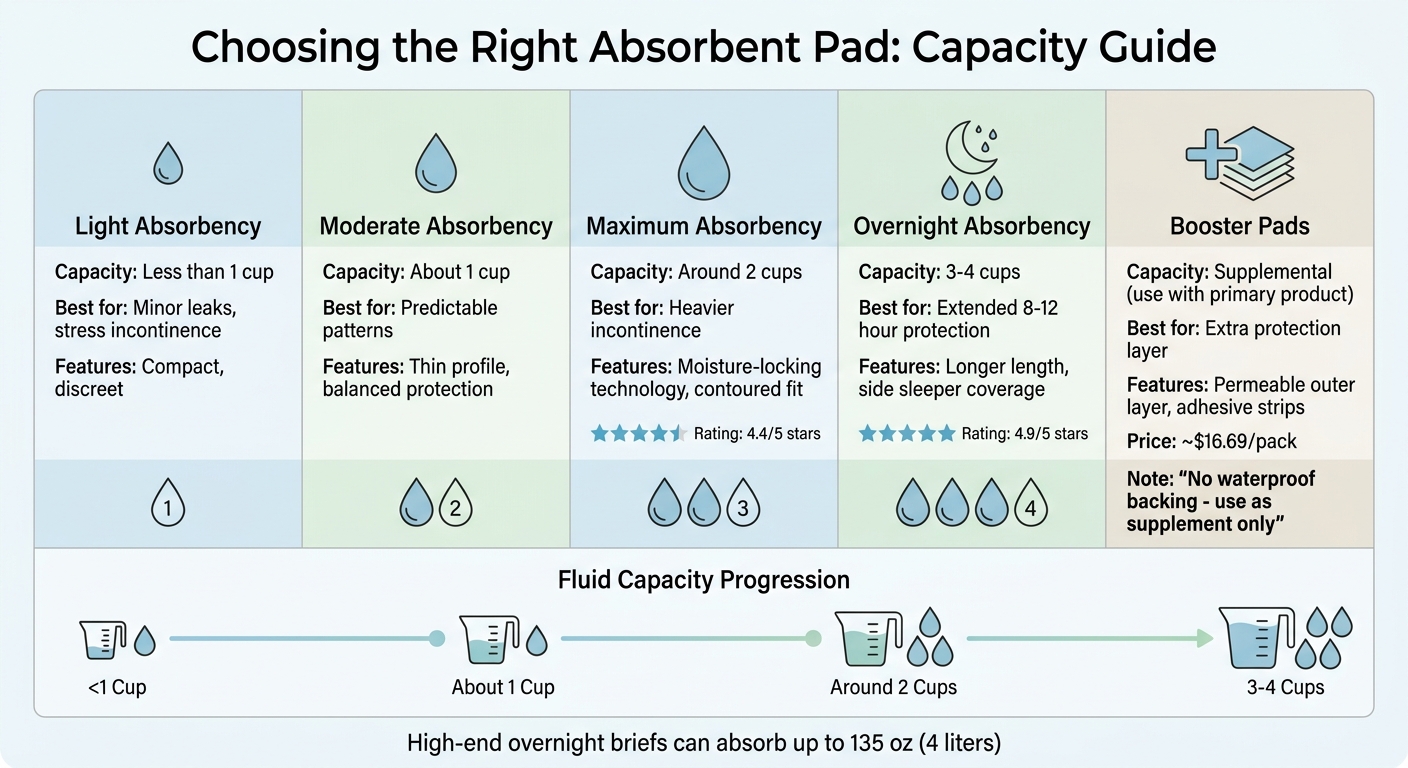
Absorbent Pad Types Comparison Chart: Capacity and Best Use Cases
Absorbent pads are categorized based on how much fluid they can hold, measured in cups. Light pads manage less than 1 cup, moderate pads handle about 1 cup, maximum pads can absorb around 2 cups, and overnight pads can hold 3 to 4 cups of fluid. Choosing the right pad depends on the level of incontinence and how long you'll go between changes. Here's a closer look at each type to help match specific needs.
Light Absorbency Pads
Light absorbency pads are designed for minor leaks or stress incontinence, holding less than one cup of fluid. They’re compact and discreet, making them a good option for those who experience occasional small leaks. These pads are also effective at protecting the skin and ensuring a restful night’s sleep.
Moderate Absorbency Pads
Moderate absorbency pads can hold about 1 cup of fluid. They’re ideal for predictable incontinence patterns, offering a balance of comfort and protection. With their thin profile, they provide reliable skin protection without feeling bulky.
Maximum Absorbency Pads
Maximum absorbency pads are made for heavier incontinence. They often feature moisture-locking technology to keep the skin dry and protected. Although they may feel bulkier than lighter options, they’re highly effective. Many premium options, rated around 4.4 out of 5 stars, are praised for their contoured fit and strong leak prevention, helping users sleep through the night without interruptions.
Overnight Absorbency Pads
Overnight pads are designed for extended use, offering 8 to 12 hours of protection. Their longer length provides better coverage, especially for side sleepers who move during the night. Some products can hold up to 4 cups of fluid and boast ratings as high as 4.9 out of 5 stars. For severe incontinence, high-end overnight briefs are available, capable of absorbing up to 135 ounces (roughly 4 liters) of fluid.
Booster Pads for Extra Protection
Booster pads, or diaper doublers, act as an additional layer of protection when paired with a primary absorbent product. These pads have a permeable outer layer, allowing fluid to pass through to the underlying garment once the booster reaches its limit. Since they lack a waterproof backing, they should only be used as a supplement to prevent leaks. Many booster pads include adhesive strips to keep them in place during sleep. For instance, Tranquility Booster Pads are available for around $16.69 per pack.
What to Look for in Nighttime Absorbent Pads
When choosing bedding for incontinence care, caregivers should focus on three key factors: absorbency capacity, breathable materials, and effective odor control. These elements work together to reduce leaks, prevent skin irritation, and ensure a restful night. Here’s a closer look at what to consider.
Absorbency Levels and Capacity
The pad's absorbency should align with the user's nightly fluid output. For example, some disposable vs. washable bed pads can hold up to 8 cups (1.9 liters) of fluid, while high-end overnight options absorb up to 38 ounces - almost double the typical 15–20 ounces found in standard products. Look for pads featuring Super Absorbent Polymers (SAP), which lock in fluid and odors by turning liquid into gel, effectively preventing leaks. Additionally, moisture-wicking acquisition layers are essential for pulling liquid away from the skin and into the absorbent core.
For a secure fit, measure the user's hips and waist carefully. A pad that's too tight may cause chafing, while one that's too loose increases the risk of leaks.
Material and Comfort
Comfort is just as important as absorbency. Modern pads often include features like airflow technologies (e.g., TENA's ConfioAir) that promote ventilation and maintain healthy skin conditions. Additionally, pads free from parabens, dyes, latex, and fragrances are less likely to irritate sensitive skin.
Soft, cloth-like outer layers and fluff polymers help reduce friction, which is especially beneficial for bed-bound individuals or those with fragile skin. Many users find that cotton-like covers provide added comfort by minimizing irritation. For extra protection during extended overnight use, applying a barrier cream or skin protectant can help guard against incontinence-associated dermatitis (IAD).
Odor Control and Hygiene
Odor control is about more than just masking smells. High-quality pads often incorporate materials like carbon or cyclodextrins to chemically neutralize ammonia and other odor-causing molecules. Pads with odor-neutralizing technology, such as zeolites or chemical neutralizers, can trap bacteria and moisture to prevent odors from forming.
To maintain hygiene and skin health, pads should be changed every 4 to 6 hours, with protective underwear or briefs replaced every 4 to 8 hours. Some pads even feature wetness indicators, like color-changing strips, to signal when a change is needed - making it easier to manage without constant manual checks. For added stability, pads with anti-skid or PVC backing help keep them in place throughout the night. Finally, airing out bedding for 15–20 minutes each morning can further reduce moisture and bacterial buildup.
How to Choose the Right Absorbent Pad
Picking the right absorbent pad starts with understanding leak severity, ensuring a proper fit, and aligning absorbency levels with nighttime needs. It’s also important to factor in the user’s mobility - whether they’d benefit from pull-on styles or tab-style briefs that are easier for caregivers to apply. Nighttime products are specially designed for prolonged wear and often include "lie-down protection", catering to side or back sleepers. This decision-making process builds on the pad types and features discussed earlier.
Check absorbency capacity. Absorbency ratings are key to matching the pad to the user’s needs. When in doubt, opt for higher absorbency to prevent leaks and skin irritation. Consider whether light, moderate, maximum, or overnight capacity works best. For example, high-capacity overnight briefs like the Abena Abri Form Premium (XL4) can hold up to 135 ounces, while the Tranquility ATN (X-Large) holds 37 ounces.
Get the fit right to avoid leaks. Instead of relying on standard clothing sizes, measure the user’s waist, hips, and thighs. A snug fit can cause chafing, while a loose fit increases the chance of leaks. For active individuals, pull-on underwear is ideal. For those with limited mobility, tab-style briefs are a better choice.
Factor in your budget and usage frequency. Caregivers often spend $500 to $1,000 annually on disposable pads. Costs vary: moderate pads are around $6.99 per pack, maximum pads cost about $8.99, and overnight pads are priced at approximately $12.29. If additional overnight protection is needed, try layering a booster pad (priced between $13.25 and $16.69) inside a primary brief. This increases capacity without adding too much bulk. Products with wetness indicators - strips that change color when a change is needed - can also help reduce unnecessary disruptions during the night.
Choose skin-friendly materials and odor control features. Look for breathable, hypoallergenic, and fragrance-free materials to prevent incontinence-associated dermatitis (IAD). Pads made from skin-safe materials help maintain skin health while controlling odor. Gender-specific designs can also enhance effectiveness; for instance, women’s pads are typically wider in the middle, while men’s guards focus absorbency at the front.
How to Use and Maintain Nighttime Absorbent Pads
Once you've chosen the right absorbent pad, using it correctly and maintaining it properly can make all the difference. A secure fit not only prevents leaks but also protects skin health and helps maintain dignity. Utilizing specialized incontinence bedding solutions can further enhance this sense of security and comfort.
Proper Application and Fit
The type of product you select should match the user's mobility needs. For those with limited mobility, tab-style briefs are a great option since they allow caregivers to change them while the user is lying down. On the other hand, pull-on protective underwear is ideal for more active individuals, offering both independence and a closer fit.
For pads, guards, and liners, pair them with snug-fitting underwear or stretch mesh briefs. Secure the adhesive backing firmly against the underwear. Men should use contoured guards designed for their anatomy, ensuring proper placement within snug underwear to avoid leaks.
If you're using briefs or pull-ups, make sure the elastic leg gathers fit snugly around the groin to create a secure seal. When choosing between waterproof mattress pads vs. disposable sheets, center the underpad beneath the hips and tuck the sides under the mattress to keep it in place during the night. Avoid layering multiple absorbent products directly on the skin, as this can lead to heat buildup, friction, and irritation.
Once everything is in place, monitor the pad’s performance throughout the night to ensure it continues to provide adequate protection.
Changing Pads During the Night
While most nighttime incontinence pads are designed to last through the night, they should generally be replaced 3 to 5 times per day. Overnight, the goal is to use a high-absorbency product that minimizes the need for changes and prevents sleep disruption. These products are often longer and specially shaped to provide "lie-down protection."
Replace the pad if you notice leakage, odor, discomfort, or if wetness indicators show that the product is saturated. Always change the product before it exceeds its absorption capacity.
After each change, gently clean the skin using mild soap or incontinence wipes. Follow up with a barrier cream to protect the skin from moisture and irritation. Keeping all your supplies within easy reach can make the process quicker and less disruptive during the night.
Disposal and Hygiene Practices
Proper disposal of used pads is key to maintaining hygiene and controlling odors. Fold or roll used pads inward to trap moisture and odors. If the pad contains stool, empty its contents into the toilet before rolling it up.
"Used incontinence aids can be folded or rolled up to avoid leakage and reduce odours. If your pull-up or slip is soiled, make sure you empty the stool into the toilet before rolling up and disposing of it".
Place the rolled-up pad in a scented, opaque disposal bag to conceal its contents. For added odor control, use a snap-lock bag before placing it in your regular trash bag.
Never flush incontinence pads, liners, or wipes down the toilet, as they can cause serious plumbing issues. To minimize indoor odors, tie the disposal bag tightly and place it in an outdoor trash bin. Finally, wash your hands thoroughly with soap and water or use hand sanitizer after handling used products.
Using PeelAways with Absorbent Pads for Better Nighttime Protection
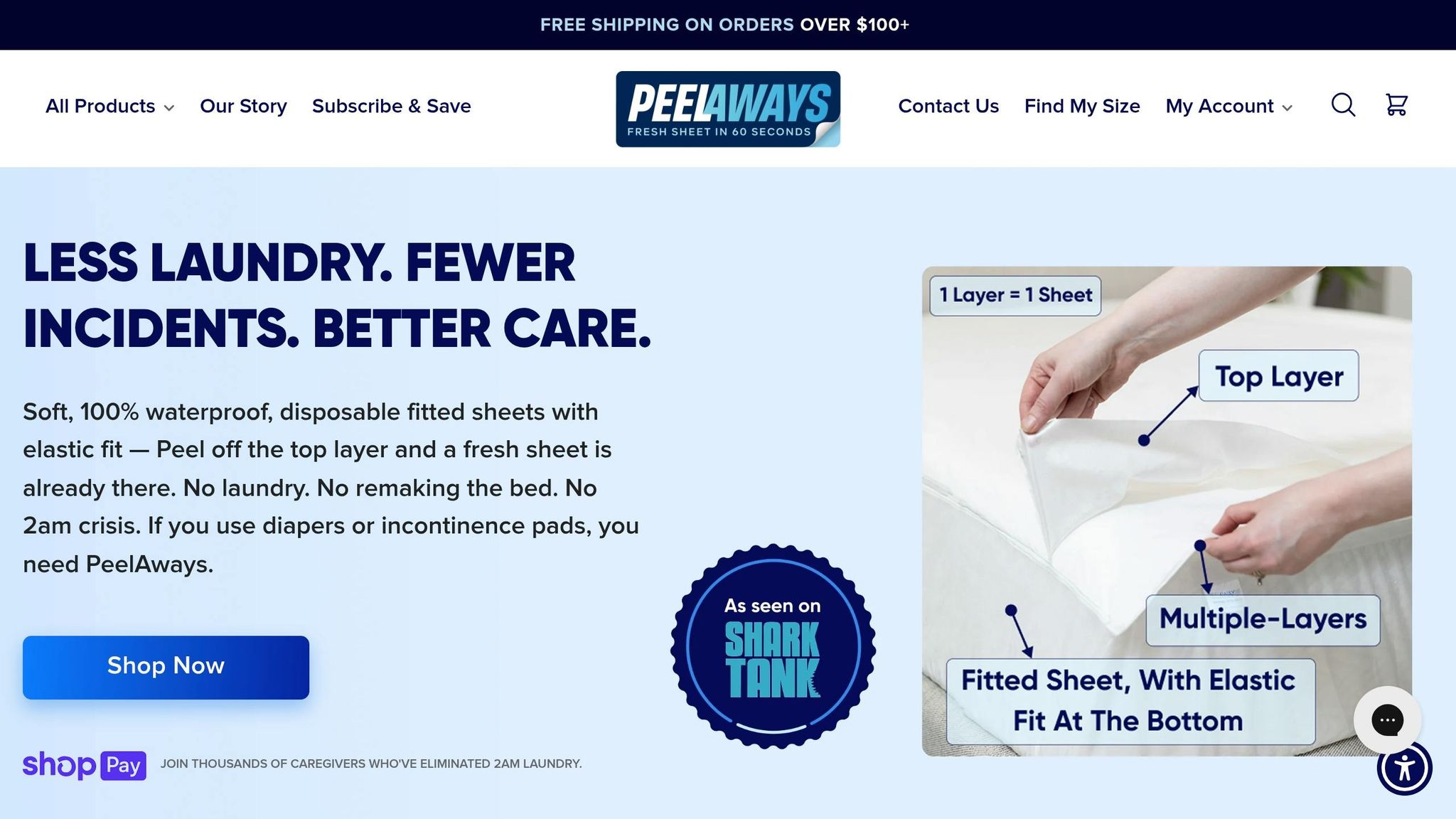
Even the most reliable absorbent pads can sometimes leak or shift during the night, leading to disrupted sleep and additional cleanup. That’s where PeelAways multi-layer disposable sheets come in. These sheets provide a 100% waterproof backup layer, protecting the mattress from accidents when primary products fail. If a leak happens, you can peel away the soiled top layer in under 60 seconds to reveal a fresh, clean surface - no heavy lifting, no emergency laundry, and minimal interruptions to sleep. It’s a smart addition to your current absorbent pad routine.
Using PeelAways is simple. Place the sheet over the mattress like a fitted sheet, then position your loved one on top with their usual absorbent pad, brief, or protective underwear. The waterproof barrier underneath catches any overflow from saturated pads, ensuring comfort and protection throughout the night.
If an accident occurs, just peel off the soiled layer and discard it. Beneath it lies a clean layer, ready to use immediately. This quick process takes only a minute, replacing the traditional 15- to 20-minute bed-changing routine. It’s a game-changer for caregivers, easing their workload and helping everyone get back to sleep faster .
For even greater protection, consider pairing PeelAways with booster pads and briefs. This combination is often recommended by healthcare professionals for managing severe nighttime incontinence. PeelAways sheets are available in sizes from Crib ($30.99) to King ($53.99), with Twin XL ($41.99) being especially useful for hospital beds and long-term care settings.
With a 4.8-star rating from over 28,000 customers, these sheets are a trusted choice. They’re also free from vinyl, PVC, phthalates, and fire retardants, making them safe for sensitive skin. Plus, they can cut laundry demands by 50–80%, offering a practical way to reduce caregiver strain while preserving sleep quality.
Conclusion
A nighttime routine can make a world of difference in managing incontinence care. Selecting the right absorbency level - whether it’s light, moderate, or heavy - plays a key role in preventing leaks and maintaining healthy skin. When combined with quality absorbent pads, consistent hygiene practices, and layered bed protection, you can create a system that truly works. Caregiving is demanding, and you deserve solutions that provide both ease and reliability.
For added peace of mind, consider pairing these strategies with PeelAways multi-layer disposable sheets. These waterproof sheets act as a reliable backup, catching any overflow when absorbent pads reach their limit. Say goodbye to lifting mattresses, emergency laundry, and disrupted sleep. With PeelAways, changes are quick and dignified, helping everyone get the rest they deserve.
To make caregiving more affordable, PeelAways is offering a special 10% discount for blog readers. Use code BLOGS10 at checkout to save on multi-layer disposable sheets. This offer can be combined with subscriptions and bundle deals, giving you the chance to save more while simplifying your routine.
You can purchase PeelAways directly on Amazon or through Peelaways.com.
FAQs
How do I estimate how much absorbency I need at night?
To figure out the right absorbency for nighttime incontinence, start by evaluating how often and how severe the leaks are. If leakage is moderate to heavy, look for products that can hold between 2 to 4 cups of liquid. For extra protection, consider layering options like waterproof protectors, disposable sheets, or reusable pads to handle larger leaks.
Keep track of the typical leakage over several nights. This will help you fine-tune the absorbency level to ensure a balance of comfort, dryness, and proper skin care.
Why do pads leak even when they aren’t full?
Pads might leak even if they aren't full, and this can happen for a few reasons: they might not be positioned correctly, body movements can shift them, or the pad might not be the right size or absorbency for your needs. To minimize leaks, make sure the pad is placed properly and choose one that's long enough and designed to handle your flow effectively.
When should I add PeelAWays sheets to my nighttime setup?
PeelAways sheets are a game-changer for managing incontinence at night. These multi-layer, disposable waterproof sheets act as a reliable shield for your mattress. All you need to do is place one on your bed before sleeping. If it gets soiled, you can peel off the top layer in under a minute to reveal a clean, fresh sheet underneath. This simple process cuts down cleanup time and helps maintain hygiene by minimizing the risk of cross-contamination.
Comments
0



SAVE MONEY & WATER
Professionals & Institutions save a fortune on labor/laundry.

SUPERIOR COMFORT
The first thing our customers notice is how soft our sheets are.

100% WATERPROOF
Each layer is 100% Waterproof, perfect for spills and accidents

SAVE TIME
Change the sheet in under 1 minute without stripping the bed.

Leave a comment