
How to Talk to Your Parents About Incontinence: Script + Tips for Adult Children

Nearly 50% of seniors over 65 experience bladder leaks, yet only 19% feel comfortable discussing it. Addressing this sensitive topic early can help your parent avoid health risks like infections or falls while preserving their independence. Start with empathy, choose the right time and place, and use "I" statements to keep the conversation supportive.
Practical steps include learning about incontinence types, suggesting a doctor visit, and introducing discreet products like protective briefs or PeelAways bed sheets to reduce stress. Regular, open check-ins help maintain trust and adapt solutions as needs change. By approaching this with care, you can improve your parent's quality of life and strengthen your bond.
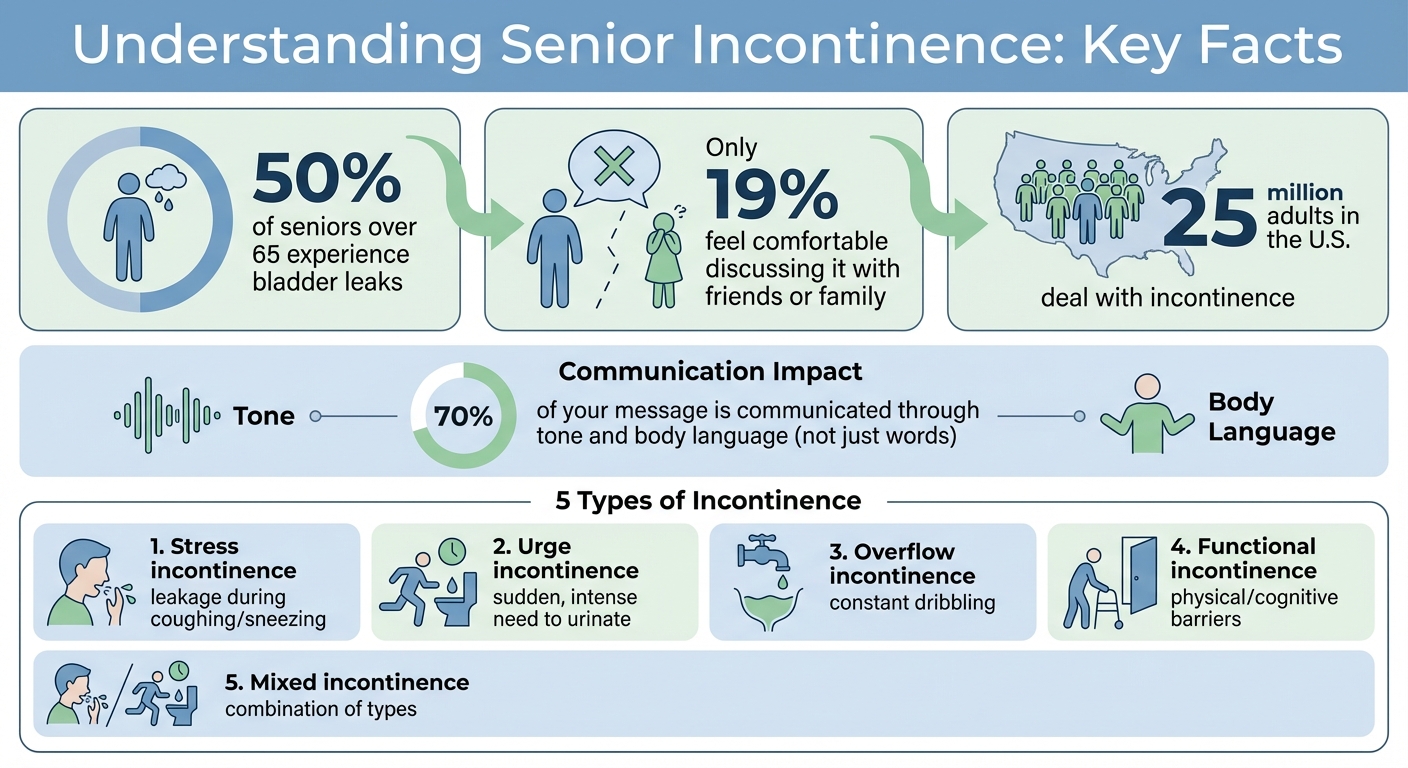
Incontinence Statistics and Communication Facts for Seniors Over 65
My Dad is Dealing with Incontinence - (Ask-A-Nurse | Season 1, Episode 27)
sbb-itb-45288fe
How to Prepare for the Conversation
Before talking to your parent, take some time to prepare emotionally and gather the facts. This isn’t just about what you say - it’s about how you approach the topic. Showing empathy and being informed about incontinence can set the tone for a conversation built on trust, making it easier for both of you.
Understand Your Feelings and Your Role
This discussion marks a big change in your relationship. Your parent, who once took care of you, may now need your support. That shift can be emotionally challenging for both of you. For your parent, it might bring feelings of vulnerability or even shame. For you, it’s important to check your own emotions. Are you approaching this with patience, or are frustration and discomfort creeping in? Studies show that tone and body language communicate 70% of your message, often more than the words you choose. Practicing how you deliver your message can help ensure you come across as supportive, not critical.
Think of yourself as a partner in care, not someone taking over. This mindset helps your parent feel less defensive and preserves their sense of independence. Use "I" statements, such as "I've noticed..." instead of "You always...", to avoid sounding accusatory. Focus on how addressing incontinence can improve their quality of life and keep them active, rather than framing it as a problem to fix. Your goal is to show that you're not taking their independence away - you’re stepping in as someone who wants to help them maintain it.
Once you’ve set your emotional approach, it’s time to understand the basics of incontinence.
Learn the Basics About Incontinence
The more you know about incontinence, the better equipped you’ll be to have an informed and stigma-free conversation. It’s important to recognize that incontinence is a symptom, not a disease. It can stem from a variety of causes, including weakened pelvic muscles, an overactive bladder, prostate issues, nerve damage from conditions like diabetes, or even side effects from medications. Understanding these causes helps you frame the issue as a medical condition - not a personal failing.
There are five main types of incontinence you should know about:
- Stress incontinence: Leakage that happens during activities like coughing or sneezing.
- Urge incontinence: A sudden, intense need to urinate.
- Overflow incontinence: Constant dribbling or an inability to empty the bladder fully.
- Functional incontinence: Physical or cognitive challenges that make it hard to get to the bathroom in time.
- Mixed incontinence: A combination of symptoms from more than one type.
This knowledge not only helps you talk more effectively with your parent but also prepares you for discussions with medical professionals. Having information about specialists or even product samples ready can show your parent that practical solutions exist if they’re open to exploring them.
Keep in mind, your parent might not even realize there’s an issue. Seniors often have reduced senses of smell and sight, so they may not notice odors or stains that are obvious to you. Additionally, sudden onset incontinence could be something as simple as a urinary tract infection, which is why suggesting a doctor’s visit as the first step is so important.
Pick the Right Time and Place
Choosing the right moment and setting can make a world of difference when approaching this kind of sensitive conversation. Opt for a private, calm environment that encourages openness. Public spaces are best avoided, as they might make your parent feel exposed or uncomfortable.
Instead of catching them off guard, gently ask, "Is now a good time to talk about something difficult?" This gives them the freedom to decide if they're ready to engage. Timing is also key - steer clear of bringing up the topic during a crisis or right after an accident. It's better to wait until everyone is relaxed and emotions aren't running high. Once they agree to talk, focus on creating a setting that feels physically and emotionally comfortable.
A side-by-side setup can help reduce pressure. For instance, you might take a walk, sit on a quiet bench, or ease into the topic while sharing an activity they enjoy, like playing cards or working on a hobby. These scenarios feel more natural and less confrontational. However, if emotions are running high or there are too many distractions, it’s okay to pause and revisit the conversation later.
This is especially important when considering that only 19% of adults aged 65 and older feel comfortable discussing bladder leaks with friends or family. That statistic highlights just how sensitive this topic can be. By carefully choosing the time and place, you create a safe space where your parent feels less isolated and more willing to explore solutions together. These thoughtful steps build on the empathetic groundwork you've already laid.
Conversation Scripts for Different Situations
These scripts are designed to help you navigate conversations about incontinence with sensitivity and care. By using "I" statements instead of "you" statements, you can avoid sounding accusatory and keep the focus on improving quality of life rather than solely addressing a medical issue. Now that you’ve taken time to prepare emotionally and understand the basics, these scripts can guide you in starting meaningful discussions. Adjust the wording to fit your parent's communication style and your relationship dynamics. These examples build on the earlier emphasis on preparation and empathy, providing practical ways to approach the topic.
Script: When You Notice Signs of Incontinence
If you’ve noticed signs like extra laundry, social withdrawal, or visible leaks, share your observations in a gentle, non-judgmental way. For example:
"I noticed a leak the other day and am concerned it might be affecting the activities you enjoy."
Alternatively, you can try the "Low-Risk Sample Method." Leave protective underwear in the bathroom with a note saying, "I found these on sale - feel free to try them." This approach allows your parent to explore options privately, without feeling pressured. By emphasizing comfort and independence, you create a supportive environment for addressing the issue.
Script: When Your Parent Brings It Up First
If your parent initiates the conversation, let them take the lead and use their language. For instance, if they mention "leaks" or "accidents", stick to those terms instead of introducing clinical jargon. You could say:
"I'm really glad you felt comfortable sharing this with me. I know this isn't easy to talk about. How is this affecting your daily routine?"
Reassure them that they’re not alone. For example, one customer shared:
None of us should have to feel like we're struggling alone. Sharing with [my friend] really changed everything. Not only was a load taken off my back, but she helped me find the right protection for dry nights.
- M.B., NorthShore Customer
This kind of response helps maintain dignity while opening the door to practical solutions.
Script: During General Health Discussions
You can also bring up the topic during broader health conversations, which can help normalize it. For example:
"Bladder leaks are common as we age - about 25 million adults in the U.S. deal with this. Have you noticed difficulty getting to the restroom in time, or has it affected your confidence at social events?"
This approach ties the issue to overall wellness rather than isolating it. You might also suggest keeping a health diary to track fluid intake and bathroom trips. This can help identify patterns to discuss with a doctor. It’s worth mentioning that incontinence is often linked to treatable conditions, like urinary tract infections or medication side effects. By framing the conversation this way, you reinforce the goal of maintaining independence and improving quality of life.
How to Listen and Handle Emotional Reactions
When you bring up a sensitive topic like this, your parent might react with denial, shame, defensiveness, or even anger. In these moments, active listening becomes your strongest tool. Let them express themselves freely, and ask open-ended questions like, "How do you feel about managing this?". It’s worth noting that while about 50% of adults aged 65 and older experience leaks, only 19% actually talk about it. This silence often means they’ve been carrying the burden alone, making your willingness to listen even more important.
If your parent reacts defensively or dismisses your concerns, try to understand where that reaction is coming from. Often, it’s tied to fears about losing independence. Avoid arguing or issuing ultimatums. Instead, affirm their autonomy with statements like, "I understand this is hard to talk about. I'm here whenever you're ready." If they choose not to engage, respect their decision for the moment. Pressing too hard can make them feel cornered or ambushed.
For parents in denial, sensory changes that often come with aging might make it harder for them to notice odors or stains themselves. In these cases, gently point out specific, observable details without judgment. For example, you could say, "I noticed some dampness on the chair after you sat down". This approach keeps the conversation factual while preserving their dignity. It’s also helpful to frame incontinence as a medical issue rather than a personal failing. Doing so can reduce feelings of shame and make them more open to discussing solutions.
If resistance persists, consider bringing in a doctor or home health provider. Sometimes, hearing the same information from a medical professional can make a big difference. Another option is the "planting" strategy: leave educational materials, product samples, or disposable underwear in a private spot where they can review them on their own terms. This gives them a sense of control over the next steps while removing the immediate pressure.
Throughout the conversation, use clear, respectful language that reinforces your supportive role. Match your parent’s tone and word choices - if they say "pee", for instance, use "pee" instead of more clinical terms like "urine". Keeping the language familiar and non-intimidating helps maintain their comfort and sense of independence.
Discuss Solutions and Next Steps
When your parent is open to talking, shift the focus to practical steps that enhance their quality of life while respecting their independence. Instead of framing the conversation around "fixing a problem", emphasize shared goals like staying active, maintaining social connections, and ensuring comfort. Work together to identify what matters most - whether that's sleeping soundly through the night, feeling confident while out and about, or reducing stress from unexpected leaks.
Collaborate on Solutions
Involving your parent in decisions is key to preserving their sense of control and dignity. Start with open-ended questions, such as, "What would make you feel most at ease?" or "How can we make this process easier for you?" This approach encourages them to take an active role rather than feeling like solutions are being imposed.
You might also consider scheduling a doctor’s visit together to rule out reversible causes like urinary tract infections or side effects from medications. This can provide helpful information for the healthcare provider to recommend the best course of action. Another practical step is establishing a regular bathroom schedule to help prevent accidents. At the same time, remind your parent to stay hydrated - typically six to eight glasses of water a day - to avoid bladder irritation and lower the risk of urinary tract infections. Once you’ve agreed on a plan, explore supportive product options together.
Introduce Supportive Products for Incontinence Care
When discussing products, use respectful language like "disposable underwear" or "protective briefs" to avoid terms that might feel demeaning. Modern incontinence products are designed to be discreet, comfortable, and effective. Many feature Super Absorbent Polymers that can hold a significant amount of fluid without adding bulk. You could offer to purchase a variety of samples, such as liners or pull-on underwear, so your parent can try them privately and choose what works best for them.
For nighttime protection, PeelAways disposable bed sheets are a practical and dignified choice. These multi-layer sheets allow you to peel away a soiled layer in under a minute, revealing a clean sheet underneath. This eliminates the hassle of lifting mattresses or managing heavy bedding. Made from bamboo/rayon fabric, they feel like regular sheets while offering a waterproof barrier to protect the mattress. Each sheet has five to seven layers (depending on size), which can cut down laundry by 50–80%. Prices range from $30.99 for crib sizes to $53.99 for king sizes. They’re available on Peelaways.com, with free shipping on orders over $100 and a 30-day money-back guarantee.
Keep the Conversation Going
One conversation won't cut it. Regular check-ins are essential to keep up with your parent's changing needs and to fine-tune care strategies. But here's the thing - don't make these talks all about incontinence. Focus on the bigger picture: improving quality of life, staying active, and maintaining social connections. These broader goals can make the discussions feel less clinical and more supportive.
Start by asking for permission before diving into a check-in. A simple question like, "Is now a good time to talk about how things are going?" can go a long way. This gives your parent a sense of control and avoids making them feel ambushed. If they’re not up for it, respect their choice and suggest, "Maybe we can talk tomorrow morning?" Respecting their boundaries builds trust and shows you're there to support, not to take over.
When you do talk, use open-ended questions to encourage them to share. Try asking, "How do you feel about managing this?" or "What kind of support would help you this week?" These kinds of questions invite honest discussion without making them feel like they’re being grilled. Listen carefully, avoid judgment, and celebrate progress - whether it’s a better-fitting product or fewer leaks.
As their mobility or cognitive health changes, revisit the care plan. This might mean looking into solutions like bathroom modifications, pelvic floor therapy, or more absorbent products. Keep these conversations private unless your parent explicitly agrees to involve others. Incontinence is a common issue that many people manage successfully while leading active, fulfilling lives, and respecting their privacy reinforces their dignity.
If your parent remains resistant, consider involving their doctor or a professional caregiver. Parents often take advice more seriously when it comes from a medical professional. The goal is to maintain a steady, supportive dialogue that balances their independence with the care they need - all while preserving their sense of control and dignity.
Conclusion
Talking to your parents about incontinence can be tough, but it’s an important step for their health and comfort. Approaching the conversation with empathy, patience, and respect for their dignity can make all the difference. Millions of older adults experience bladder leakage, so it’s important to remember that this is a common medical issue - not a personal failure or something to feel ashamed about. With the right approach, you can navigate this sensitive topic with confidence.
Start by learning about the different types of incontinence and preparing communication strategies. Use "I" statements like, "I’ve noticed…", which feel less judgmental. Be mindful of your language - terms like “disposable underwear” or “protective briefs” are more respectful and can help maintain your parent’s dignity.
Shift the focus toward preserving their independence and quality of life, rather than just managing a medical condition. Work together to find solutions, whether that’s scheduling a doctor’s visit, trying out products like PeelAways disposable bed sheets for nighttime convenience, or creating a plan that prioritizes their autonomy. Celebrate small victories and keep the dialogue open with regular, supportive conversations. By doing so, you’re not just addressing a health concern - you’re building a partnership that respects their needs and emotions.
Caregiving often involves a role reversal, which can be hard for a parent who’s spent years taking care of you. Acknowledge this shift with understanding and compassion. Your patience and dedication to preserving their dignity will strengthen your bond and make the caregiving journey smoother for both of you.
Just because something feels uncomfortable doesn't mean it isn’t worth doing.
Take the first step today. Your parent’s health and sense of dignity depend on it.
FAQs
What if my parent denies having incontinence?
If your parent refuses to acknowledge incontinence, it’s important to handle the situation with patience and understanding. Begin by talking about their general health and carefully bring up any signs you’ve noticed. Reassure them that this is a common issue many people face and that it can be managed effectively. Be mindful of your language - avoid terms like "diaper" that could feel stigmatizing - and focus on offering support in a way that protects their sense of dignity. Listen attentively, use comforting words, and take the time to build trust as you work toward finding solutions together.
When should I suggest a doctor visit for leaks?
If incontinence starts happening more often, becomes more severe, or worsens over time - like regular accidents or leaks turning into larger gushes - it’s a good idea to consult a doctor. Persistent leaks, especially when paired with other symptoms, might signal an underlying issue that needs medical evaluation to pinpoint the cause and decide on the right treatment.
How can I bring up incontinence without embarrassing my parent?
When addressing sensitive topics like incontinence, it's crucial to approach the conversation with empathy and respect. Choose a private, calm setting to ensure the person feels comfortable and not embarrassed. Instead of directly mentioning incontinence, express concern for their overall well-being.
Avoid using terms like "diaper", as they can feel stigmatizing. Opt for neutral, more inclusive language to help normalize the condition. Start with "I" statements to gently share your observations - for example, "I noticed you might be facing some challenges, and I’d like to help." Focus on finding solutions and offering support, creating an open space for dialogue that respects their dignity and encourages trust.
Related Blog Posts
Comments
0



SAVE MONEY & WATER
Professionals & Institutions save a fortune on labor/laundry.

SUPERIOR COMFORT
The first thing our customers notice is how soft our sheets are.

100% WATERPROOF
Each layer is 100% Waterproof, perfect for spills and accidents

SAVE TIME
Change the sheet in under 1 minute without stripping the bed.

Leave a comment