
5 Signs Your Current Bed Pads Aren't Working Anymore

It’s 2 a.m. The sheets are soaked again. Your loved one is embarrassed, your back hurts, and you have to be up in four hours. If this keeps happening, your bed pads are not doing their job anymore.
A bed pad is failing when it leaks to the mattress, shifts at night, leads to full sheet changes, leaves skin damp, or turns every accident into a long cleanup. I learned the hard way that once those signs start, the problem is not just the pad. It’s the whole bedding setup.
- Leaks hit the mattress
- Pads slide or bunch up
- You change full sheets too often
- Skin redness or odor keeps coming back
- Night care feels like an ordeal every time
| Quick check | What it usually means |
|---|---|
| Mattress is damp | Pad is too thin, too small, or worn out |
| Pad is twisted by morning | It does not stay in place |
| Sheets need changing 3+ times a week | Coverage or absorbency is not enough |
| Skin stays red or damp | Moisture is sitting too long |
| Cleanup takes 15 to 20 minutes | Your setup is making care harder |
If you are tired of doing a full bed change in the middle of the night, this is what I would look at first.
Why this problem is harder than people realize
A bad bed pad does not just make a mess.
It steals sleep.
It adds laundry.
It makes your loved one feel exposed.
And it puts one more job on your back at the worst hour of the night.
That is why these signs matter.
When a pad fails, you are not only dealing with urine. You are dealing with:
- a wet mattress
- a cold, damp bed
- skin that stays in moisture too long
- odor that hangs around
- another load of wash you did not need
A full bed change can take 15 to 20 minutes. A better layered system can cut that to about 60 seconds. That gap is huge when it is 2 a.m. and you are already running on fumes.
I also look at the week as a whole. If your bedding setup is causing 3 to 5 extra sheet washes a week, that is not a small issue. That is time, detergent, water, and energy gone.
What to look for before buying
Before I buy anything for nighttime accidents, I keep it simple.
I want five things:
- Waterproof protection that keeps fluid off the mattress
- Enough absorbency for overnight use
- A fit that stays put when the person in bed moves
- Soft, breathable layers that do not leave skin hot and damp
- Fast top-layer changes so I am not remaking the whole bed
If you use diapers or incontinence pads and still deal with wet sheets, the bed layer matters just as much.
I would also check these basics:
- Size range: crib to king
- Layer count: 5 to 7 waterproof layers per set
- Reviews from people who bought it: 28,000+ verified reviews and a 4.8-star rating stand out for a reason
- Change time: closer to 60 seconds, not 15 to 20 minutes
- Laundry cut: about 50% to 80% less laundry can make a big difference week to week
PeelAways
The first time I came across PeelAways, I did not care about branding.
I cared about one thing:
Can this stop the 2 a.m. full bed change?
That is why it stood out.
PeelAways is a fitted, multi-layer disposable bed sheet system. You place it on the bed once, and when there is an accident, you peel away the top soiled layer and there is a clean, dry layer underneath.
That means:
- no lifting the mattress
- no stripping the whole bed
- no fighting with fitted sheets half asleep
The part that got my attention was the time difference.
About 60 seconds for a layer change, compared with 15 to 20 minutes for the old routine.
That is not hype.
That is the difference between getting back to bed and losing the rest of the night.
PeelAways also checks the boxes I care about:
- 5 to 7 waterproof layers
- sizes from crib to king
- 28,000+ reviews
- 4.8-star rating
- made to cut laundry by 50% to 80%
If you want to see it, you can check the main store here: peelaways.com/shop
You can also find the Amazon listing here: PeelAways on Amazon
And if you want more detail from people living this problem, these are worth reading:
- How to Change Wet Bed Sheets Without Lifting the Patient
- Best Bedding for Incontinence Care at Home
Waterproof fitted bedding
If your main problem is pad movement, fitted waterproof bedding can help more than flat pads.
Why?
Because the issue is often not just absorbency.
It is drift.
A flat pad can slide under the body during the night. Once it moves, the wet area misses the pad, and now the sheet and mattress are at risk.
A fitted waterproof layer helps by:
- staying centered on the bed
- covering more of the sleep surface
- cutting edge leaks
- making the bed feel more secure after repositioning
This type of setup makes sense if the person you care for moves a lot or needs turning at night.
Disposable bed sheets
If laundry is the part breaking you down, disposable bed sheets may help more than washable pads.
Washable pads can work for light leaks. But when accidents are heavy or frequent, they can become one more thing to clean, dry, and put back on the bed.
Disposable layers help most when you need:
- less washing
- less sheet handling
- less time standing over the bed at night
That is the part many people miss.
Sometimes the best product is not the one that absorbs the most once.
It is the one that saves your back and your time every week.
Comparison table
| Option | Best for | Main problem it solves | Main drawback |
|---|---|---|---|
| Standard washable bed pad | Light leaks | Low upfront cost | Can slide, bunch, and soak through |
| Fitted waterproof bedding | Pad movement | Better mattress coverage and hold | Still may need a full sheet change |
| Disposable bed sheets | Heavy laundry load | Less washing after accidents | Ongoing supply cost |
| PeelAways multi-layer sheets | Frequent nighttime accidents | Fast layer changes, dry backup layer underneath | Higher upfront cost than a single pad |
For me, the big question is simple:
When there is an accident at 2 a.m., what happens next?
If the answer is “strip the bed and start laundry,” the setup is still asking too much from you.
FAQ
How do I know if my bed pad is worn out?
If leaks start reaching the mattress, the pad feels thinner, or the backing no longer stays flat, it is past its useful life.
How often is too often for full sheet changes?
If you are changing full sheets 3 or more times a week because of leaks, your current setup is likely not enough.
Are washable bed pads enough for overnight incontinence?
Sometimes, for light leaks. For heavy or repeat overnight accidents, many people need more coverage, a better fit, or a layered disposable system.
What matters more: absorbency or grip?
Both matter. A pad that absorbs well but slides out of place can still fail.
sbb-itb-45288fe
Is PeelAways only for hospital-style care?
No. It is made for home use too, especially when you want less lifting, less laundry, and a bed change that takes about 60 seconds.
Bottom line
If your bed pads leak, slide, leave skin damp, or turn every accident into a 15- to 20-minute cleanup, they are not working anymore.
I would stop trying to make a failing pad work and move to a better system.
For me, PeelAways stands out because it tackles the part that hurts most: the middle-of-the-night reset. It gives you 5 to 7 waterproof layers, sizes crib to king, and a way to change the bed in about 60 seconds instead of remaking everything. With 28,000+ reviews and a 4.8-star rating, it is one of the few products that feels built for the person doing the cleanup.
Making aging and caregiving easier, one bed at a time.
Blog readers save 10% with code BLOGS10 at checkout. Available on peelaways.com and Amazon. Free shipping on orders over $100.
Why Bed Pad Performance Matters More Than Most Families Realize
It’s the middle of the night. The bed is wet, the room already smells off, and now you’re stripping sheets while your loved one waits, tired and embarrassed. That kind of moment doesn’t just interrupt sleep. It drains you.
A bad bed pad causes more than a wet bed. It turns one issue into laundry, odor, and broken sleep.
And when the barrier shifts or bunches up, the mattress is still at risk. Most of the time, you don’t spot the problem right away. The first sign is moisture that’s already made it through to the mattress.
Then there’s the skin issue. When skin stays damp, irritation usually follows. It can start small and quiet, then turn into a pattern instead of a one-time mess.
You feel it too as the caregiver. If bed changes keep taking over the night, you lose time, sleep, and the energy you need for the rest of care. That kind of strain is often a sign that the bedding setup just isn’t doing its job anymore.
What helps? A pad that stays put, blocks moisture, and cuts cleanup time. That protects the mattress, but just as much, it protects the person in the bed.
1. Leaks Are Reaching the Mattress
It’s 2am. You strip back the sheet and there it is again - a damp patch creeping into the mattress, that sinking feeling in your chest, and one more load of cleanup you did not need tonight.
When you see wet spots under the sheet or stains on the mattress, the pad has stopped doing its job. At that point, it’s not protecting the bed anymore. Most of the time, leaks happen because the pad is too thin, too small, or worn down after too many washes.
And once moisture gets into the mattress, everything gets harder. Cleanup takes longer. Odors stick around. The bed never feels fully clean. It can also lead to skin irritation, especially when someone is lying on damp bedding for hours.
A pad needs three things to work through the night:
- A soft top layer
- High absorbency
- A waterproof backing that stays put
That last part matters more than people think. Even if a pad can hold a lot of liquid, it can still fail if it slides around overnight. If the pad shifts, moisture can sneak through to the mattress anyway.
And if leaks are happening along with bunching or slipping, then absorbency isn’t the only problem.
2. The Pad Shifts, Bunches, or Slips Overnight
It’s early morning. You pull back the blanket and the pad you set so carefully the night before is halfway sideways, crumpled under a hip, or sliding off the bed. Now your loved one is on a bare sheet, and what should’ve been a simple check has turned into one more mess.
By morning, the pad you placed carefully before bed is twisted diagonally, bunched under one hip, or hanging off the side of the mattress. The person you're caring for may be lying on a bare sheet, and the pad is no longer where it needs to be. When the pad moves out of place, the problem is no longer just absorbency.
Most of the time, this happens for a few plain reasons. The pad may be too small for the person or the bed. It may have been placed a little off-center. Or it just doesn’t have enough grip to stay put through the night. Fabric-only backings can slide on cotton sheets, especially when someone turns in bed or needs to be repositioned. And once the pad moves, the next issue is what that movement does to skin.
When a pad bunches or wrinkles, it creates ridges and pressure points under the body. Those uneven spots can rub the skin, hold moisture against it, and increase the risk of pressure sores.
That’s the part people don’t always see at first. A pad that slips isn’t just annoying. It can make someone more uncomfortable, more damp, and more likely to wake up sore.
For you, a shifting pad can turn a quick check into a much bigger job. Instead of pulling the top layer back into place, you may need to re-center the pad, smooth the sheet, and change the whole bed if the leak missed the absorbent area. When this keeps happening, the burden shifts from care to cleanup.
What to look for instead: choose a pad that’s wide and long enough to cover the full hip and buttock area, with a non-slip or textured backing that stays centered. Side wings can help if your loved one moves a lot or needs frequent repositioning. If you’re tired of fixing the bed over and over, fitted waterproof bedding or disposable bed sheets can stay in place better and make cleanup much faster.
3. You're Changing Full Sheets Far Too Often
It’s 2am. The leak got past the pad again, and now you’re pulling off damp fitted sheets while your loved one waits, tired and embarrassed. Your back aches, your eyes burn, and you’re thinking: we just did this.
If you’re changing full sheets three or more times a week because of leaks, your current bed pad isn’t keeping up. Usually, the issue comes down to one of three things: the pad is too small, it can’t hold enough, or it shifts out of place.
You can often tell what’s going wrong by looking at where the wetness shows up. If the pad is soaked through, it’s not holding enough. If the sheet is wet past the edge of the pad, the coverage is too small. If the pad has bunched up or slid away, the grip or placement is the problem.
And this isn’t a small hassle. Each full sheet change can take 8 to 15 minutes. Do that again and again in the middle of the night, and the laundry pile grows fast. So does the sleep debt.
What to look for instead: Choose overnight protection with more coverage and a fitted or non-slip design. Even better, look for bedding that lets you change only the top layer instead of remaking the whole bed. That’s the whole point. The right setup should cut down cleanup, not add to it.
4. Skin Redness, Irritation, or Odor Keeps Coming Back
It’s 2am. You pull back the blanket for a quick check, and there it is again - a patch of redness near the hip, maybe a rash that wasn’t there yesterday. You’re tired, your loved one is uncomfortable, and the bed still doesn’t feel dry.
When wetness keeps coming back, skin is often where the damage shows up next. That redness is a sign the pad is no longer shielding the skin from too much moisture.
Leave moisture against the skin long enough, and irritation can turn into sores. That’s even harder when your loved one can’t shift positions on their own. The skin just keeps taking the hit.
Odor can tell the same story. If the smell keeps coming back, even after washing, the pad may be holding moisture instead of pulling it away. Sometimes that dampness lingers in the fabric. Sometimes it reaches the mattress too. And yes, the material itself matters. Rough synthetic fabrics and chemical finishes can aggravate sensitive skin and make a bad night worse.
What to look for instead: Soft, hypoallergenic bedding with a breathable waterproof layer. You want something that blocks leaks but still lets air move through, so the bed stays drier and the whole cleanup is less of an ordeal.
5. Caregiver Frustration Is Becoming Part of the Routine
It’s the middle of the night. The bed is wet again, your back is already barking, and you’re standing there knowing this simple mess is about to turn into a whole production. If you’ve hit the point where you dread the next accident before it even happens, the bedding setup is not doing its job.
That kind of frustration doesn’t come out of nowhere. It builds one rough night at a time. A leak here. A full sheet change there. Another load of laundry when you were already running on fumes. After a while, cleanup starts to feel never-ending.
The physical toll is no joke. You’re tugging at fitted sheets, shifting body weight, and trying to work around a mattress that never seems to cooperate. Doing that at 2 a.m. is hard enough once. Doing it over and over can wear you down fast.
And your loved one feels it too. When changes take too long, the accident feels bigger and more exposed than it needs to. That can bring a lot of embarrassment into a moment that already feels hard.
What to look for instead: a no-lift, multi-layer bedding system that lets you remove a soiled layer fast, without lifting the patient or the mattress. That kind of setup cuts down on lifting, reduces laundry, and makes nighttime changes much faster. It keeps the bed secure, and it gives you a way to handle accidents without turning every leak into a 15- to 20-minute ordeal.
What to Look for in Better Bedding
It’s 2am. The bed is wet again. You’re half asleep, your loved one is upset, and you already know this isn’t just a sheet problem - it’s another full cleanup when you barely have anything left in the tank.
Once the warning signs are clear, the next step is knowing what better bedding must do. And honestly, the job is pretty simple: it needs to stop moisture, stay where you put it, and let you deal with accidents FAST. The right setup protects the mattress and takes some of the panic out of every nighttime change.
Full waterproof protection means fluid does not reach the mattress at all. Not a little. Not “most of the time.” For heavy or overnight leaks, look for products rated to hold at least 400–500 mL and stay leakproof for hours.
That barrier matters. But if the absorbent part can’t keep up, the whole thing falls apart. Absorbency and fit matter just as much. For heavy or overnight use, choose products with superabsorbent cores that lock away heavy leaks. Then pair that with a fitted-sheet design or non-slip backing, so the pad stays put when your loved one shifts, turns, or rolls.
Skin-friendly materials are non-negotiable. When someone is lying on that surface for hours, the fabric matters more than people think. Breathable membranes like polyurethane or TPU let air move through while still blocking liquid, which helps cut down heat buildup and sweat. Soft top layers pull moisture away from skin and help lower the risk of incontinence-associated dermatitis, a common skin issue in incontinence care.
And then there’s the part nobody talks about enough: what happens when the accident comes in the middle of the night. Protection is one thing. Speed is another. Faster change systems can take a huge load off your back and your nerves. Look for a multi-layer disposable fitted sheet design where a soiled layer peels away fast to reveal a clean, dry layer underneath - no lifting the patient, no stripping the bed, no emergency laundry.
Failing Bed Pads vs. Better Waterproof Bedding: A Side-by-Side Look
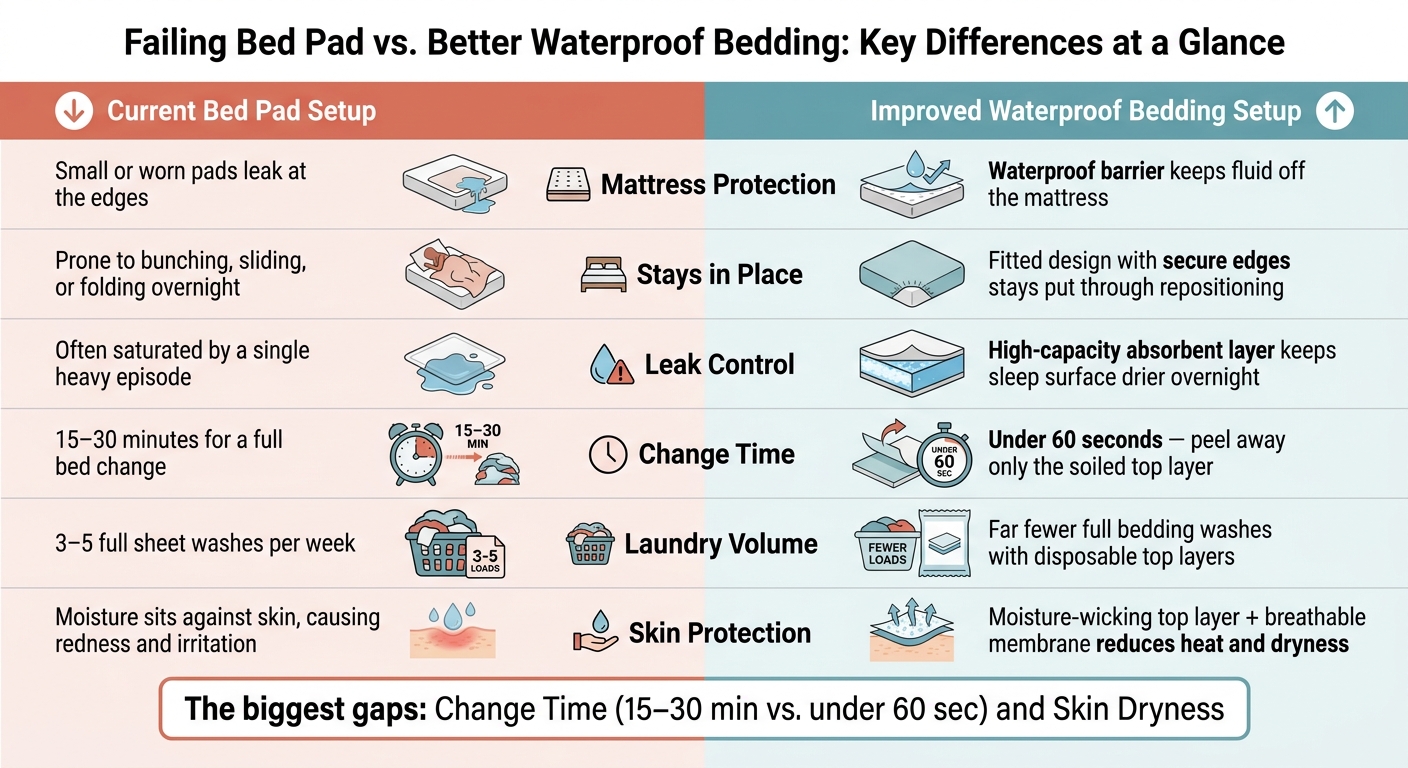
Failing Bed Pad vs. Better Waterproof Bedding: Key Differences at a Glance
It’s 2am. The pad shifted, the sheet is wet, and now you’re doing that tired math in your head: strip the bed, calm your loved one down, start laundry, try not to cry. If that’s been your night more than once, this is where the difference starts to show.
If those warning signs feel familiar, this comparison helps you see what actually changes day to day. A failing pad doesn’t just cause a leak. It turns one accident into more mess, more washing, and more stress than most families expect.
| Feature | Current Bed Pad Setup | Improved Waterproof Bedding Setup |
|---|---|---|
| Mattress Protection | Small or worn pads can leak at the edges | A waterproof barrier keeps fluid off the mattress |
| Stays in Place | Prone to bunching, sliding, or folding overnight | A fitted design with secure edges stays in place through turning and repositioning |
| Leak Control | Often saturated by a single heavy episode | A high-capacity absorbent layer keeps the sleep surface drier overnight |
| Change Time | Usually turns into a full bed change | Many incidents are handled by removing only the soiled top layer |
| Laundry Volume | Frequent leaks can mean 3 to 5 sheet washes a week | Far fewer full bedding washes |
| Skin Protection | Moisture sits against the skin, leading to recurring redness and irritation | A moisture-wicking top layer pulls fluid away from skin, and a breathable membrane reduces heat buildup |
The biggest gap shows up in two places: change time and skin dryness.
Most people feel the time problem first. A full nighttime bed change can eat up 15 to 30 minutes. That’s not just work. That’s 15 to 30 minutes while your loved one is cold, tired, and embarrassed, and you’re lifting corners, changing sheets, and trying to get everyone settled again. With a fitted waterproof base and a peel-away top layer, many of those same moments can be handled by removing the soiled layer in under 60 seconds.
Laundry is the next gut punch. Frequent leaks can mean 3 to 5 sheet washes a week, and each load can take about 90 minutes. That adds up fast. More time. More detergent. More wear on bedding. When disposable top layers catch the mess before it reaches the fitted base, most incidents stop there. You’re not washing the whole bed nearly as often.
Then there’s the part people don’t talk about enough: skin. When moisture stays against the body, it can wear down the skin barrier and lead to redness, irritation, and maceration. A setup that pulls moisture away and lets you change the surface fast can help keep skin drier for longer.
That’s the lens to use when you compare bedding setups. Not just whether a pad can absorb fluid for a moment, but whether the whole bed stays dry, stays put, and gives you a way out that doesn’t turn into a 20-minute ordeal.
Conclusion
It’s the middle of the night. The bed is wet again, the pad has bunched up, and now you’re stripping sheets when you barely have the energy to stand. That kind of exhaustion adds up fast.
If leaks are reaching the mattress, the pad keeps sliding out of place, full sheet changes are happening over and over each week, skin irritation keeps coming back, or the whole routine is wearing you down, your current setup isn’t doing its job. At that point, the issue isn’t just the accident. It’s the bedding system.
You need something that protects the bed and makes care easier. A fitted, waterproof, peel-away system can speed up nighttime changes and help keep the bed drier. The right bedding should guard the mattress, cut cleanup, and make the night feel a little less hard.
Comments
0



SAVE MONEY & WATER
Professionals & Institutions save a fortune on labor/laundry.

SUPERIOR COMFORT
The first thing our customers notice is how soft our sheets are.

100% WATERPROOF
Each layer is 100% Waterproof, perfect for spills and accidents

SAVE TIME
Change the sheet in under 1 minute without stripping the bed.

Leave a comment