
Preventing Bed Sores with Positioning Cushions

Pressure ulcers, or bed sores, can develop quickly, especially in older adults with fragile skin. Using positioning cushions effectively helps redistribute pressure, reducing the risk of tissue damage. Foam, gel, and air cushions, along with heel protectors, are key tools for protecting high-risk areas like the tailbone and heels. Proper repositioning every 2 hours and regular cushion maintenance are equally important for preventing these injuries. Learn how to choose, position, and care for cushions to safeguard skin health.
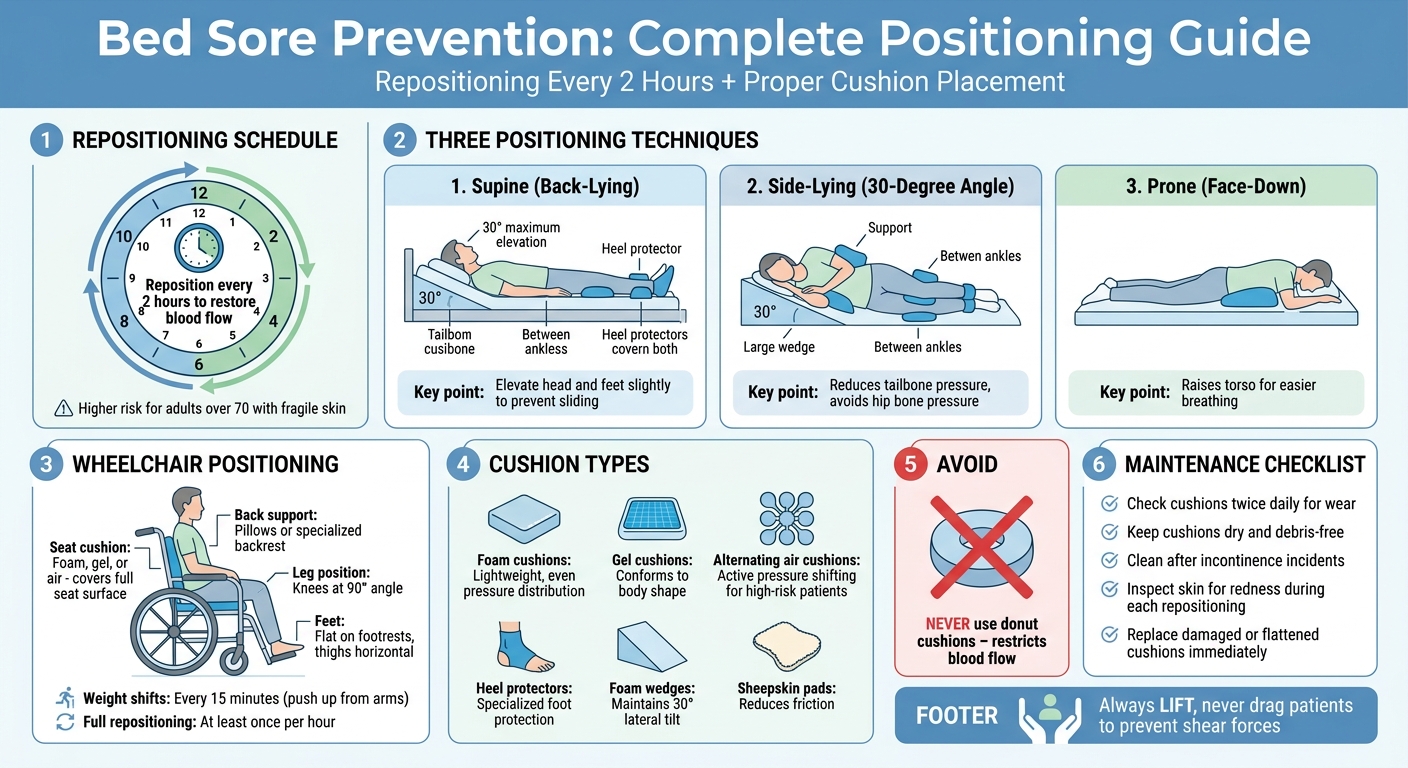
Bed Sore Prevention: 2-Hour Repositioning Schedule and Positioning Guide
Proper Positioning to Prevent Pressure Injuries | Caregiver's Guide
sbb-itb-45288fe
Choosing the Right Positioning Cushions
When selecting a positioning cushion, it's essential to consider the patient's mobility and the specific areas of the body that need protection. Below, we break down the common cushion types and key factors to guide your decision.
Types of Positioning Cushions
- Foam cushions: Lightweight and easy to position, these cushions help distribute pressure evenly across bony areas like the heels and sacrum.
- Gel cushions: These conform to the body's shape, redistributing weight and reducing pressure in high-risk areas during extended sitting or bedrest.
- Alternating air cushions: Designed for patients at high risk of pressure injuries, these cushions actively shift pressure points through adjustable settings, preventing tissue damage in immobile individuals.
- Heel protectors and elevators: These are specialized for protecting sensitive areas like the feet, minimizing the risk of pressure ulcers.
- Foam wedges and lateral support pillows: Ideal for maintaining proper body alignment, such as the 30-degree lateral tilt that alleviates pressure on the spine and hips.
- Sheepskin pads: Effective for reducing friction and skin irritation, these are especially useful for patients who frequently shift positions.
Each cushion type is tailored for specific needs, so choosing the right one is crucial for addressing the patient's risk factors and comfort.
What to Consider When Selecting a Cushion
The choice of cushion should go beyond its type, focusing on the patient's unique requirements. For individuals with no mobility, alternating air cushions are often the best choice. Those capable of small weight shifts may benefit from foam or gel cushions. Older patients, particularly those over 70, face a higher risk of pressure injuries due to fragile skin.
Key areas like the sacrum, hips, heels, and shoulder blades require extra attention. Additionally, health conditions such as incontinence care tasks, diabetes, vascular disease, and poor nutrition can increase the likelihood of skin breakdown, regardless of the cushion used.
Avoid donut-shaped cushions. While they may seem helpful, they can restrict blood flow to the skin in the center, worsening pressure injuries or creating new ones. Instead, opt for well-fitted heel protectors, wedges, or lateral support pillows that distribute pressure evenly without causing constriction. If available, pressure mapping technology can be a valuable tool, offering visual feedback on high-pressure zones to ensure the cushion is performing as intended.
How to Position Cushions Correctly
Once you've picked the right cushion, proper placement becomes key to ensuring effective pressure relief. Correct positioning helps redistribute weight evenly, maintain blood flow, and protect areas prone to pressure injuries. The approach varies depending on whether the patient is lying on their back, side, or stomach. Each position demands specific techniques to safeguard sensitive areas like the heels, hips, and tailbone while keeping the patient comfortable and secure.
Lying on the Back (Supine Position)
For patients lying on their back, keep the head of the bed elevated to no more than 30 degrees unless a medical condition or eating requires otherwise. This helps reduce sliding and the risk of shear forces. Place cushions or pillows between the ankles and knees, and use foam pads or heel protectors to relieve pressure on the heels and tailbone - two areas highly susceptible to pressure injuries . Slightly elevating both the head and feet can further prevent sliding down the bed.
Additionally, keep the patient's elbows slightly bent for comfort and to minimize strain. Ensure the moisture-wicking sheets are smooth, clean, and free of debris that could irritate the skin. It's important to note that pressure injuries often develop beneath the skin's surface before becoming visible.
Lying on the Side (Side-Lying Position)
The 30-degree side-lying position is widely recommended for reducing pressure on the tailbone while avoiding direct pressure on the hip bone. UMass Memorial Health provides this guidance:
When lying on your side, put pillows behind your back so that you are lying at about a 30-degree angle. Also put pillows between your legs, and between your ankles.
To maintain this position, place cushions securely behind the patient's back to prevent rolling. Add pillows between the knees and ankles to stop bones from pressing against each other and creating pressure points. Support the arms with additional pillows to enhance comfort and stability. Always lift the patient rather than dragging them to avoid causing friction or shear that can harm the skin. After positioning, check that all pressure-prone areas are adequately offloaded.
Lying Face Down (Prone Position)
For patients in the prone position, a cushion or wedge should be placed under the chest and upper abdomen to slightly raise the torso, making breathing more comfortable. As with other positions, always lift the patient during repositioning to prevent shear forces. Although this position is less commonly used compared to back or side-lying, proper cushion support is still essential for redistributing pressure and protecting vulnerable areas like bony prominences.
Using Positioning Cushions in Wheelchairs
Just like with bed-bound patients, proper cushion placement in wheelchairs is essential for maintaining circulation and preventing tissue damage. Wheelchair users often face constant pressure on areas like the tailbone, sitting bones, and shoulder blades. By redistributing pressure across a larger surface area, cushions can help maintain spinal alignment and reduce the risk of sliding, which can lead to harmful shear forces. To protect the skin and promote circulation, it’s important to pair a pressure-relieving seat cushion with a supportive backrest while ensuring proper leg positioning. For those managing multiple conditions, keeping beds dry is equally vital for skin integrity.
Placing Back and Seat Cushions
To start, choose a pressure-relieving seat cushion made from materials like foam, gel, or air. These cushions are designed to distribute weight evenly and protect sensitive areas like the buttocks and sitting bones. Place the cushion so it fully covers the seat surface and has a contoured base to stabilize the pelvis and spread pressure across a wider area.
For spine and shoulder support, use pillows or specialized backrests. Brenlee Mogul-Rotman, National Clinical Education Manager, emphasizes:
Pressure cannot be eliminated in seating, so instead, we must focus on the redistribution of pressure.
Avoid using doughnut-shaped cushions, as they can restrict blood flow to the skin and surrounding tissues.
To maintain circulation and reduce pressure buildup, perform small weight shifts every 15 minutes by pushing up from the wheelchair arms. For those with limited mobility, a full repositioning should occur at least once an hour.
Next, ensure the proper positioning of legs and feet to enhance overall pressure relief.
Supporting Legs and Feet
Keep feet securely on footrests with knees bent at a 90° angle. UMass Memorial Health advises:
Keep your feet on a footrest, so your thighs are horizontal. This keeps your buttocks from sliding forward.
Maintaining horizontal thigh alignment prevents sacral sitting, where sliding can lead to friction and shear forces that harm the skin.
Pad footrests to protect the feet and ankles, and ensure legs are not left dangling, which can disrupt circulation and increase pressure under the thighs. If knees tend to collapse inward, use a cushion with a medial abductor to support proper hip and leg alignment. For those who slide forward frequently, an anti-thrust cushion with a built-in barrier can help keep the pelvis in place and thighs properly supported.
Regularly inspect areas like ankles and heels for redness, and adjust the footrest height to ensure even weight distribution. Check bony areas - such as the tailbone, sitting bones, and shoulder blades - twice daily for any redness that doesn’t fade within a few minutes.
Creating a Repositioning Schedule and Caring for Cushions
No cushion can fully prevent bed sores without regular repositioning and proper upkeep. Together, scheduled position changes and cushion maintenance help protect skin health. Repositioning encourages blood flow to areas under pressure, while clean, well-kept cushions provide consistent support. Adding protective bedding to the mix creates a more effective system for reducing the risk of skin breakdown and easing caregiver responsibilities.
Setting Up a Repositioning Schedule
For patients confined to bed, it’s important to change their position at least every 2 hours. This schedule helps restore blood flow to the skin and underlying tissues, preventing damage that can develop quickly - even in healthy individuals. UMass Memorial Health highlights the importance of this practice:
Changing positions allows blood to get to your skin and keep the tissue healthy.
Older adults, especially those over 70, face a higher risk due to the increased fragility of aging skin. When repositioning, place pillows between the ankles and knees when the patient is lying on their side. This reduces friction and prevents bony areas from rubbing together.
During each position change, take a moment to check the skin for early signs of pressure injuries. The Veterans Health Library offers this advice:
Catch problems early, stay off the area, and call your health care team immediately.
Of course, repositioning works best when paired with well-maintained cushions.
Cleaning and Maintaining Cushions
To keep cushions effective, ensure they’re dry, smooth, and free of debris. Bodily fluids can weaken the skin and damage the cushion’s integrity, so clean the skin and replace cushion covers promptly after any incontinence incidents. Using moisture barriers or protective creams can also help prevent fluids from soaking into the cushions.
Inspect cushions twice a day for signs of wear or deformation. Any damage - such as flattening or uneven surfaces - can reduce their ability to distribute pressure, signaling the need for a replacement. Lightweight sheets placed over cushions can further minimize friction and pressure, but make sure they remain smooth and wrinkle-free.
For extra protection and easier care, using PeelAways sheets can be a game-changer.
Using PeelAways Sheets for Extra Protection

PeelAways multi-layer disposable sheets offer a simple and effective way to protect mattresses and cushions from moisture and damage. These sheets are 100% waterproof, making them ideal for incontinence care. Each sheet contains 5 to 7 layers, and when the top layer gets soiled, you can peel it off in less than a minute to reveal a clean surface - no need to lift heavy mattresses or deal with extensive laundry.
You can align the peeling of a layer with your 2-hour repositioning schedule to minimize disruptions. The Twin XL size fits hospital beds perfectly and costs $41.99 for a set of 7 layers.
Made from a soft bamboo blend, the sheets are smooth and breathable, helping to reduce friction and shearing that can occur when patients move against damp or wrinkled bedding. The 360° elastic edges ensure the sheets stay secure and wrinkle-free, maintaining the clean, dry surface that’s vital for skin health.
FAQs
How do I know which cushion type is best for my loved one?
The right cushion for your loved one depends on their specific needs, risk factors, and comfort preferences. Here are a few options to consider:
- Foam cushions: A budget-friendly choice, suitable for those with a low to moderate risk of developing bedsores.
- Gel cushions: Great for cooling and evenly distributing weight, offering additional comfort.
- Air cushions: Designed for individuals at higher risk, providing advanced pressure relief.
- Low Air Loss systems: Useful for managing moisture and heat, especially for those with sensitive skin.
For the best results, consult a healthcare professional to find the most suitable option.
What are early warning signs of a pressure ulcer I should watch for?
Pressure ulcers can start with subtle signs, so it’s important to catch them early. Look for areas of skin that are reddened, discolored, or darker than usual and don’t return to their normal color after 10–30 minutes of relieving pressure. The skin might also feel warm, firm, or spongy to the touch. Additionally, these spots could be painful or itchy. Paying attention to these early indicators can help you take quick action and stop the condition from progressing.
How can I reposition someone safely without causing skin shear?
To reposition someone safely and protect their skin from shear, move them slowly and carefully, ensuring their skin remains supported at all times. Avoid dragging or pulling, as this can cause damage. Instead, use small, controlled lifting or turning motions. Use your hands or positioning aids to support their body, paying special attention to reducing pressure on bony areas. Regularly inspect these areas to ensure pressure is relieved and the skin stays healthy.
Comments
0



SAVE MONEY & WATER
Professionals & Institutions save a fortune on labor/laundry.

SUPERIOR COMFORT
The first thing our customers notice is how soft our sheets are.

100% WATERPROOF
Each layer is 100% Waterproof, perfect for spills and accidents

SAVE TIME
Change the sheet in under 1 minute without stripping the bed.

Leave a comment