
How Pressure Relief Pads Help Prevent Bed Sores

Pressure relief pads are a key tool in preventing bed sores, which result from prolonged pressure on the skin, often in people with limited mobility. These sores, also called pressure ulcers, can develop in as little as two hours and may lead to severe health complications if untreated. Here's how pressure relief pads work and why they matter:
- Redistribute Weight: These pads spread body weight evenly to reduce pressure on high-risk areas like the heels, hips, and tailbone.
- Improve Blood Flow: By minimizing pressure, they help maintain healthy blood circulation, preventing tissue damage.
- Control Moisture and Temperature: Advanced materials keep the skin dry and cool, reducing risks from sweat or incontinence care needs.
- Support Healing: They complement other care measures like repositioning, skin checks, and hygiene practices.
While pressure relief pads are effective, they work best when combined with regular repositioning, proper skin care, and clean bedding. Products like PeelAways disposable bed sheets simplify hygiene and reduce caregiver strain, making them a practical addition to care routines. Bed sores affect over 2.5 million people in the U.S. annually, and prevention is far easier than treatment.
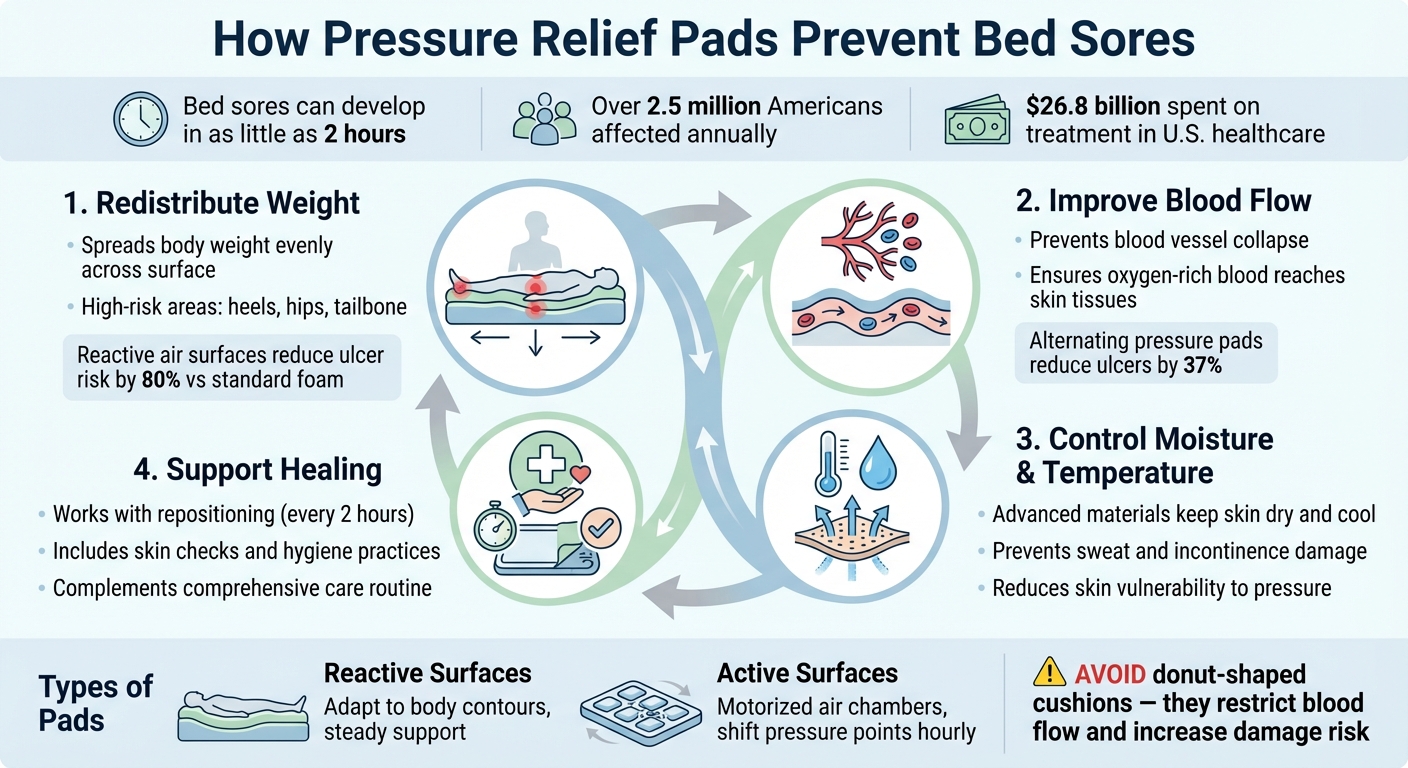
How Pressure Relief Pads Prevent Bed Sores: 4 Key Mechanisms
How Pressure Relief Pads Work
Pressure Redistribution
Pressure relief pads function by evenly spreading body weight across a larger surface area, which helps reduce pressure on sensitive areas like the heels, tailbone, and hips [10-12]. Think of it like walking on soft sand - the surface adjusts to your body, distributing weight more evenly.
These pads are generally categorized into two types. Reactive surfaces adapt to the body’s contours, providing steady support and minimizing stress on the skin [11,12]. On the other hand, active (alternating) surfaces feature motorized air chambers that inflate and deflate in cycles. This process shifts pressure points multiple times an hour, ensuring no single area remains compressed for too long [10,11]. Studies suggest that reactive air surfaces can lower the risk of developing new ulcers by as much as 80% compared to standard foam [6].
Avoid donut-shaped or ring cushions - while they might seem helpful, they actually restrict blood flow to the center area, increasing the risk of tissue damage [1,3-5].
This even distribution of weight also plays a key role in promoting healthy blood flow, as discussed next.
Better Blood Circulation
By easing localized pressure, these pads help prevent small blood vessels from collapsing, which ensures oxygen-rich blood can reach the skin and underlying tissues [1,3,4]. This steady blood flow is vital for delivering nutrients and oxygen to skin cells.
Active alternating pressure pads are particularly effective at shifting pressure points to maintain consistent circulation [6]. However, even with high-quality pads, caregivers should stay alert for signs of poor circulation. Watch for skin that appears red, purple, or blue, or areas that feel unusually cold, hot, hard, or "boggy" [7].
Alongside improving circulation, these pads also manage the skin’s microenvironment, as detailed below.
Moisture and Temperature Control
For older adults, keeping the skin’s microclimate balanced with cooling bedding for seniors is just as important as redistributing pressure and improving circulation. Advanced pressure relief pads are designed to keep the skin dry and regulate temperature. This prevents moisture buildup from sweat or incontinence, which can weaken the skin and make it more prone to damage from pressure and friction [5,10,12]. Moisture from sweat, urine, or stool can soften the skin, leaving it vulnerable to injury [3].
Specialized materials like medical-grade foam and air-filled cells help prevent heat buildup, a common issue with standard mattresses [4,13]. Options like static air mattresses, alternating pressure air mattresses, and gel pads outperform standard foam mattresses by managing temperature and reducing trapped moisture [6]. Additionally, caregivers should ensure the skin stays clean and dry, change and wash bedsheets regularly, and use moisture barrier creams to protect areas at risk [3].
sbb-itb-45288fe
Preventing and Treating Bed Sores - Alternating Pressure Pad
Choosing the Right Pressure Relief Pad
Building on how pressure relief pads work, picking the right one is key for both preventing pressure injuries and ensuring comfort.
Material and Comfort
The material used in a pressure relief pad significantly impacts comfort and skin health. Common choices include high-performance foam, air-filled cells, gel-filled compartments, and air-fluidized beads [8][5]. Each type offers unique benefits - foam conforms to the body, while air and gel provide dynamic support [9].
Breathable materials are especially important, as they help prevent heat and moisture buildup, which can compromise skin integrity. Some advanced options, like "low air loss" mattresses, allow air to flow through a vapor-permeable layer, actively reducing moisture and heat. This feature is particularly helpful for seniors dealing with incontinence or sweating [8].
"High‐specification foam mattresses are more beneficial than regular foam mattresses for individuals at risk of pressure injuries." – American Academy of Family Physicians [5]
Smooth, low-friction covers are another important feature to minimize rubbing and sliding, which can damage fragile skin. Medical-grade materials are especially beneficial for elderly individuals prone to pressure sores. A 2019 study of over 38,000 support surfaces found that more than half of the mattresses in nursing homes and acute care facilities were in poor condition due to thinning, compression, or damage [9]. This highlights the importance of maintaining the quality and integrity of the materials.
Ultimately, the material you choose not only affects comfort but also determines how well the pad supports individual needs based on their risk level.
Support Level and Risk Assessment
Matching the pad's support level to the patient’s risk profile is just as important as material quality. Clinicians often use tools like the Braden or Norton Scales to evaluate risk before recommending a surface [5].
For individuals at low to medium risk who can still shift positions, reactive (static) surfaces - such as foam, gel, or static air - are effective. These surfaces work by redistributing pressure as the body sinks into the material.
Patients at higher risk or those unable to reposition themselves may need active (alternating) surfaces [8]. These powered mattresses inflate and deflate air cells in cycles, relieving pressure from specific areas. Research suggests that alternating pressure air surfaces can lower the risk of pressure ulcers by about 37% compared to foam [6].
"Compared with foam mattresses, alternating pressure air surfaces probably result in health benefits that outweigh their costs in preventing pressure ulcers." – Cochrane Review [6]
Patient weight and size also play a role. Lightweight individuals may not sink deeply enough into reactive surfaces for proper pressure redistribution, while heavier patients may require bariatric-specific pads to avoid "bottoming out", where the body sinks through to the bed frame [8]. Always check that the pad’s weight capacity matches the user’s needs.
Ease of Use and Maintenance
Ease of maintenance is crucial for ensuring the pad performs consistently over time. Look for designs with waterproof, multi-layer covers that are easy to clean and replace [4][3]. This is especially important for caregivers who may need to change linens frequently - sometimes every 15 minutes to 2 hours [2][4][3].
Hygiene is another critical factor. Some specialized surfaces require off-site maintenance, which can disrupt care routines [8]. For a more practical option, PeelAways disposable bed sheets provide a hygienic solution without the hassle of frequent laundry. These sheets feature 5 to 7 peel-away layers, allowing caregivers to quickly remove a soiled layer and reveal a clean one underneath, reducing cross-contamination risks and physical strain.
If you’re considering powered active surfaces, keep in mind that pump noise can disrupt sleep [8]. Additionally, overlays placed on top of existing mattresses may increase bed height, which can make transfers more difficult or interfere with bed rails [8]. Choose designs that balance functionality with day-to-day usability to ensure both comfort and practicality.
Combining Pressure Relief Pads with Other Care Measures
Pressure relief pads work best when paired with regular repositioning, attentive skin care, and hygienic bedding. Together, these measures can better safeguard vulnerable skin and enhance the effectiveness of pressure relief pads.
Repositioning and Movement
Even with advanced pressure relief pads, regular repositioning is essential. In the U.S., over 3 million pressure injuries are treated annually, costing the healthcare system around $26.8 billion [5]. While pads help distribute weight, repositioning is the only way to fully relieve pressure on bony areas like the sacrum and heels, ensuring tissues receive adequate blood flow and oxygen.
"Repositioning should generally occur every 2 hours for individuals confined to bed, based on established guidelines aimed at relieving pressure on vulnerable skin areas." – Breeze Hospice Services [10]
For wheelchair users, small weight shifts every 15 minutes help maintain circulation [10][2]. In bed, the 30-degree rule is a helpful guide: position the body at a 30-degree angle to the mattress using pillows, and avoid raising the head of the bed more than 30 degrees to prevent sliding and shear [10][4]. To protect against heel ulcers, place a pillow under the calves to keep the heels off the surface entirely [5].
Skin Care and Hygiene
Healthy skin care practices go hand in hand with pressure relief. Clean, dry skin and routine checks strengthen the protection offered by pads. Between 4 and 10 out of every 100 hospital patients develop pressure ulcers [11], often due to moisture from sweat, urine, or stool, which weakens the skin and increases the risk of breakdown.
"Your skin provides a barrier to protect you from many things including harmful substances, bacteria and infection. It is important your skin is well cared for." – North Tees and Hartlepool NHS Foundation Trust [11]
Use soap alternatives like Aqueous Cream or Emulsifying Ointment instead of perfumed soaps, which can disrupt the skin's natural pH [11]. Gently pat the skin dry - don’t rub or scrub [11][1]. Barrier creams are especially useful for protecting skin exposed to moisture, particularly in incontinent patients [11][2]. Damp or soiled linens and clothing should be changed immediately [4][3], and daily head-to-toe skin checks should focus on bony areas like the sacrum, hips, and heels [1][4].
Using PeelAways for Better Hygiene

Hygienic bedding solutions, such as PeelAways, can further support skin health. Frequent linen changes can be physically taxing for caregivers and disruptive for patients. An estimated 2.5 million Americans develop bedsores annually, with moisture being a key contributor [3].
PeelAways disposable bed sheets simplify linen changes with their multi-layer design. Each sheet includes 5 to 7 soft, absorbent layers, depending on the size. When a layer becomes soiled, caregivers can peel it away to reveal a clean sheet underneath - no need for mattress lifting, laundry, or risk of cross-contamination. This reduces caregiver strain and avoids unnecessary repositioning that could cause friction or shear [11][12].
These sheets are 100% waterproof and breathable, creating a clean, dry environment essential for maintaining skin health [3][12]. They pair seamlessly with pressure relief pads, ensuring the surface stays smooth and wrinkle-free, which is vital since bunching can lead to localized pressure points [12]. PeelAways are available in sizes ranging from Crib to King, fitting standard mattresses and pressure relief surfaces, making them a practical addition to any routine aimed at preventing bedsores.
Conclusion
Pressure relief pads play a critical role in protecting the skin of seniors and bedridden individuals. By redistributing body weight away from pressure points like the heels, hips, and tailbone, these pads help maintain proper blood flow and reduce the risk of tissue damage that leads to ulcers. Considering that about 2.5 million Americans develop pressure ulcers each year [3][13], and that tissue damage can start within just two to three hours [13], these pads are more than a comfort item - they're a vital tool in preventing serious health complications.
However, the pads work best when paired with a comprehensive care routine. This includes repositioning every 1–2 hours, daily skin checks, proper nutrition, and maintaining hygiene. Products like PeelAways disposable bed sheets can make care easier by reducing the effort required for frequent linen changes while ensuring a clean, dry surface that supports skin health. Combining portable pressure relief pads with PeelAways sheets provides a practical and hygienic solution for elder care.
When selecting a pad, whether it’s foam, gel, or air-based, it’s essential to consider the person’s mobility and risk level. Steer clear of donut-shaped cushions, and keep the head of the bed at or below 30° to reduce the risk of shear forces [1][2][3][12][13]. With the U.S. healthcare system spending $26.8 billion annually on treating pressure injuries acquired in hospitals [5], investing in prevention through proper equipment and care not only saves money but also improves patient outcomes.
FAQs
How do I know if someone needs an alternating pad or a static pad?
Choosing the right type of pad - alternating or static - depends largely on a person’s risk level for pressure ulcers and their specific medical requirements. Alternating pads work by inflating and deflating in cycles, which helps redistribute pressure. These are a good choice for individuals at higher risk of developing ulcers or those already dealing with them. On the other hand, static pads offer consistent support by molding to the body’s shape, making them more appropriate for those at lower risk or simply in need of added comfort. It's always best to consult a healthcare provider to figure out which option suits your needs.
What are the first early signs of a bedsore to look for?
Bedsores often start subtly, but catching them early can make a big difference. Look for changes in skin color or texture, swelling, or areas that feel unusually warm or cool to the touch. Tenderness or soreness in these spots is another red flag.
These symptoms are most common over bony areas such as the hips, tailbone, heels, or shoulders. Keeping a close eye on these areas, especially for individuals with limited mobility, is key to addressing bedsores before they worsen.
Can I use PeelAways with a pressure relief pad or mattress?
PeelAways work well with pressure relief pads and mattresses. They assist in preventing bed sores by keeping moisture under control, reducing friction, and shielding the skin. Their design integrates easily with different support surfaces, making them a convenient option for elder care and added comfort.
Comments
0



SAVE MONEY & WATER
Professionals & Institutions save a fortune on labor/laundry.

SUPERIOR COMFORT
The first thing our customers notice is how soft our sheets are.

100% WATERPROOF
Each layer is 100% Waterproof, perfect for spills and accidents

SAVE TIME
Change the sheet in under 1 minute without stripping the bed.

Leave a comment