
Potty Training Regression: Why It Happens and How to Handle Nighttime Accidents

Potty training regression is common and temporary. It often involves nighttime accidents, even after weeks of staying dry. Causes range from stress or routine changes to medical issues like constipation or UTIs. With patience, consistent routines, and tools like disposable vs. traditional waterproof sheets, most regressions resolve within two weeks. Here's how to support your child effectively while minimizing disruptions.
Part 4 - Trouble-shooting, regression and night-time dryness
sbb-itb-45288fe
Why Nighttime Accidents Happen During Potty Training Regression
Nighttime accidents during potty training regression often boil down to three main causes: medical issues, emotional stress, or developmental challenges. Pinpointing the specific cause can help you tackle the problem at its source instead of just dealing with the symptoms. Let’s explore these common factors behind nighttime accidents.
Medical Issues That May Cause Accidents
Physical health problems are a frequent culprit behind nighttime accidents. One of the most common medical causes is constipation. When stool hardens in the colon, it can put pressure on the bladder, making it harder for your child to control urges. Constipation is often indicated by fewer than two bowel movements per week.
Urinary tract infections (UTIs) are another potential cause. These often lead to a sudden loss of bladder control. Be on the lookout for additional symptoms like fever, irritability, stomach pain, vomiting, or a loss of appetite. Potty training consultant Allison Jandu explains:
"Constipation, stomach viruses, or UTIs can lead to an increase in accidents, so a quick call to the pediatrician could be in order".
Before assuming the cause is behavioral, rule out medical issues first. You can help by adjusting your child’s diet - offer more water, include fiber-rich foods, and limit milk intake to 16–24 ounces daily. If the accidents continue or other symptoms appear, consult your pediatrician for guidance.
Stress and Changes in Daily Life
Emotional stress is another common factor that can lead to potty training regression. Stressful changes, even positive ones, can make it harder for children to recognize their body’s signals. Dr. Schwartz highlights:
"Anything that's new or perceived to be new, or different or stressful for a child can invoke a regression. When they're dealing with other things, it's easy to lose track".
Big life changes like welcoming a new sibling, moving to a new home, starting daycare, or parental separation can all contribute. Sometimes, children regress as a way to seek comfort and attention. As Allison Jandu puts it:
"Falling into a potty training regression is a child's way of saying, 'Help me. I'm feeling out of sorts, and I need extra love and attention from you right now'".
Sleep deprivation can make things worse, too. When children don’t get enough rest, their ability to manage bladder control weakens because the brain’s problem-solving functions are affected. Addressing these stressors is key. Pay attention to any recent changes in your child’s routine and carve out time each day to focus on them without distractions. This can help fill their "attention tank" and reduce stress-related accidents.
Developmental Stages and Bedtime Routines
Finally, a child’s developmental readiness and the stability of their bedtime routine are crucial factors. Predictability and routine provide children with a sense of security. When routines are disrupted, kids may feel unsettled and revert to earlier behaviors for comfort. If they’re busy mastering other milestones, like new motor or language skills, they might temporarily lose focus on potty training.
Some children may seem fully potty trained but aren’t yet ready to maintain that consistency long-term. The initial excitement of using the potty can wear off, revealing gaps in their readiness. As Allison Jandu notes:
"Kids are creatures of habit, and they thrive on routines and predictability. So regressions are usually observed when kids are feeling stress as a result of some sort of disruption to their regular routine".
To support your child, maintain consistency. Avoid going back to diapers, as this can shake their confidence. Stick to a steady bedtime routine and bring back positive reinforcement methods like sticker charts or gentle reminders to help rebuild their confidence and encourage progress. You might also consider Montessori potty training techniques to foster independence during this transition.
How to Handle Potty Training Regression
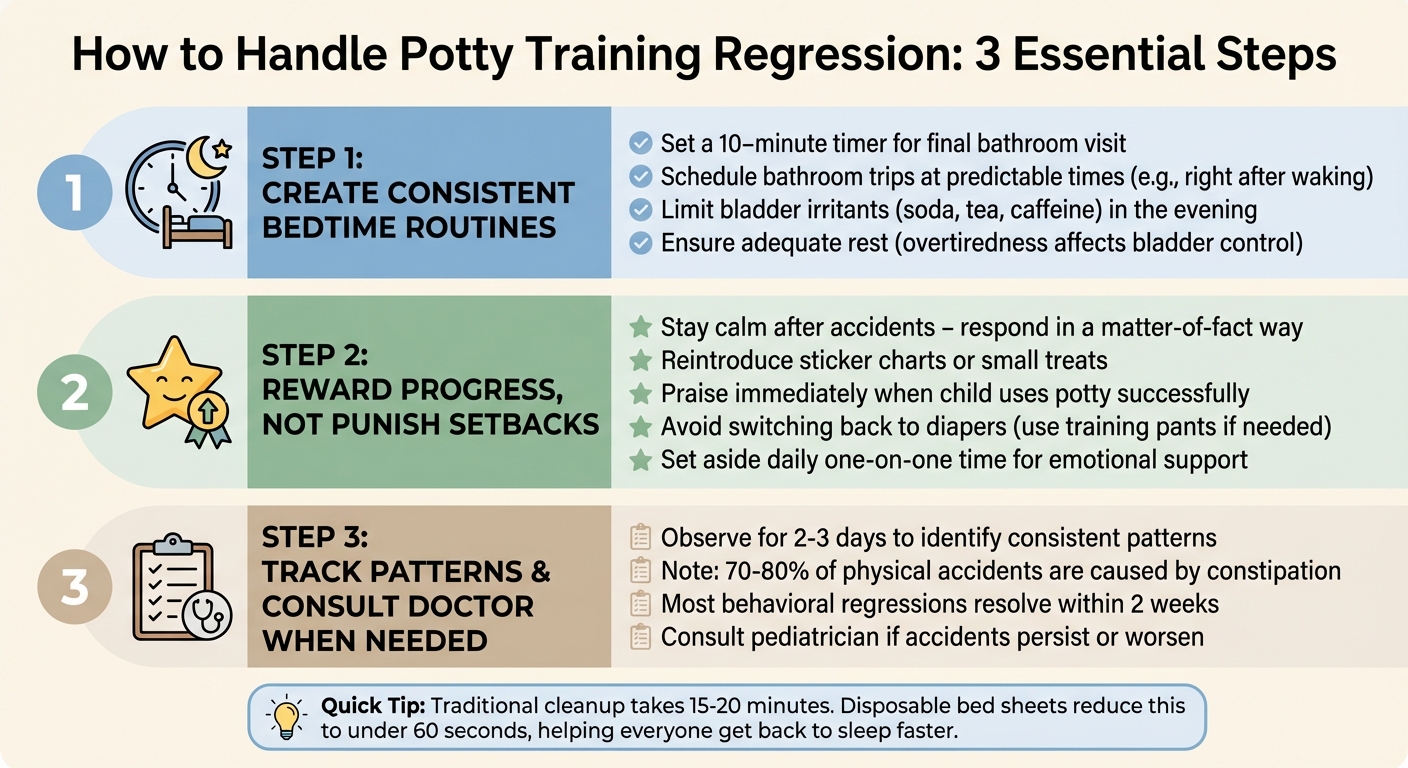
How to Handle Potty Training Regression: A Step-by-Step Guide
Dealing with potty training regression requires patience, consistency, and a focus on positive reinforcement. The aim is to reduce nighttime accidents while giving your child the emotional support they need during this temporary phase. By sticking to routines, celebrating progress, and identifying patterns, you can help your child regain confidence and get back on track. Here’s a breakdown of practical steps to guide you through this process.
Create Consistent Bedtime Routines
A steady bedtime routine that includes a bathroom visit can help minimize nighttime accidents. Make the final potty trip the last step before bed to create a rhythm your child can rely on.
To keep things moving, set a 10-minute timer for the final bathroom visit. If your child doesn’t go within that time, proceed with the bedtime routine, ensuring they’ve had a chance without turning it into a delay tactic.
Pay attention to your child’s natural schedule. Encourage bathroom visits at predictable times, like right after waking up, to strengthen their routine and avoid sleep interruptions.
It’s also important to limit bladder irritants in the evening. Avoid drinks like soda, tea, or anything with caffeine, as these can increase urine production. Additionally, make sure your child gets enough rest - overtiredness can make it harder for their brain to manage potty training effectively.
While structure is essential, positive reinforcement can make all the difference.
Reward Progress Instead of Punishing Setbacks
Building confidence through positive reinforcement can ease your child’s anxiety, which often worsens regressions. Stay calm after accidents and focus on encouraging good habits. Potty training consultant Allison Jandu advises:
"Respond to all accidents in the same calm, matter-of-fact way, encouraging them to try again next time. Scolding or shaming will only do more harm than good".
Reintroduce rewards that worked during initial training, like sticker charts or small treats, to make the process fun again. Praise your child immediately when you notice them practicing good potty habits to reinforce their progress.
Avoid switching back to diapers, as this could confuse your child and lower their confidence. If accidents are frequent, training pants can serve as a middle ground - they provide some protection while keeping the potty routine intact. This approach not only helps your child feel more secure but also reduces stress for caregivers.
Dr. Noah Schwartz suggests offering emotional support with gentle reassurance:
"You can say things like, 'I know that something has changed, and you're feeling uncomfortable, but we're here for you.' Keep the pressure to a minimum, but make the potty accessible, and give plenty of gentle reminders".
Set aside time daily to connect with your child. Feeling supported can prevent them from using accidents as a way to seek attention.
Tracking patterns is another key step in addressing regression effectively.
Track Patterns and Consult Your Doctor When Needed
Spend a few days observing your child’s behavior. Dr. Schwartz explains:
"Wait a couple of days, and see if they're having accidents consistently. If they're having accidents multiple times a day, or it's only happening at school, or there's a clear pattern developing showing that accidents are becoming more consistent, that may be when we're talking about a regression".
Look out for additional symptoms and consult your pediatrician if needed. For example, constipation can put extra pressure on the bladder, and studies show that 70–80% of children experiencing accidents for physical reasons are constipated.
If accidents persist or worsen, it’s wise to check in with your doctor to rule out medical concerns. Most regressions tied to behavior resolve within two weeks. Tracking patterns will help you figure out whether your child is going through a normal developmental phase or if professional guidance is necessary.
Make Nighttime Cleanup Easier with PeelAways Disposable Bed Sheets

Dealing with nighttime accidents can feel like an uphill battle, but PeelAways disposable bed sheets are here to make life a whole lot easier. These sheets cut cleanup time from the usual 15–20 minutes down to just 60 seconds. Their waterproof, multi-layer design lets you simply peel away a soiled layer to reveal a fresh, clean sheet, saving you from late-night laundry marathons and reducing stress for everyone involved.
How PeelAways Work
PeelAways use a patented system featuring 5–7 stacked waterproof layers that fit snugly on your child’s mattress. When an accident occurs, you peel off the top layer to instantly reveal a dry, clean sheet underneath. Each layer is 100% waterproof, forming a barrier that keeps moisture, odors, and germs from seeping into lower layers or damaging the mattress. Made from a soft, breathable, and hypoallergenic blend, these sheets feel just as comfortable as traditional bedding. This smart design not only keeps your child cozy but also helps maintain a calm, stress-free environment during potty training regression.
Benefits for Families Managing Potty Training
PeelAways don’t just save time - they help with the emotional side of accidents too. As one customer, Ronda, shared:
"When he has an accident he now can take care of it himself and put a new top sheet on his bed. No more scrubbing, no more smell, and no more embarrassment".
For older children experiencing regression, this independence can be a game-changer. It allows them to handle accidents discreetly, preserving their confidence and dignity. Plus, the disposable layers prevent cross-contamination, ensuring a hygienic sleeping space without the hassle of lifting heavy mattresses or struggling with fitted sheets in the middle of the night. With over 12,000 satisfied customers and a 4.61/5 average rating, PeelAways have become a trusted solution for families looking to simplify their routines and get better sleep.
Time Savings: Traditional Bedding vs. PeelAways
The time-saving aspect of PeelAways is a huge advantage. Traditional bedding cleanup involves stripping the bed, running a load of laundry, drying, and remaking the bed - a process that can take 15–20 minutes and fully wake both you and your child. PeelAways, on the other hand, let you handle accidents in under 60 seconds. Just peel off the soiled layer, toss it in the trash, and you’re done. This quick fix minimizes disruptions, helping everyone get back to sleep faster - a critical factor since overtiredness can make potty training even harder. The time you save can instead be spent supporting your child emotionally as they navigate this challenging phase.
Supporting Your Child and Yourself Through Regression
Helping your child through regression means addressing their emotional needs while also taking care of your own well-being. Balancing both is key to maintaining the consistent routines mentioned earlier. By staying composed and interpreting setbacks as communication rather than failure, you create a supportive environment that helps your child rebuild their confidence.
Remember That Regression Is Normal
Potty training doesn't follow a straight trajectory. Accidents often signal that your child is feeling overwhelmed or in need of extra comfort. Whether triggered by a new sibling, a move, or another big change, these moments are a form of expression, not misbehavior. Understanding this can help you respond with kindness, easing your own stress and preventing your child from feeling ashamed.
Stay Calm and Patient
How you react to nighttime accidents can strongly influence your child's recovery from setbacks. Pediatrician Dr. Noah Schwartz emphasizes:
"The more anxiety that the parent has, the more that is going to transfer to the child, which certainly won't help the situation".
When accidents happen, pause, take a deep breath, and use calm, reassuring words like, "It's okay, we're here for you." This approach reduces anxiety for both of you. Instead of dwelling on accidents, focus on celebrating successful potty trips, offering small rewards, and setting aside a few minutes daily for undistracted time together. A smoother bedtime routine can also make a big difference, showing your child that restful sleep supports their progress.
How Better Sleep Helps the Whole Family
Nighttime accidents can disrupt sleep for everyone, and lack of rest can make potty training harder. PeelAways disposable bed sheets can simplify cleanup, cutting the process from 15–20 minutes to under a minute. This quick solution helps everyone return to bed sooner. A well-rested child is better equipped to manage emotions and succeed with potty training, while well-rested parents have the energy and patience to provide steady support.
Conclusion
Potty training regression is a common and temporary challenge. With patience, consistency, and the right tools, most setbacks resolve within about two weeks. Accidents are simply a sign that your child may need a little extra support during this phase.
By sticking to consistent potty training routines, seeking medical advice when necessary, staying calm, and using positive reinforcement, you can help your child regain their confidence. Adding practical solutions to your routine can also make nighttime disruptions easier to manage.
PeelAways multi-layer disposable sheets are a game-changer for nighttime accidents. Cleanup time drops from 15-20 minutes to under 60 seconds, ensuring everyone gets back to sleep quickly. You can learn more about these sheets here.
As a bonus, PeelAways is offering blog readers an exclusive 10% discount. Use the code BLOGS10 at checkout to save on your purchase. This discount works with subscriptions and bundle offers, so you can save even more while simplifying care.
You can purchase PeelAways directly on Amazon or from PeelAways.com.
With the right strategies and tools, you can support your child through this phase while keeping nighttime care as stress-free as possible.
FAQs
How can I tell if accidents are stress-related or a medical issue?
Stress can sometimes lead to accidents, especially when emotional changes or disruptions are involved. On the other hand, medical conditions like constipation or urinary tract infections might trigger physical symptoms like discomfort or frequent accidents. Paying attention to patterns can provide valuable clues, and consulting a healthcare professional is a smart step to pinpoint the cause. Offering emotional support and addressing any underlying medical issues are crucial ways to help your child navigate this challenging time.
When should I call the pediatrician about nighttime accidents?
If your child continues to have nighttime accidents, especially if they come with symptoms like pain or fever, or if you’re concerned about their health or development, it’s a good idea to reach out to the pediatrician. When in doubt, getting professional advice can provide clarity and peace of mind about any potential underlying issues.
How can I help my child stay confident after an accident?
To help your child regain confidence after an accident, it’s important to stay calm and provide reassurance. Instead of showing frustration, remind them that setbacks are completely normal when learning new skills. Acknowledge their efforts and offer plenty of emotional support to make them feel safe and encouraged. Simple, kind words and a patient approach can go a long way in keeping their confidence steady throughout the potty training journey.
Related Blog Posts
- Quick Guide: Managing Overnight Accidents in Children
- Ultimate Guide To Potty Training Routines
- How to Handle Nighttime Potty Training Regression
- Potty Training Accidents: How to Handle Them Without Stress [2026 Parent Guide]
Comments
0



SAVE MONEY & WATER
Professionals & Institutions save a fortune on labor/laundry.

SUPERIOR COMFORT
The first thing our customers notice is how soft our sheets are.

100% WATERPROOF
Each layer is 100% Waterproof, perfect for spills and accidents

SAVE TIME
Change the sheet in under 1 minute without stripping the bed.

Leave a comment