
Potty Training Accidents: How to Handle Them Without Stress [2026 Parent Guide]

Accidents during potty training routines are normal - 95% of children experience them. How you respond matters more than you think. Staying calm, using neutral language like “It’s okay, accidents happen,” and involving your child in cleanup can build confidence and reduce stress. This approach aligns with Montessori potty training principles that prioritize independence. Tools like PeelAways Crib-A-Peel sheets make nighttime messes easier to manage, helping you focus on supporting your child’s progress.
Potty Training Accidents Are Normal: How to Support Your Toddler with Less Stress
sbb-itb-45288fe
Why Potty Training Accidents Happen
Potty training accidents are a normal part of childhood development. A child's ability to connect bladder signals with the need to use the bathroom typically matures between the ages of 3 and 4. This isn't about discipline - it’s a developmental milestone nearly all children go through. Let’s take a closer look at how factors like age, emotional changes, and even medical conditions can play a role in these accidents.
Age, Development, and Emotional Factors
Toddlers are still learning how to recognize and respond to bathroom signals. Often, they’re so absorbed in activities like playing or watching TV that they ignore their body’s cues. This phenomenon, called "selective attention", can delay their response to the urge to go. On top of this, they may misjudge how long it takes to get to the bathroom, which can lead to accidents.
Stressful life changes - like starting daycare or welcoming a new sibling - can also disrupt potty training progress. Emotional stress may cause children to ignore their body’s signals or even use accidents as a way to gain extra attention. As Potty Training Consultant Allison Jandu explains:
"Children can perceive having accidents as a way to get extra attention from the adults in their life, which, in turn, brings comfort to their stress".
Developmental milestones in other areas, such as language or motor skills, can also temporarily slow progress. For example, a child focusing on learning to walk or talk may experience a temporary regression in potty training. Typically, girls in the U.S. achieve daytime dryness between ages 2 and 2.5, while boys reach this point slightly later, around ages 2.5 to 3. Achieving nighttime dryness takes longer - often 6 months to 2 years after mastering daytime control - because the hormone that reduces nighttime urine production may not yet be fully developed.
Medical Issues That May Cause Accidents
Sometimes, medical conditions are behind potty training setbacks. Constipation is a common culprit, affecting 70–80% of children with daytime wetting issues. When the bowels are full, they can press against the bladder, making it harder for the bladder to function properly. Janelle Traylor, APRN, FNP, a Urology Nurse Practitioner at Children's Health, explains:
"When the bowels are full and don't empty, the stool puts pressure on the bladder – so much pressure that the bladder cannot empty or fill completely".
Signs of constipation include fewer than two bowel movements per week, straining, or hard stools.
Urinary tract infections (UTIs) can also cause accidents. Symptoms to watch for include painful urination, cloudy or bloody urine, fever, or stomach pain. Additionally, conditions like diabetes may lead to increased thirst and frequent urination, which can result in accidents.
If accidents persist for more than two months or are accompanied by symptoms like abdominal pain or discomfort during urination, consult your pediatrician. Identifying any underlying medical issues is essential to support your child’s potty training progress. By monitoring both health and behavior, you can better understand and guide your child through this important stage of development.
How to Stay Calm When Accidents Happen
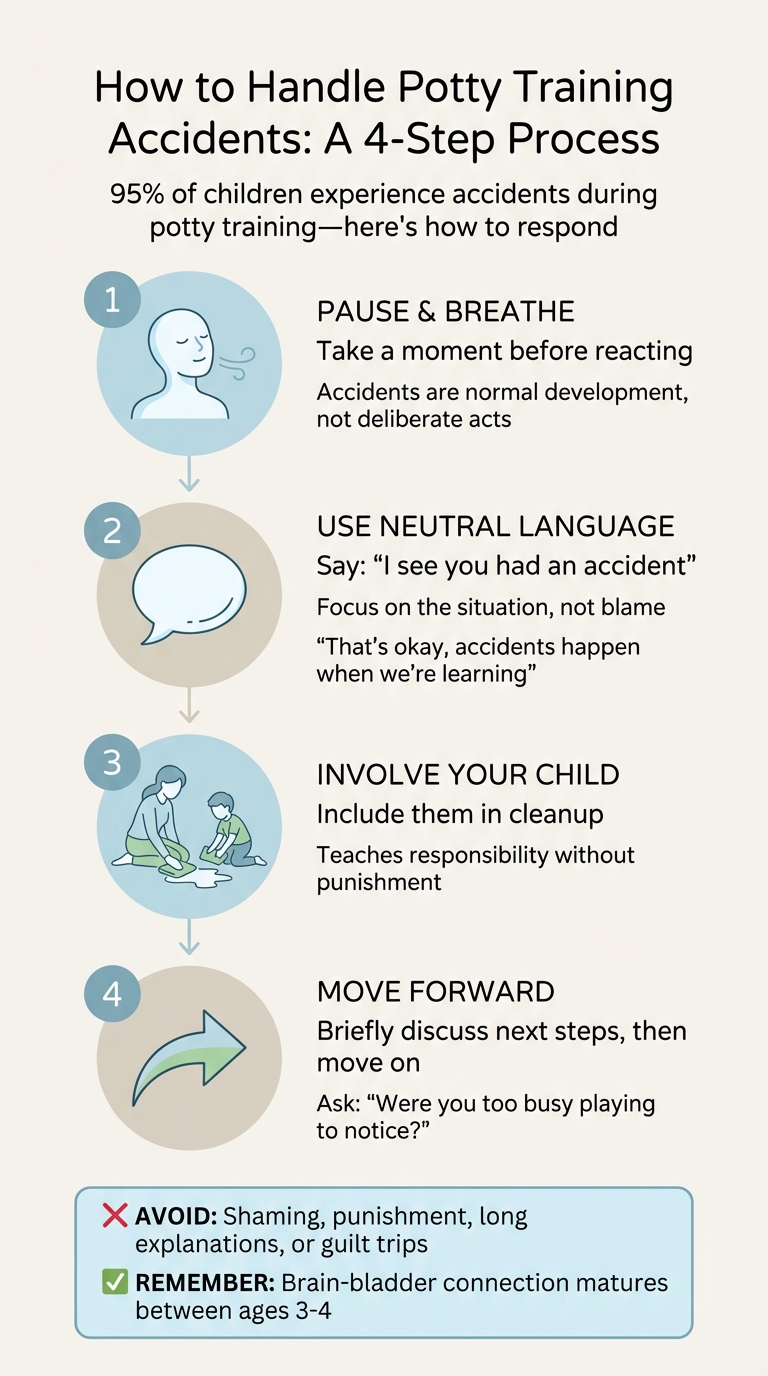
Step-by-Step Guide to Handling Potty Training Accidents Calmly
Keeping your cool during accidents not only eases your stress but also helps your child learn to handle emotions during challenging moments. When something goes wrong, take a moment to pause and breathe before reacting. This small step can help you manage frustration and remind you that accidents are a normal part of development - not a deliberate act. How you respond plays a big role in shaping your child’s perspective on learning and overcoming setbacks.
When an accident occurs, stay composed, acknowledge it neutrally, involve your child in cleaning up, and briefly discuss what to do next before moving on. Use neutral phrases like, "I see you had an accident," to focus on the situation without assigning blame. Including your child in the cleanup process encourages responsibility without making it feel like a punishment. From here, understanding how to use positive language and avoiding shaming can further support your child’s progress.
Using Positive Words and Encouragement
Encouraging words can boost your child’s confidence and create a safe space for learning. Instead of showing disappointment, try saying something like, "That’s okay, accidents happen when we’re learning. Let’s clean up and try again next time".
Recognize and praise their efforts rather than focusing solely on outcomes. For example, acknowledge when your child sits on the potty or signals they need to go. Tone matters too - children are highly sensitive to subtle cues like sighs or eye-rolls, which can unintentionally cause anxiety. After cleanup, you might gently ask, "Were you so busy playing that you didn’t notice the urge?" This approach encourages reflection without blame. Keep in mind that the connection between the brain and bladder typically matures between ages 3 and 4. Positive reinforcement builds confidence, while punitive measures can have the opposite effect.
Why Shame and Punishment Don't Work
Shaming or punishing a child for accidents can lead to anxiety and fear around bathroom habits. In some cases, this even prompts children to hide accidents or withhold bowel movements, which can result in constipation. As Kiddlyhaven puts it:
"Punishing your child for potty accidents is like scolding someone for having the hiccups - it’s not under their conscious control, and shame only makes the situation worse." – Kiddlyhaven
Negative reactions, even subtle ones, can increase the likelihood of accidents by creating stress around bathroom use. Long explanations or guilt trips are also unhelpful - toddlers often can’t articulate why accidents happen, and these responses may lead to nighttime potty training regression. Instead, natural consequences, like involving your child in cleanup, teach responsibility while maintaining trust and cooperation. This approach helps children feel safe and supported, encouraging them to keep trying despite setbacks. By focusing on positive strategies, you can build their confidence and reduce frustration for both of you.
Fast and Clean Accident Cleanup Methods
Handling accidents quickly and efficiently starts with containing the mess and prioritizing personal care before addressing surfaces. Begin by surrounding the spill with towels and gently blotting it with paper towels to prevent spreading or pushing it deeper into the surface. Focus first on cleaning your child gently, changing them into fresh clothes, and washing hands together before moving on to clean the floor or furniture. This keeps your child comfortable and ensures hygiene while preventing the mess from becoming harder to manage.
Involving your child in the cleanup process, in ways that suit their age, can be helpful. For example, they can hand you clean training pants or help place wet clothes in the laundry basket. This teaches responsibility without creating feelings of shame. To stay prepared, keep a designated cleanup station stocked with essentials like disposable gloves, enzymatic cleaner, paper towels, and fresh clothes, so you're not scrambling for supplies during an accident.
Step-by-Step Cleanup Process
Start by blotting the spill with paper towels to soak up as much liquid as possible without spreading it further. Once the area is contained, clean and change your child into fresh clothes. After your child is settled, treat the soiled surface with an enzymatic cleaner and let it sit for the recommended time to break down organic material effectively.
For stubborn odors, sprinkle baking soda on the damp area, let it sit, and vacuum it up once dry. Hard surfaces can be cleaned with a vinegar and water solution, while enzymatic cleaners work best for carpets and upholstery (or you can compare waterproof mattress pads vs. disposable sheets for future prevention). When washing soiled clothing, use a laundry sanitizer or booster to fully remove odors. Afterward, restock your supplies so you're ready for the next accident.
Nighttime accidents can be managed even more efficiently with the right bedding.
How Protective Bedding Makes Cleanup Easier
Layered waterproof bedding can turn a 15-minute cleanup into a quick, one-minute task. Products like PeelAways Crib-A-Peel sheets are designed with multiple waterproof layers stacked on top of each other. When the top layer becomes soiled, you simply peel it away to reveal a clean, dry sheet underneath, eliminating the need to strip the entire bed. Each layer is completely waterproof, preventing leaks from reaching the mattress or lower layers.
This method drastically reduces laundry and water use. It also saves time and helps maintain a calm, stress-free environment. Keep clean pajamas and wipes within easy reach of the bed, and during early morning changes, use dim lighting and soft voices to minimize sleep disruption. The disposable nature of these sheets allows for quick, hygienic cleanups without the hassle of dealing with heavy, wet bedding in the middle of the night.
How to Reduce Future Potty Training Accidents
Establishing a steady potty routine and using positive reinforcement can significantly cut down on accidents. Try setting a timer for regular potty breaks every 30 minutes. If accidents persist, shorten the interval to 15 minutes for a while. Pay close attention to times when accidents are more likely, such as right after waking up, before naps or bedtime, and 10 to 20 minutes after meals. Keep potty sessions short, around 2–5 minutes, to avoid frustration. This structured approach supports the brain-bladder connection, which usually develops between ages 3 and 4.
Setting Up a Regular Potty Schedule
Use a timer to remind your child to take regular potty breaks. When it rings, encourage them to stop what they're doing and head to the bathroom. Plan bathroom visits during transitions, like before leaving home or upon arriving somewhere new, to prevent accidents caused by distractions. After meals, take advantage of the gastrocolic reflex by scheduling a potty attempt within 10 to 20 minutes.
Make fluid intake more predictable by offering drinks at set times and avoiding bladder irritants like sugary or caffeinated beverages. Dressing your child in elastic-waist pants or leggings can make it easier for them to undress quickly when they feel the urge. For added comfort and proper posture, use a stool to support their feet while they sit on the potty. This helps relax the pelvic floor, with knees positioned slightly higher than the hips.
Having a consistent schedule is just one part of the process. Reinforcing progress with rewards can help keep your child engaged and motivated.
Using Rewards to Keep Your Child Motivated
Once your child is following a potty routine, offer rewards for every step of the process - sitting on the potty, signaling they need to go, and washing their hands. Celebrate with enthusiastic praise, high-fives, or small rewards. You can also encourage them by asking, "Are you clean and dry?" and giving a sticker or small treat when they are.
A tiered reward system works well: give smaller incentives like stickers or stamps for trying, and reserve bigger rewards - like extra playtime or choosing a bedtime story - for successful potty use. Sticker charts can visually track their progress and keep them interested over several weeks. Keep in mind that around 95% of children will still have accidents regularly during the training process, so patience and consistency are key. These strategies not only help build your child’s confidence but also make the overall experience less stressful for everyone.
Using PeelAways Crib-A-Peel Sheets During Potty Training

Potty training can be messy, but PeelAways Crib-A-Peel sheets are here to make cleanup quick and easy. Thanks to their patented multi-layer design, you can remove a soiled layer in less than 60 seconds, revealing a fresh, clean sheet underneath. Each of the five layers is fully waterproof, so you can skip those late-night laundry marathons. Plus, they’re made from a soft, breathable blend of bamboo, rayon, and polyester, offering a quiet and comfortable surface - no more crinkly plastic sounds.
Here’s why PeelAways are a game-changer for potty training.
What Makes PeelAways Perfect for Potty Training
The innovative stacked layer system ensures you always have clean sheets ready to go. If your child has an accident, simply peel away the top layer to instantly reveal a clean one. No need to wrestle with the mattress or rush to wash sheets in the middle of the night.
Each layer is built to last 7 to 10 days under normal use, making them both durable and practical. At $30.99 per set, with bundle discounts of 5% for three units and 10% for six, these sheets offer an affordable solution. Designed to fit standard crib mattresses (52" x 28") with a depth of up to 6 inches, they’re as convenient as they are effective.
"They hold a LOT of liquid and are easy to use and tear away. No more 15 loads of laundry and wet mattresses!" - Jalene Stanger
Safety is another priority. PeelAways sheets are free from Vinyl, PVC, Phthalates, and fire retardants, ensuring they’re safe for toddlers. With an impressive average rating of 4.61 out of 5 stars from more than 12,000 customers and earning the title of "Potty Training Product of the Year", these sheets are a trusted choice for parents. They’re designed to make potty training less stressful, so you can focus on helping your child succeed.
Conclusion
Potty training accidents are a normal part of the process, and approaching them with patience and the right tools can make a world of difference. Staying calm reassures your child and helps them feel secure, while having cleanup supplies and protective bedding on hand makes dealing with accidents much less stressful. Since accidents are common during this stage, it's important to recognize that readiness plays a big role in the journey.
Being prepared can set the tone for success. Establishing a regular potty schedule, keeping cleanup kits accessible in every room, and using positive reinforcement all contribute to creating a supportive environment. Responding to accidents with neutral language, like saying, "It seems you had an accident. Let’s clean up and try again next time," helps maintain a constructive and encouraging atmosphere.
For nighttime accidents, tools like PeelAways Crib-A-Peel sheets can simplify cleanup. Their multi-layer design allows you to remove a soiled layer in under a minute, saving you from stripping the mattress or tackling laundry in the middle of the night.
As Dr. Noah Schwartz points out, "The more anxiety that the parent has, the more that is going to transfer to the child, which certainly won't help the situation," emphasizing that a calm, prepared approach not only makes accidents easier to handle but also boosts your child’s confidence, turning potty training into a positive experience for the whole family.
FAQs
When should I call the pediatrician about accidents?
If your child continues to have accidents past the age of 4, experiences other worrisome symptoms, or has physical issues like constipation or urinary problems, it’s a good idea to reach out to your pediatrician. While occasional daytime accidents are typical in potty-trained kids and usually get better with time, your doctor can provide clarity and support if you’re uncertain about what’s normal.
How do I stop my child from withholding poop after an accident?
Stool withholding often happens during potty training and is usually tied to fear or discomfort. To support your child, focus on making the bathroom a relaxed and welcoming space. Encourage regular bathroom habits without applying pressure, and address any discomfort they might be experiencing. Offer gentle reassurance and celebrate their efforts to help boost their confidence. If the issue continues or leads to problems like constipation or pain, it’s a good idea to reach out to a pediatrician for personalized advice and support.
What should I keep in a potty-accident cleanup kit?
A potty-accident cleanup kit is a must-have for handling mishaps efficiently and hygienically. Stock it with essentials like disposable bed sheets or waterproof protectors (such as PeelAways), wipes or cloths, a spare set of clothing, and trash bags for soiled items. Having these supplies on hand makes it easier to manage accidents without panic, safeguard bedding and furniture, and maintain cleanliness - all while keeping the situation as stress-free as possible.
Related Blog Posts
Comments
0



SAVE MONEY & WATER
Professionals & Institutions save a fortune on labor/laundry.

SUPERIOR COMFORT
The first thing our customers notice is how soft our sheets are.

100% WATERPROOF
Each layer is 100% Waterproof, perfect for spills and accidents

SAVE TIME
Change the sheet in under 1 minute without stripping the bed.

Leave a comment