
Night Shift Caregiving: How to Sleep Better When You're On Call 24/7

Key Tips:
- Align your sleep schedule with your care recipient's routine.
- Use blackout curtains and white noise machines to block light and sound.
- Split your sleep into blocks if uninterrupted rest isn’t possible.
- Address care recipient issues like frequent wake-ups or discomfort to reduce disruptions.
Small changes, like using blackout curtains or wearing an eye mask, can make a big difference in how rested you feel. Let’s dive into how you can reclaim your sleep while balancing caregiving responsibilities.
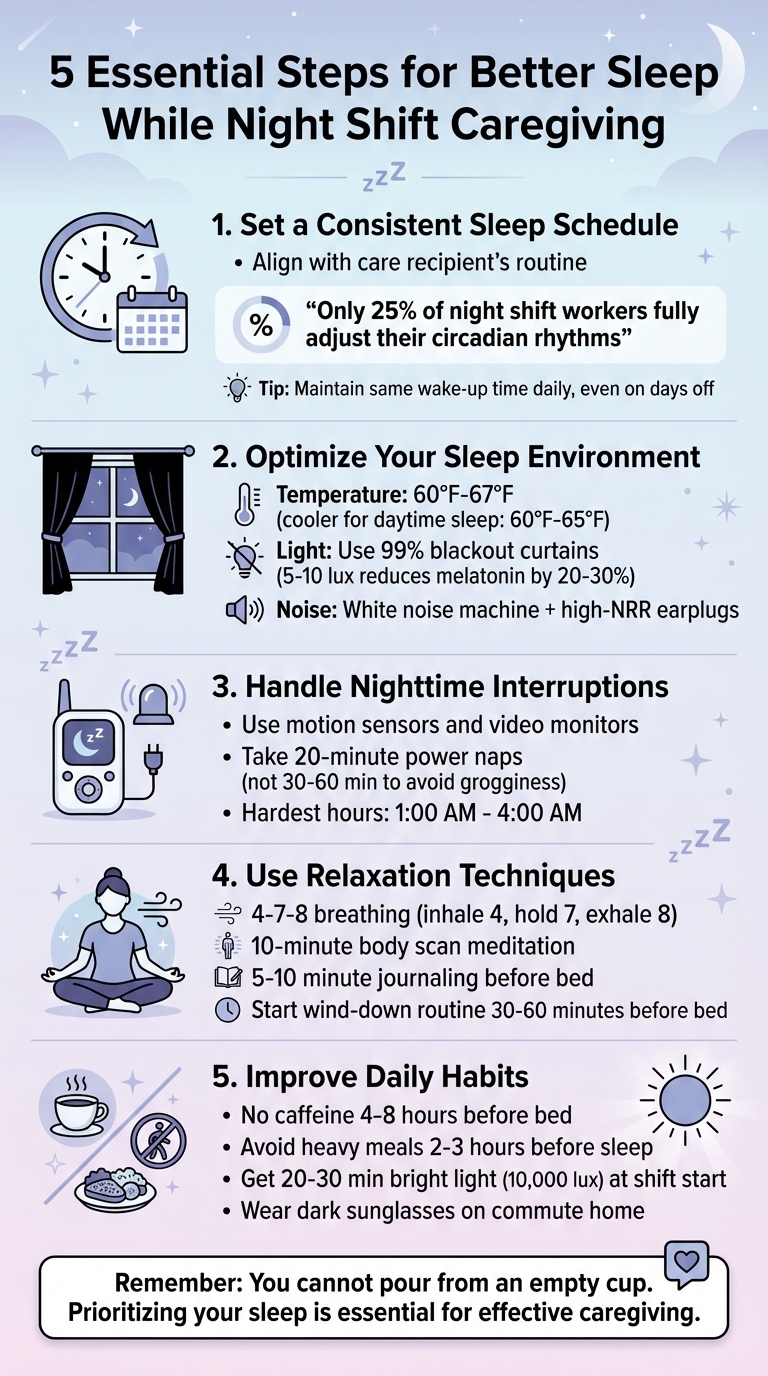
5 Essential Steps for Better Sleep While Caregiving at Night
Set a Consistent Sleep Schedule
Even in the unpredictable world of caregiving, having a consistent sleep schedule can work wonders. A regular sleep-wake pattern helps align your internal clock, making it easier to fall asleep and wake up feeling more refreshed. This is especially helpful for night shift caregivers, although fewer than 25% of night shift workers manage to fully adjust their circadian rhythms.
How to Create Your Sleep-Wake Routine
Start by observing when your care recipient typically rests. Use that as a foundation for your own sleep schedule. For instance, if they usually sleep from 10:00 p.m. to 6:00 a.m., try to align your main sleep block with that time. Consistency is key - pick a bedtime and wake-up time and stick to it, even on your days off.
Dr. Nancy Foldvary-Schaefer, a sleep medicine expert at Cleveland Clinic, offers this advice:
"Set a wake-up time that's the same every day, including work days and non-work days. That'll drive your brain to feel sleepy around the same time every evening".
If getting 7–8 hours of uninterrupted sleep isn’t realistic, consider splitting it. For example, you could aim for 5 hours of sleep after your shift and take a 2–3 hour nap before your next one. What matters most is the total amount of sleep you get. Even a 90-minute nap before your shift can help, as it allows for a full sleep cycle, reducing grogginess and improving alertness.
Why Regular Sleep Times Improve Rest
Your body’s internal clock, regulated by the suprachiasmatic nucleus, controls processes like hormone release and body temperature based on light exposure and routine. By maintaining consistent sleep times, you help this system anticipate rest, making it easier to fall asleep and stay asleep.
One common pitfall to avoid is "social jet lag." This happens when you drastically change your sleep schedule on days off to mimic a daytime routine. Constantly shifting between schedules can make it harder for your body to adjust and may lead to fatigue and brain fog. Treat your sleep hours as sacred - let your family know when you’re resting and use tools like a "Do Not Disturb" sign to minimize interruptions.
Now that you’ve got a routine in place, let’s explore how to create the perfect sleep environment for even better rest.
sbb-itb-45288fe
Optimize Your Sleep Environment
Getting quality rest is all about setting up the right environment, especially when you’re sleeping during the day. A room that’s cool, dark, and quiet sends the right signals to your body to relax and recharge, even with daytime distractions. Start by tackling light and noise disruptions.
Block Out Noise and Light
Light is a major hurdle for daytime sleep. Even minimal exposure - just 5 to 10 lux - can reduce melatonin production by 20% to 30%. Robon Vanek, APRN, CNP, a sleep expert from Cleveland Clinic, explains:
"Light is one of the biggest triggers that keeps people awake... light exposure to the eyes suppresses melatonin, a hormone that helps us feel sleepy".
To keep light out, consider blackout curtains with 99% light-blocking capability. Standard 95% curtains might let in light leaks that could disturb your rest. For extra coverage, seal gaps around windows using weather stripping or aluminum foil. Cover small LED lights from devices like chargers or smoke detectors with black electrical tape, or switch to an alarm clock with a red light display, as red wavelengths are less disruptive. Adding a 100% blackout eye mask from brands like Manta or Sleep Master can give you an extra layer of darkness.
Noise is another common issue. A white noise machine paired with high-NRR foam earplugs can mask sounds like traffic or noisy neighbors. If noise is a persistent problem, custom-molded earplugs (around $150) offer a personalized fit. Place your bed in the quietest spot possible to reduce sound disturbances. Also, set household rules to limit noisy activities - like running the vacuum or blasting the TV - during your sleep hours.
Select Appropriate Bedding and Maintain an Optimal Temperature
The right bedding and room temperature can make a big difference in how quickly you fall asleep and how well you stay asleep. Aim to keep your bedroom temperature between 60°F and 67°F. For daytime sleep, stick to the cooler end of this range (60°F to 65°F) to combat daytime heat.
Opt for breathable, natural fabrics like cotton, linen, or bamboo for your sheets. These materials help regulate your body temperature and reduce the chance of night sweats. Adjust your bedding with the seasons - light percale cotton works well in summer, while soft jersey or flannel is better for winter.
Your mattress and pillows should also support restful sleep. A medium-firm mattress is often best for spinal alignment and overall sleep quality. Replace your mattress every 7 to 10 years and your pillows every 1 to 2 years to maintain proper support.
For caregivers managing incontinence or nighttime accidents, layering waterproof protectors with fitted sheets can make cleanup faster. PeelAways disposable sheets are a handy option - they allow you to peel off a soiled layer in seconds, revealing a fresh sheet underneath. Made from a soft bamboo/rayon blend, they feel just like regular bedding while protecting your mattress without adding noise or reducing breathability.
Next, focus on creating boundaries in shared spaces to ensure your rest isn’t compromised.
Create Boundaries When Sharing a Room
If you share a room with a family member or care recipient, setting clear physical and mental boundaries is essential for protecting your rest. Robon Vanek, APRN, CNP, emphasizes:
"When you work night shift, it can be extremely difficult to maintain daytime sleep... But it's important to figure out how to make sleep your No. 1 priority".
For shared beds, pick a mattress with high motion isolation - like one with pocketed coils - to avoid being disturbed by your partner’s movements or alarms. If you and your partner have different temperature preferences, try separate blankets or a dual-zone electric blanket for customized comfort.
Keep your sleep area free from clutter, such as laundry piles or caregiving paperwork, as visual distractions can add stress and make it harder to unwind. Set phones to Do Not Disturb mode and place them face down to block notification lights. These simple changes can help establish a clear divide between caregiving duties and the rest you need to stay effective.
Handle Nighttime Care Interruptions
Nighttime interruptions are part of caregiving, but smart tools and efficient solutions can help you handle them quickly and get back to sleep. Using monitoring devices to avoid constant checking, addressing your care recipient's sleep challenges, and simplifying bed changes can all make a big difference. These strategies work alongside an optimized sleep environment to help you rest better, even during demanding caregiving nights.
Use Monitoring Tools to Reduce Constant Checking
Motion sensors and video monitors with night vision let you check on your care recipient without getting out of bed unnecessarily. Audio monitors with adjustable sensitivity can help you hear genuine distress without waking to every minor noise.
For those tough early-morning hours, between 1:00 a.m. and 4:00 a.m., when staying awake feels hardest, movement breaks can help you stay alert. Set hourly reminders on your phone or fitness watch to take quick activity breaks. Simple tasks like restocking supplies or a short walk can help you stay focused and ready for any needs that arise.
Strategic napping can also make a big difference. A quick 20-minute nap before your caregiving shift or during downtime can boost your alertness without leaving you groggy, unlike longer naps of 30-60 minutes. This way, you can respond to your care recipient quickly and effectively, even during the night.
Address Your Care Recipient's Sleep Problems
While monitoring tools help reduce unnecessary wake-ups, tackling the root causes of your care recipient's nighttime interruptions can minimize disruptions even further. Issues like frequent bathroom trips, untreated sleep apnea, or medication side effects can disturb their sleep - and yours. Consulting a doctor to address these problems can make nights more restful for everyone.
"As an RN in home health, I found satisfaction in working the night shift because I knew the household could rest peacefully knowing their family member was in the hands of a competent nurse".
You don’t need to be a nurse to apply this idea. Solving the underlying causes of nighttime waking creates a calmer environment for everyone. For example, reducing evening fluid intake can cut down on bathroom trips. Using warm, low-Kelvin lighting (below 2700K) during nighttime care tasks can also help avoid fully waking yourself or your care recipient with harsh blue light. These small adjustments can have a big impact on reducing nighttime disruptions.
Speed Up Bed Changes with PeelAways

When accidents happen in the middle of the night, the last thing you want is a long struggle with fitted sheets. PeelAways disposable sheets offer a fast and dignified solution. These multi-layer sheets let you peel away the soiled top layer to reveal a clean one underneath, all in under a minute. Made from a soft bamboo/rayon blend, they feel like regular bedding and stay quiet throughout the night.
Caregivers have praised PeelAways for simplifying bed changes and reducing stress. To use, place the sheet with the tag at the head or foot of the bed, and when needed, peel off the top layer for a fresh sheet in seconds. For deeper mattresses, sheet straps can help keep the corners secure. With a 4.8-star rating from over 12,000 customers and recognition as "Caregiver Product of the Year", PeelAways is a practical tool to help you handle nighttime interruptions more efficiently.
Use Relaxation Techniques Before Bed
After a caregiving shift, winding down is essential to help your body transition from a state of alertness to being ready for sleep. When paired with a sleep-friendly environment and strategies to minimize disturbances, relaxation techniques can make a big difference. They work by easing both physical tension and mental stress, making it easier to fall asleep - even if your schedule requires daytime rest.
Try Meditation, Breathing, and Journaling
Controlled breathing exercises are a simple yet effective way to tell your brain it's time to relax. For example, the 4-7-8 breathing method is designed to activate the vagus nerve and calm your nervous system. Here's how it works: inhale through your nose for 4 counts, hold your breath for 7 counts, and then exhale through your mouth for 8 counts. Repeat this four times to slow your heart rate and prepare for sleep. Another option is box breathing, which follows a steady rhythm: inhale for 4 counts, hold for 4, exhale for 4, and hold again for 4. This method can reduce cortisol levels and create a sense of calm.
A 10-minute body scan meditation can also help. While lying in bed, focus on each muscle group - starting with your feet and working your way up - spending 30 to 45 seconds consciously relaxing each area. If you're looking for something even more effective, try progressive muscle relaxation. With this technique, you tense each muscle group for 5 seconds and then release it. This contrast between tension and relaxation helps your body respond to sleep cues, even if your internal clock is out of sync.
Journaling is another powerful tool. By spending 5 to 10 minutes writing down your thoughts, worries, or tasks from your caregiving shift, you can clear your mind before bed. Studies show this practice can significantly shorten the time it takes to fall asleep. Making these techniques part of your nightly routine can help establish a more predictable and restful sleep pattern.
Follow the Same Bedtime Routine Each Night
Sticking to a consistent bedtime routine reinforces your body's sleep signals. Performing the same relaxation activities in the same order every night - starting 30 to 60 minutes before bed - trains your brain to associate those actions with sleep. This works whether you're going to bed at 8:00 a.m. or 10:00 p.m.. Dr. Catherine McCall, a sleep expert from the UW School of Medicine, emphasizes the importance of this habit:
"Something that's not talked about enough is having a wind-down routine... if we don't have that wind-down routine, we're still sending signals to our brain to be active".
For shift workers, physical cues can be especially effective. Taking a warm shower or bath at least an hour before bed can help regulate your body temperature. As your body cools down after the bath, it mimics the natural drop in core temperature that happens at night, signaling to your body that it's time to sleep.
Adding aromatherapy to your routine can enhance the experience. Lavender-scented sprays, oils, or lotions have been shown to improve sleep quality for those with irregular schedules. Pair this with a calming herbal tea, like chamomile or lavender, during your wind-down period. These sensory cues work together to help your brain recognize that it's time to rest, regardless of the time on the clock.
Improve Daily Habits for Better Sleep
The choices you make throughout the day - what you eat, drink, and how you move - can have a big impact on your sleep quality. Even if your schedule keeps you awake at night and sleeping during the day, small, purposeful changes can help keep your body's internal clock on track.
Adjust What You Eat and Drink
What you consume before bed plays a big role in how well you sleep. For starters, caffeine should be off the table at least 4 to 8 hours before your bedtime. This gives your body enough time to process it. Dr. Catherine McCall from UW School of Medicine highlights the risks:
"If you take larger amounts of caffeine or start having it later, it could cause jitteriness or lead to difficulty getting to sleep when you get home".
It's not just caffeine, though. Certain foods can also disrupt your sleep. High-sugar snacks, greasy or fatty meals, aged cheeses, and spicy dishes should be avoided close to bedtime. For example:
- Greasy or fatty foods: These digest slowly and may lead to acid reflux.
- Aged cheeses (like Cheddar, Swiss, or Parmesan): They contain tyramine, a compound that can stimulate norepinephrine and keep you alert.
- Spicy foods: These can raise your core body temperature, making it harder for your body to cool down and prepare for sleep.
Try to finish heavy meals 2 to 3 hours before bed to give your digestion time to settle. If you're feeling hungry closer to bedtime, go for lighter options like a banana, oatmeal, yogurt, or a handful of almonds. Also, drink most of your fluids earlier in the day and cut back 1 to 2 hours before bed to avoid frequent bathroom trips during the night.
Alcohol is another tricky factor. While it might initially help you fall asleep, it can disrupt your sleep cycle. Robon Vanek, APRN at Cleveland Clinic, explains:
"It [alcohol] might help you fall asleep, but it interferes with REM sleep. Then, as it metabolizes out of your system, it turns to a stimulant that can wake you up".
Balancing your diet with these tips can go a long way in improving your sleep, especially when paired with physical activity.
Add Light Exercise and Daylight Exposure
Your body clock doesn’t just rely on food - it also takes cues from movement and light. Light is a powerful signal that tells your brain when to be awake or asleep. During your waking hours, exposure to bright light can help anchor your internal clock, while minimizing light before bed helps prepare your body for rest.
When starting your shift, expose yourself to natural sunlight or use a 10,000-lux light therapy box for about 20 to 30 minutes. This signals your brain that it’s time to wake up and be alert.
Incorporating physical activity into your routine also helps. Moderate exercise before your shift can give your energy levels a boost. Brooke Williams from Sleepopolis explains:
"Exercise increases your core body temperature, which is a signal to your body's internal clock that it's time to be awake".
However, timing matters. Avoid intense workouts within an hour of bedtime, as they can make it harder to wind down. Instead, consider gentler activities like stretching or restorative yoga to help your body relax.
To protect your sleep during the day, be mindful of light exposure after your shift. Wearing dark, wraparound sunglasses during your commute home can block out bright light, which could suppress melatonin production by 20% to 30%, even at low levels (5 to 10 lux).
Conclusion
Caring for others during night shifts takes a toll on your energy, time, and sleep. But prioritizing your rest isn’t a luxury - it’s essential for your health and your ability to provide safe, effective care. Sleep impacts everything, from your focus and memory to your emotional and physical well-being. Without proper rest, you face heightened risks of heart disease, stroke, and diabetes, and your caregiving abilities can decline. This guide offers practical adjustments - like improving your sleep environment and using tools such as PeelAways - to help you get the rest you need.
You don’t need to overhaul your routine overnight. Start small - try one or two tips, like installing blackout curtains, sticking to a consistent sleep schedule, or taking a short 20-minute nap before your shift. These small changes can make a noticeable difference over time. As Brad, owner of Mattress Miracle, wisely points out:
"You cannot pour from an empty cup. Your sleep setup is not a luxury. It is part of how you sustain the care you are giving".
By aligning your sleep habits, creating a restful environment, and using practical tools, you can protect your health and maintain your caregiving effectiveness. For example, PeelAways multi-layer disposable sheets allow you to change bedding in just 60 seconds by peeling away the top layer, helping you return to sleep faster after nighttime interruptions.
To make things easier on your budget, PeelAways is offering blog readers an exclusive 10% discount. Use code BLOGS10 at checkout to save on PeelAways multi-layer disposable sheets. They’re available on Amazon or Peelaways.com, and the discount applies to subscriptions and bundle offers, helping you save even more while simplifying your care routine.
FAQs
How do I know if I should split my sleep into blocks?
If getting a full 7-9 hours of sleep in one stretch feels impossible due to your schedule or other challenges, splitting your sleep into blocks might be worth trying. This method can help sync with your natural circadian rhythm, enhance your overall rest, and keep you alert during demanding shifts. It's particularly helpful for night shift workers or anyone dealing with irregular hours and frequent sleep disruptions.
What’s the best way to stay alert overnight without ruining my sleep later?
To stay awake during overnight shifts while protecting your sleep later, try these strategies:
- Use bright light during your shift to help stay alert and focused.
- Take short breaks for movement or even a quick power nap, if possible, to recharge.
- Time your caffeine intake wisely: Have it early in your shift but avoid it later to prevent it from interfering with your daytime sleep.
When it comes to rest, consistency is key. Stick to a regular sleep schedule, use blackout curtains and earplugs to block out distractions, and limit light exposure after your shift to help your body wind down effectively.
How can I handle middle-of-the-night accidents faster and get back to sleep?
Dealing with nighttime accidents can be stressful, but using disposable bedding like PeelAways sheets can make the process much easier. These multi-layer, waterproof sheets allow you to simply peel away the soiled layer in seconds, avoiding the hassle of changing an entire set of sheets in the middle of the night.
Helpful Tips:
- Keep PeelAways sheets on the bed at all times for quick access.
- Swiftly peel off the soiled layer when needed, so you can get back to sleep faster.
- Stick to a routine to minimize disruptions and handle emergencies with less stress.
Comments
0



SAVE MONEY & WATER
Professionals & Institutions save a fortune on labor/laundry.

SUPERIOR COMFORT
The first thing our customers notice is how soft our sheets are.

100% WATERPROOF
Each layer is 100% Waterproof, perfect for spills and accidents

SAVE TIME
Change the sheet in under 1 minute without stripping the bed.

Leave a comment