
Medical Conditions Linked to Bedwetting

Bedwetting, or nocturnal enuresis, affects children and adults for various reasons. While most kids grow out of it, persistent or sudden bedwetting may signal underlying health issues. Here's what you need to know:
-
Types of Bedwetting:
- Primary: Never consistently dry for six months.
- Secondary: Starts wetting again after being dry, often due to medical or psychological factors.
-
Possible Causes:
- Diabetes: High blood sugar levels increase urine production.
- Urinary Tract Infections (UTIs): Irritate the bladder, causing accidents.
- Sleep Disorders: Conditions like sleep apnea disrupt bladder control.
- Hormonal Imbalances: Low antidiuretic hormone (ADH) levels lead to excess nighttime urine.
-
When to Seek Help:
- Bedwetting persists past age 7.
- Symptoms like painful urination, excessive thirst, or daytime accidents.
- Sudden onset after a dry period.
-
Management Tips:
- Adjust fluid intake (reduce in the evening).
- Use enuresis alarms to build awareness.
- Address constipation and bladder irritants (e.g., caffeine).
- Protect bedding with waterproof sheets like PeelAways.
Bedwetting is not laziness - it often has medical or developmental roots. Consult a doctor to rule out serious conditions and support emotional well-being through patience and understanding.
Bedwetting in Kids: Causes, Solutions, and When to See a Doctor
Medical Conditions That Cause Bedwetting
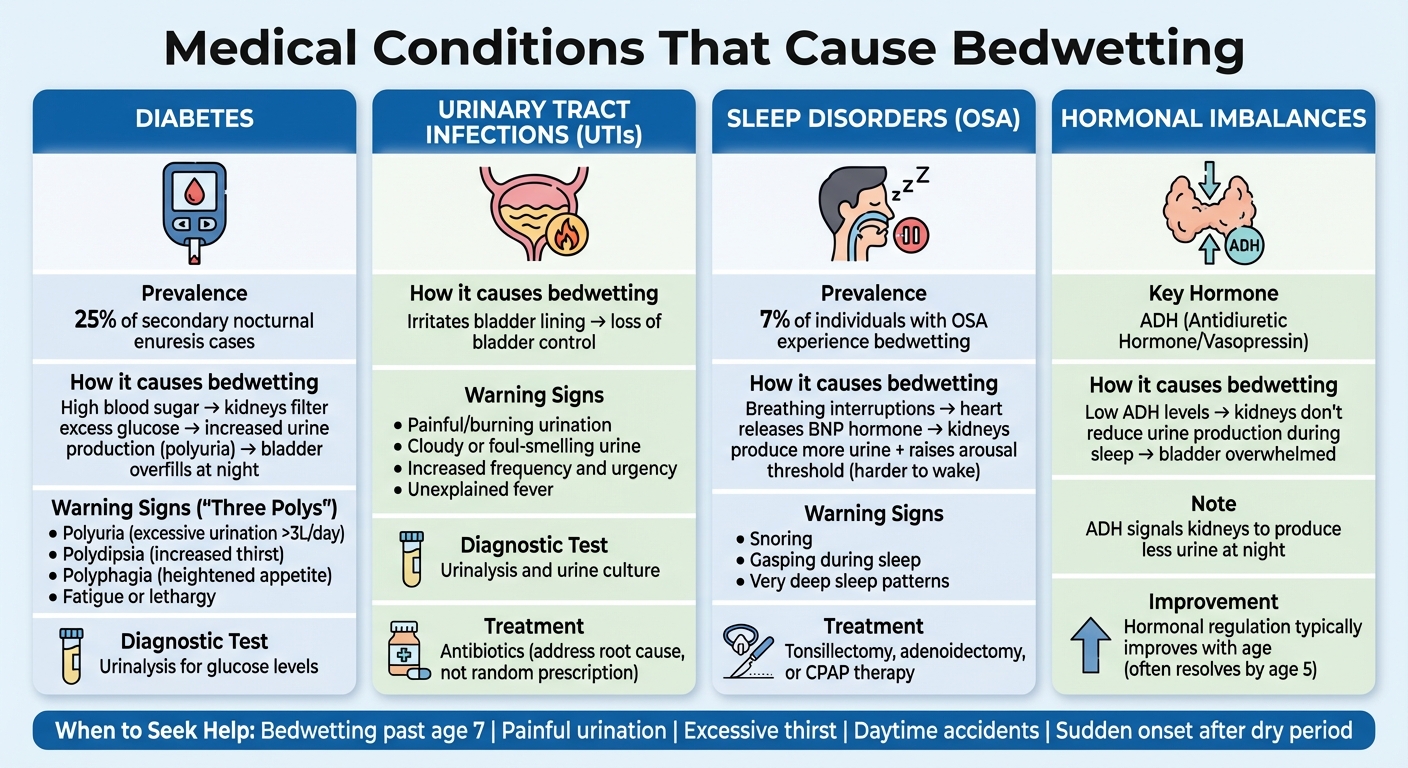
Medical Conditions That Cause Bedwetting: Symptoms and Warning Signs
Certain medical conditions can contribute to or intensify bedwetting. Recognizing these factors can help determine when to seek professional advice and guide effective treatment options.
Diabetes and Bedwetting
Both Type 1 and Type 2 diabetes can lead to bedwetting due to high blood sugar levels. When blood sugar rises, the kidneys work harder to filter and remove the excess glucose, resulting in increased urine production, known as polyuria. This can cause the bladder to overfill at night, leading to involuntary leakage. According to Healthline:
When blood sugars are high, the amount of urine increases as the kidneys try to manage sugar levels. This can lead to bed-wetting, excessive urination (more than 3 liters per day), and frequent urination. [6]
Diabetes is responsible for about 25% of secondary nocturnal enuresis cases [3]. Parents should watch for warning signs like the "three polys": polyuria (excessive urination), polydipsia (increased thirst), and polyphagia (heightened appetite, sometimes accompanied by weight loss). Other symptoms, such as fatigue or lethargy, may also indicate diabetes. If diabetes is suspected, a healthcare provider can perform a urinalysis to check for glucose levels. Managing blood sugar levels is crucial in addressing diabetes-related bedwetting.
Urinary Tract Infections (UTIs)
Urinary tract infections are another common cause of bedwetting, particularly in children who were previously dry at night. UTIs can irritate the bladder lining, leading to both daytime and nighttime accidents. Symptoms often include painful or burning urination, cloudy or foul-smelling urine, increased frequency, and sudden urgency.
Dr. Israel Franco, a pediatric urologist at Yale Medicine, highlights the importance of addressing the root cause:
It is our goal to identify the cause of the recurrent infections and correct this problem instead of randomly prescribing antibiotics. [2]
If a child shows signs of a UTI or has an unexplained fever, seek medical attention promptly - ideally within 24 hours. Diagnosis typically involves a urinalysis and urine culture, and treatment usually includes antibiotics. For recurrent UTIs, doctors may also explore underlying issues like constipation, which can exert pressure on the bladder, and may suggest probiotics such as Lactobacillus GG to help maintain urinary health.
Sleep Disorders and Bedwetting
Sleep disorders like obstructive sleep apnea (OSA) can disrupt normal bladder control at night. OSA causes repeated interruptions in breathing, which prompts the heart to release brain natriuretic peptide (BNP). This hormone signals the kidneys to produce more urine, increasing the likelihood of bedwetting. Studies indicate that about 7% of individuals with OSA experience bedwetting, with the frequency linked to the severity of the condition [6].
Additionally, sleep disorders can raise the arousal threshold, making it harder for children to wake up when their bladder is full. The American Academy of Sleep Medicine notes:
Bedwetting can be a symptom of sleep apnea in children and may resolve when the sleep apnea is treated. [7]
Treatment for OSA, such as tonsillectomy or adenoidectomy, often alleviates or resolves bedwetting. In some cases, Continuous Positive Airway Pressure (CPAP) therapy may also be effective. For children who experience very deep sleep patterns, this can further delay their ability to wake in time to use the bathroom.
Hormonal Imbalances
Hormonal regulation, particularly involving antidiuretic hormone (ADH), plays a key role in controlling nighttime urine production. ADH, also known as vasopressin, signals the kidneys to produce less urine during sleep. In some children with bedwetting, ADH levels are lower than normal, leading to excessive urine production overnight. This can overwhelm the bladder's capacity and result in accidents.
Sleep disorders, such as sleep apnea, can also interfere with the natural surge of ADH during sleep. As children grow, hormonal regulation typically improves, with bedwetting often resolving by around age five. When hormonal imbalances are identified, specific treatments can help regulate urine production and reduce nighttime accidents.
How to Manage Bedwetting: Medical and Practical Solutions
Managing bedwetting involves a combination of medical advice, lifestyle adjustments, and practical tools to help reduce occurrences and make nighttime routines easier.
When to See a Doctor
It's important to consult a doctor if your child is over 5 years old and wets the bed more than twice a month. Other warning signs include sudden onset of bedwetting (known as secondary enuresis), painful urination, fever, cloudy or bloody urine, or daytime accidents. Additionally, conditions like chronic constipation or symptoms of sleep apnea - such as snoring or gasping during sleep - warrant a medical evaluation [3][5][8].
Doctors often start with a detailed medical history, a physical exam, and a voiding diary to understand the pattern. A simple urinalysis can rule out issues like urinary tract infections, diabetes, or kidney problems [3][1]. Depending on the findings, further tests might include renal ultrasounds, blood tests to check hormone or blood sugar levels, or even sleep studies if sleep apnea is suspected [3][6][1].
Once medical causes are addressed, lifestyle changes can play a crucial role in managing bedwetting.
Lifestyle Changes and Behavioral Strategies
Small, consistent changes in daily habits can make a big difference. Adjust fluid intake so that 40% is consumed in the morning, 40% in the afternoon, and only 20% in the evening. Stop fluids 1–2 hours before bedtime to avoid overfilling the bladder, and steer clear of bladder irritants like caffeine and artificial sweeteners in the evening [3][9].
Encourage your child to use the bathroom 4–7 times during the day and to "double void" before bed (going to the bathroom twice within a short period). Addressing constipation is also key, as a full rectum can press on the bladder and interfere with normal nerve signaling [3][10].
Moisture-sensitive enuresis alarms are another effective tool. These devices detect wetness and wake the child, helping them develop awareness and control. When used consistently, they can help up to two-thirds of children reduce bedwetting [4][10]. Positive reinforcement, like sticker charts to reward habits such as following a fluid schedule or using the bathroom before bed, can also encourage progress [3].
Dr. Manjunatha from Mayo Clinic Health System highlights the importance of a supportive approach:
Children don't wet the bed because of laziness or spite. Yelling or expressing your disappointment does not help children's bed-wetting and can hurt their confidence. [9]
Practical Products for Bedwetting Management
In addition to behavioral strategies, practical tools can make managing bedwetting less stressful. Waterproof bedding is a must-have for protecting mattresses and simplifying cleanup. Traditional mattress protectors work, but they often require stripping the entire bed, which can disrupt sleep routines.
PeelAways offers an innovative solution with disposable, waterproof fitted sheets. These sheets feature a patented multi-layer design (available in 5–7 layers depending on size). When an accident occurs, you simply peel away the top layer to reveal a fresh, clean sheet underneath - eliminating the need to lift the mattress or do immediate laundry. This is especially helpful for families dealing with additional conditions like diabetes or UTIs. PeelAways also offers free shipping on orders over $100 and a 15% discount for subscription orders.
For daytime protection or special occasions like sleepovers, disposable training pants provide a discreet option to prevent embarrassment. However, regular nighttime use might reduce a child's motivation to overcome bedwetting. After an accident, applying a skin protectant like petroleum jelly or an emollient can prevent irritation, while keeping fresh pajamas and cleanup supplies close by ensures smoother nighttime transitions [1][3][4].
sbb-itb-45288fe
Supporting Emotional Health
Bedwetting can take a heavy emotional toll. Over 5 million children in the United States experience this condition [4]. Many struggle with feelings of shame, embarrassment, or guilt. In fact, 20%–30% of children with enuresis also have a mental health condition, which is twice the rate seen in their peers [3]. Addressing these emotional challenges is just as important as treating the physical symptoms.
Reducing Shame Around Bedwetting
Open and honest conversations can go a long way in reducing the stigma. Let your child know that bedwetting is not something they can control - it isn’t caused by laziness or bad behavior. Explaining that bedwetting often runs in families (there’s a 77% likelihood if a parent experienced it) can help them feel less alone [3][4]. Knowing that a parent or sibling has been through the same thing can ease feelings of isolation.
Children may avoid social activities out of fear that someone will find out, which can lead to loneliness [1][3][4]. For events like sleepovers or camp, absorbent pants can provide a discreet safety net, helping to ease anxiety without interfering with bladder control development [4]. It’s also important to avoid punishment, teasing, or showing disappointment when accidents happen - these reactions only increase emotional stress [3][4].
Creating a Supportive Environment
In addition to reducing shame, creating a supportive home environment helps children develop healthy coping mechanisms. Caregivers’ patience and understanding are crucial. Instead of focusing only on dry nights, celebrate positive actions like sticking to a bathroom schedule or helping with cleanup in the morning [3]. This type of positive reinforcement builds confidence without adding unnecessary pressure. Keeping extra linens readily available can also make accidents less stressful [3].
The Urology Care Foundation highlights the role of patience in successful treatment:
Success for alarm therapy depends on parents understanding that this is a learning process... Without patience, parent and child frustration will lead to quitting. [4]
If your child shows signs of severe emotional distress, social withdrawal, or anxiety related to bedwetting, it may be helpful to consult a mental health professional. Cognitive behavioral therapy can provide tools to manage the emotional impact and develop effective coping strategies [2]. It’s also worth noting that bedwetting tends to resolve naturally at a rate of about 15% per year [3][4]. With the right mix of emotional support, practical solutions, and time, most children will overcome this challenge. Supporting their emotional well-being is a key part of this journey.
Conclusion
Bedwetting is something many children naturally grow out of, but when it persists, it could point to deeper concerns. While most kids improve with time [3], frequent or sudden bedwetting can sometimes signal medical issues. Conditions like diabetes, urinary tract infections, sleep disorders (such as obstructive sleep apnea), hormonal imbalances, or neurological problems can all interfere with normal bladder control. As the Cleveland Clinic explains:
Bedwetting is often a symptom of an underlying medical condition if it occurs in a toilet-trained person who has frequent bedwetting episodes after not having any for at least six months [1].
Acting quickly is important. If bedwetting continues past age 7, happens with symptoms like pain or burning during urination, or reappears after six months of dryness, it’s time to consult a doctor. Keeping a voiding diary can also help - track accident frequency, fluid intake, and other symptoms like snoring or discomfort during urination [1][2][3].
Once medical concerns are addressed, managing bedwetting day-to-day becomes the focus. Products like PeelAways disposable fitted sheets offer a practical way to handle accidents. These sheets allow you to peel off a soiled layer to reveal a clean one underneath, cutting out the need for late-night mattress changes or extra laundry. Available in sizes ranging from crib to king, PeelAways are a helpful tool for families navigating potty training, recovery from medical issues, or ongoing bedwetting management.
Equally important is emotional support. Around 1 in 10 children in the U.S. deal with nocturnal enuresis [1], and many feel embarrassed or ashamed. Providing a safe, understanding environment - alongside proper medical care and effective tools - can help kids and their families manage bedwetting while protecting their confidence and emotional health.
FAQs
What health issues can lead to bedwetting in children?
Bedwetting in children can sometimes be connected to underlying medical issues. Some common causes include urinary tract infections (UTIs), a small bladder capacity, sleep disorders, hormonal imbalances (like low levels of antidiuretic hormone or ADH), constipation, and certain neurological conditions. In some instances, diabetes might also play a role.
If bedwetting happens often or comes with other symptoms - such as pain, excessive thirst, or noticeable changes in behavior - it’s wise to reach out to a healthcare provider. Identifying and addressing the root cause can make a significant difference in managing or resolving the problem.
Can sleep disorders cause bedwetting?
Yes, sleep disorders can heavily influence bedwetting by disrupting the body’s ability to manage bladder control during sleep. For instance, conditions like sleep apnea, where breathing repeatedly stops and starts during sleep, can interfere with normal sleep patterns and disrupt the signals that help regulate bladder function. This miscommunication can lead to bedwetting, but the good news is that addressing the sleep disorder often helps reduce or eliminate these episodes.
Poor sleep habits or regular disturbances during the night can also make it harder for the body to wake up when the bladder is full, increasing the likelihood of accidents. Treating sleep disorders - whether through medical intervention or behavioral adjustments - can be a key part of minimizing or preventing bedwetting.
When is it important to consult a doctor about bedwetting?
It’s wise to check in with a doctor if bedwetting continues past age 7, reoccurs after a long period without incidents, or is accompanied by other concerning symptoms. Key signs to look out for include pain during urination, unusual thirst, blood in the urine, constipation, or loud snoring. These could signal underlying health issues such as diabetes, urinary tract infections, or sleep-related problems.
If bedwetting is causing your child stress or interfering with their daily routine, consulting a medical professional can provide both answers and support. Addressing the issue early can help manage any health concerns and improve your child’s overall quality of life.
Comments
0



SAVE MONEY & WATER
Professionals & Institutions save a fortune on labor/laundry.

SUPERIOR COMFORT
The first thing our customers notice is how soft our sheets are.

100% WATERPROOF
Each layer is 100% Waterproof, perfect for spills and accidents

SAVE TIME
Change the sheet in under 1 minute without stripping the bed.

Leave a comment