
Best Ways to Manage Incontinence at Home: Products That Help

"It's 2am. The sheets are soaked again. Your loved one is embarrassed, your back hurts, and you have to be up in four hours. If this is your life right now, you’re not alone - and there’s a way to make it easier."
Caring for someone with incontinence can feel overwhelming. Between constant laundry, disrupted sleep, and emotional strain, it’s no wonder so many caregivers find themselves burned out. But the right tools and routines can make all the difference. Products like PeelAways multi-layer disposable bed sheets transform 15-20 minutes of middle-of-the-night frustration into a 60-second fix - no laundry required. With over 28,000 reviews and a 4.8-star rating, they’re a lifesaver for caregivers everywhere.
Key takeaways:
- PeelAways disposable sheets: 5-7 waterproof layers, change a bed in 60 seconds.
- Absorbent pads: Add extra protection during the day or night.
- Bathroom tools: Grab bars, bedside commodes, and nightlights reduce accidents and improve safety.
- Daily routines: Scheduled bathroom breaks, bladder training, and pelvic floor exercises help reduce accidents over time.
When you’re caring for someone with incontinence, every second counts. Let’s dive into practical solutions that save time, preserve dignity, and lighten your load.
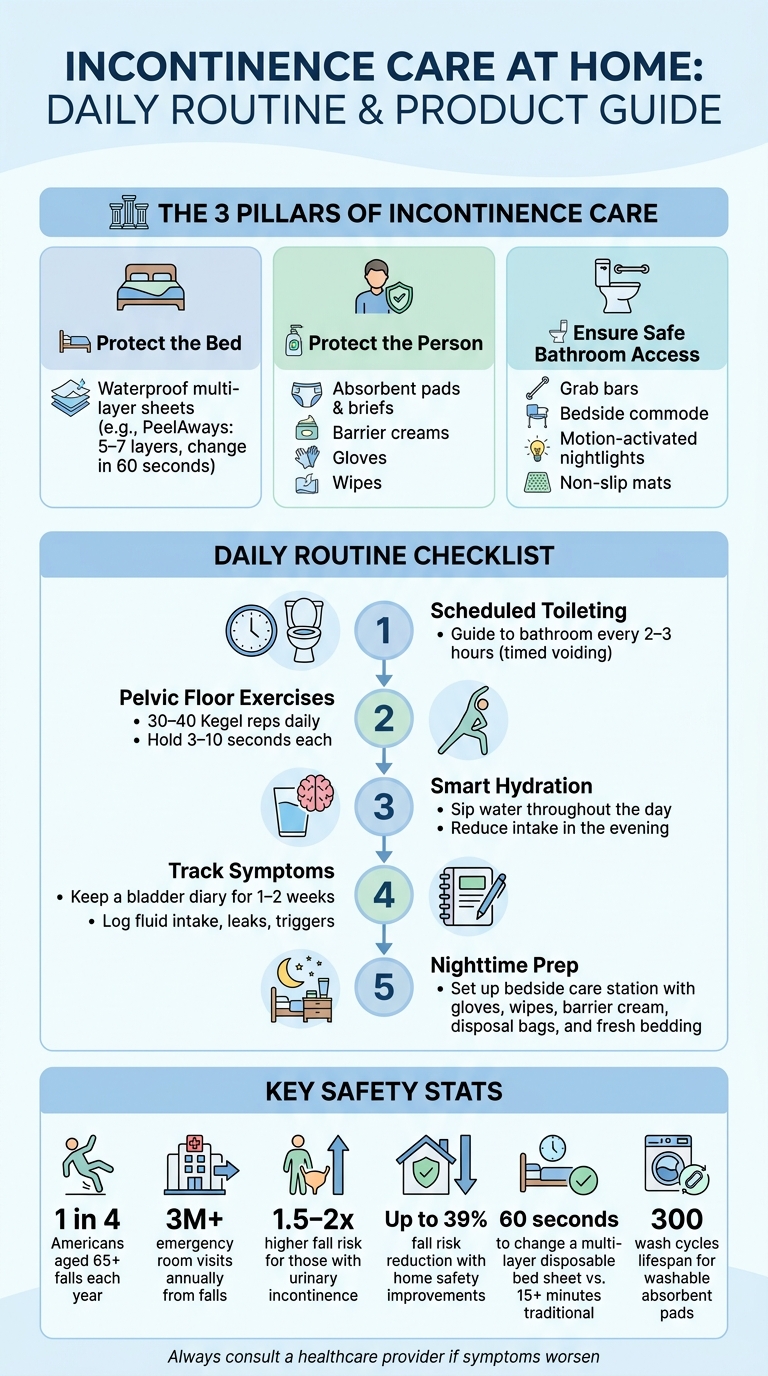
Incontinence Care at Home: Daily Routine & Product Guide
Part 3 of 4 Continence products - Bed and chair protectors
What Caregivers Should Know About Incontinence
Incontinence shows up in different ways, each with its own causes and care requirements. Understanding the type of incontinence is the first step in choosing the right products and routines to maintain dignity and make daily life more manageable.
Common Types and Triggers of Incontinence
Incontinence, or the involuntary loss of bladder control, is grouped into several categories: stress, urge, mixed, functional, and overflow. Stress incontinence happens during physical activities like coughing, sneezing, or lifting, leading to small leaks. Urge incontinence creates a sudden, intense need to urinate that’s difficult to control. Mixed incontinence combines elements of both stress and urge types. Functional incontinence often affects older adults who face mobility or cognitive challenges - it’s not the bladder malfunctioning but rather the difficulty of getting to the bathroom in time. Overflow incontinence, where the bladder doesn’t empty completely, is more serious and can result in kidney complications if untreated.
Certain habits and conditions can make incontinence worse. Consuming caffeine or alcohol, drinking too much liquid late in the day, medication changes, illnesses, and even emotional stress can all amplify symptoms.
"Although incontinence is more common among older adults, it is not a normal part of aging." - MSD Manual
Understanding these types and triggers helps caregivers know when it’s time to seek professional advice.
When to See a Healthcare Provider
Many forms of incontinence can be managed at home, but there are warning signs that require medical attention. Watch for symptoms like pain during urination, blood or cloudiness in the urine, a sudden increase in frequency, or new neurological symptoms like leg weakness. Skin issues, such as redness, rashes, or open sores caused by prolonged exposure to moisture, also need immediate care to avoid infections.
"It's important to establish healthy bladder practices, especially before considering treatment options." - Dr. Samantha DeAndrade, Urogynecologist and Reconstructive Pelvic Surgeon
If accidents become more frequent or routines aren’t working, keeping a bladder diary can help. Track fluid intake, bathroom visits, and leakage patterns to share with a healthcare provider. This can provide valuable insights for treatment or adjustments.
While medical advice is key when symptoms change, the daily caregiving journey comes with its own set of hurdles - both physical and emotional.
The Daily Challenges Caregivers Face
Caregivers often deal with constant cleanups, piles of laundry, and disrupted sleep due to nighttime care. These tasks can take a physical toll, but the emotional strain is just as heavy. The care recipient may feel embarrassed or ashamed, sometimes hesitating to ask for help. On the other side, caregivers may wrestle with feelings of guilt or burnout. Acknowledging these challenges is essential in building a care routine that works for both the caregiver and the person receiving care.
How to Build a Daily Incontinence Care Routine
Creating a daily routine can make caregiving more manageable while helping to reduce accidents. By scheduling bathroom visits, incorporating specific exercises, and making thoughtful choices about diet and hydration, you can bring more structure and predictability to the day - for both you and the person you’re caring for.
Scheduled Toileting and Bladder Training
A consistent schedule for bathroom visits helps maintain dignity and promotes better bladder control over time. This approach, known as timed voiding, involves guiding the person to the bathroom every 2–3 hours rather than waiting for the urge to go. Over time, this routine can help retrain the bladder to follow a predictable pattern, and you can gradually extend the intervals as control improves.
Sticking to the schedule is key. Tools like a digital caregiver planner (around $25.00) can help track bathroom visits, medications, and other caregiving tasks, making it easier to spot patterns and stay organized. Keep essential supplies - like gloves, wipes, barrier creams, and bed protectors - within easy reach, and try to schedule more demanding caregiving tasks during times when the person is most alert.
Pelvic Floor Exercises and Activity Adjustments
Strengthening the pelvic floor muscles through exercises, often called Kegels, can improve bladder control. The process is straightforward: tighten the muscles you’d use to stop passing gas, hold for three seconds, then relax for three seconds. Gradually increase to 10-second holds, aiming for 30 to 40 repetitions spread throughout the day.
"Strong pelvic floor muscles can go a long way toward warding off incontinence." - Harvard Health Publishing
However, over one-third of people may unknowingly contract the wrong muscles. To avoid this, focus on isolating the correct muscles, breathe naturally, and avoid practicing Kegels while urinating, as this can interfere with fully emptying the bladder. The Mayo Clinic Staff suggests making Kegels part of your daily routine: "To keep getting benefits from Kegels, make these exercises a lasting part of your daily routine." You can easily incorporate them into idle moments, like waiting at a red light. For those with stress incontinence, doing a quick Kegel before coughing, sneezing, or lifting can help prevent leaks.
Diet, Fluid Intake, and Constipation Prevention
Cutting back on fluids may seem like a good idea, but it often backfires by concentrating urine, which can irritate the bladder. Instead, aim to sip water steadily throughout the day, while reducing intake in the evening to minimize nighttime disruptions.
| Strategy | Action | Benefit |
|---|---|---|
| Smart Hydration | Sip water throughout the day | Prevents bladder irritation and supports health |
| Fluid Timing | Reduce intake in the evening | Minimizes nighttime accidents and improves sleep |
| Bladder Training | Schedule visits every 2–3 hours | Helps improve predictability and control |
| Symptom Tracking | Keep a bladder diary | Identifies triggers and patterns |
Keeping a bladder diary for one to two weeks can be incredibly helpful. By recording fluid intake, the timing of leaks, and any foods or drinks that seem to trigger urgency, you’ll gather valuable insights for both yourself and your healthcare provider. Small changes based on these observations can make a noticeable difference. A well-structured routine also sets the stage for using effective and dignified incontinence care products.
sbb-itb-45288fe
Products That Make Incontinence Care Easier at Home
Managing incontinence at home doesn't have to be overwhelming. The right products can make the process simpler while preserving dignity for everyone involved. Tools like PeelAways multi-layer disposable waterproof bed sheets can drastically cut down on laundry and streamline care.
PeelAways Multi-Layer Disposable Waterproof Bed Sheets

Middle-of-the-night accidents are exhausting. They often mean soaked mattresses, endless laundry, and long disruptions to sleep. PeelAways changes all that. These fitted sheets come with 5 to 7 waterproof layers, so when one layer is soiled, you simply peel it away to reveal a clean one underneath. The whole process takes less than 60 seconds - far quicker than the 15 minutes or more it usually takes to change a bed the traditional way.
Made from a breathable bamboo blend, these sheets are hypoallergenic, noiseless, and free of Vinyl, PVC, Phthalates, and fire retardants. Each layer is durable enough to last 7–10 days if not soiled, and the elastic corners ensure a snug fit on various mattress sizes. Plus, PeelAways look and feel like regular bedding, helping maintain a sense of normalcy while easing the caregiver's workload.
"These have saved my sanity! With 2 incontinent special needs teenagers... they hold a LOT of liquid and are easy to use and tear away. No more 15 loads of laundry and wet mattresses!" - Jalene Stanger
Pricing starts at $34.99 for a Twin 5-layer pack, with Queen sheets at $47.99 and King sheets at $53.99. Bulk 12-packs are also available starting at $371.88. Blog readers can save 10% with code BLOGS10 at checkout.
For extra protection, consider pairing PeelAways with absorbent pads to keep bedding safeguarded between changes.
Absorbent Pads and Mattress Protection Options
PeelAways are a game-changer for nighttime care, but absorbent pads can add an extra layer of daytime protection. These pads are perfect for targeting high-risk areas and work well as a supplement to full-bed coverage. Washable pads can withstand up to 300 wash cycles, lasting about two years with daily use. Many now come with antibacterial treatments that eliminate 99.9% of odor-causing bacteria.
By layering protective options, you’re always just one peel or swap away from a clean, dry surface. When selecting absorbent pads, look for features like non-slip backing and stretchable side flaps to keep them securely in place.
Bathroom and Bedside Tools for Safety and Convenience
Reducing the distance to the bathroom can make a huge difference. A bedside commode provides easy access, while a handheld urinal offers a practical nighttime solution for men without requiring them to leave the bed.
Installing grab bars is another effective way to enhance safety. Placed near the toilet and along the path to the bathroom, they reduce the risk of falls during urgent trips. Pair grab bars with a plug-in nightlight to create a well-lit path, helping to prevent accidents.
For those who move frequently during sleep, sheet straps or clips can keep waterproof layers firmly in place, preventing leaks caused by shifting. These small additions, like PeelAways, create a more manageable and dignified care environment by cutting cleanup time and improving safety.
Setting Up a Safe and Dignified Home for Incontinence Care
Creating a well-organized home can make a world of difference for those managing incontinence. It’s not just about convenience - it’s about reducing fall risks, making cleanup quicker, and ensuring dignity remains intact. Focus on three key areas: clear pathways, a nighttime care setup, and respectful communication.
Room Layout and Mobility Tips
Start by clearing the path from the bed to the bathroom. Loose rugs, stray cords, or small furniture can be serious tripping hazards. The National Council on Aging reports that 1 in 4 Americans aged 65 and older falls each year, leading to over 3 million emergency room visits annually in the U.S. For those with urinary incontinence, the odds of falling are 1.5–2 times higher, often due to nighttime urgency and hurried bathroom trips.
Safety upgrades make a big difference. Install grab bars by the toilet and in the shower or tub. Add non-slip mats both inside and outside the bathroom. Motion-activated nightlights along hallways and bedroom floors can make nighttime navigation much safer. Studies show that home safety improvements like these can cut fall risks by up to 39% in older adults.
For those using walkers or wheelchairs, ensure doorways are wide enough for easy turns. Replace round doorknobs with lever handles to make opening doors simpler. If cognitive challenges are part of the picture, keeping the bathroom door open with the light on at night can help guide the way. These adjustments create a safer, more accessible environment.
Nighttime Care Strategies
Nighttime care can be the most challenging - but preparation changes everything. Set up a care station near the bed with essentials like gloves, wipes, barrier cream, disposal bags, protective underwear, and fresh bedding. Keeping supplies within reach minimizes disruption and ensures the person is never left unattended during a change.
For bedding, speed matters. PeelAways sheets allow for quick changes, cutting down on caregiver fatigue and nighttime stress. A dimmable or motion-activated lamp near the bed provides just enough light to handle changes discreetly, without fully waking everyone up.
If the bathroom is too far or difficult to access at night, consider placing a bedside commode on the same side of the bed. This eliminates the need for a rushed trip down a dark hallway, enhancing both safety and convenience. Alongside these physical adjustments, maintaining respectful communication is equally important.
Supporting Emotional Well-Being and Independence
The way you communicate matters just as much as the care itself. Use neutral and calm language to reduce embarrassment. Avoid focusing on accidents - instead, guide the person toward getting clean and comfortable. Simple gestures like knocking before entering, covering them during changes, and storing supplies out of sight go a long way in preserving dignity.
Whenever possible, involve the individual in their care. Let them choose their products, adjust their clothing, or help decide on a bathroom schedule. These small acts of involvement can reinforce their sense of control and independence. Explain each step of the process and ask how much assistance they want. This collaborative approach builds trust, reduces resistance, and makes daily routines smoother for everyone involved.
Conclusion: The Right Tools Make Incontinence Care Manageable
Caring for incontinence at home gets easier when you combine consistent routines with the right products. Together, they help reduce the caregiver's workload while preserving the dignity of the person you're caring for. It all comes down to three essential pillars that simplify the process.
Picture your setup in three parts: protect the bed, protect the person, and ensure safe access to the bathroom. Waterproof bedding takes care of the first, absorbent briefs and pads handle the second, and the third is all about tools like grab bars, nightlights, or a bedside commode. When these three are in place, accidents shift from feeling overwhelming to something you can handle. For instance, PeelAways shows how focusing on just one pillar - protecting the bed - can make a world of difference.
When it comes to bedding, PeelAways multi-layer disposable sheets turn what could be a long, frustrating bedding change into a quick 60-second fix. This means your loved one can get back to sleep faster, and so can you. As one satisfied customer, Sharon A., shared: "PeelAway sheets make life so much easier for patient care and caregivers. Absolutely a must have item."
Right now, blog readers can save 10% on PeelAways. Just use code BLOGS10 at checkout. You can even combine this offer with subscriptions or bundle deals for extra savings.
Shop PeelAways on Amazon or directly at PeelAways.com.
FAQs
How do I pick the right incontinence products for my loved one?
To find the best care plan, begin by identifying the type of incontinence - whether it’s stress, urge, overflow, or functional. Keep a record of leakage patterns, noting the time, frequency, and amount. This will help you select the right absorbency level. A snug fit around the waist and legs is crucial to avoid leaks. For bedding, waterproof, multi-layer options like PeelAways can make cleanup faster and easier. Choose skin-friendly materials to protect against irritation, and consider mobility needs when deciding between tabbed briefs or pull-on protective underwear.
How can I reduce nighttime accidents without cutting fluids too much?
To help reduce nighttime accidents while staying hydrated, stick to a steady routine. Drink fluids consistently during the day, but cut back in the evening, especially on drinks that can irritate the bladder, like caffeine or citrus juices. Before bed, try double-voiding: use the bathroom, wait a few minutes, and go again to ensure your bladder is as empty as possible. For added peace of mind, use waterproof bedding. It makes cleanup easier and keeps the sleeping area dry and comfortable, helping everyone rest a little easier.
What warning signs mean we should call a doctor?
If you observe skin irritation, pressure sores, or any sudden shift in the frequency or severity of incontinence, it's important to reach out to a doctor. Additionally, watch for signs of infection like redness, swelling, or fever, and seek medical advice promptly if these occur. Regular skin checks can help catch problems early and may prevent incontinence-associated dermatitis.
Comments
0



SAVE MONEY & WATER
Professionals & Institutions save a fortune on labor/laundry.

SUPERIOR COMFORT
The first thing our customers notice is how soft our sheets are.

100% WATERPROOF
Each layer is 100% Waterproof, perfect for spills and accidents

SAVE TIME
Change the sheet in under 1 minute without stripping the bed.

Leave a comment