
Disposable vs. Washable Bedding: Pros and Cons

When managing incontinence, choosing between disposable and washable bedding can impact your daily routine, budget, and convenience. Here’s a quick breakdown:
- Disposable Bedding: Single-use sheets like PeelAways offer fast cleanup, high absorbency, and reduced physical effort for caregivers. They’re great for heavy leaks, travel, and emergencies but come with ongoing costs and generate more waste.
- Washable Bedding: Reusable sheets and pads are cost-effective over time and reduce waste. They’re better for light to moderate leaks but require frequent laundering, which can increase utility bills and effort.
Quick Comparison
| Feature | Disposable Bedding | Washable Bedding |
|---|---|---|
| Cost | Higher (recurring) | Lower (long-term savings) |
| Absorbency | High (50–96 oz) | Moderate (up to 5 liters) |
| Convenience | Easy, no laundry | Requires frequent washing |
| Waste | Higher | Lower (but uses more water/energy) |
| Best For | Heavy leaks, travel, emergencies | Light/moderate leaks, home use |
Key Takeaway: Disposable bedding prioritizes convenience and hygiene, while washable options save money and reduce waste. Many caregivers use a mix of both to balance cost and practicality.
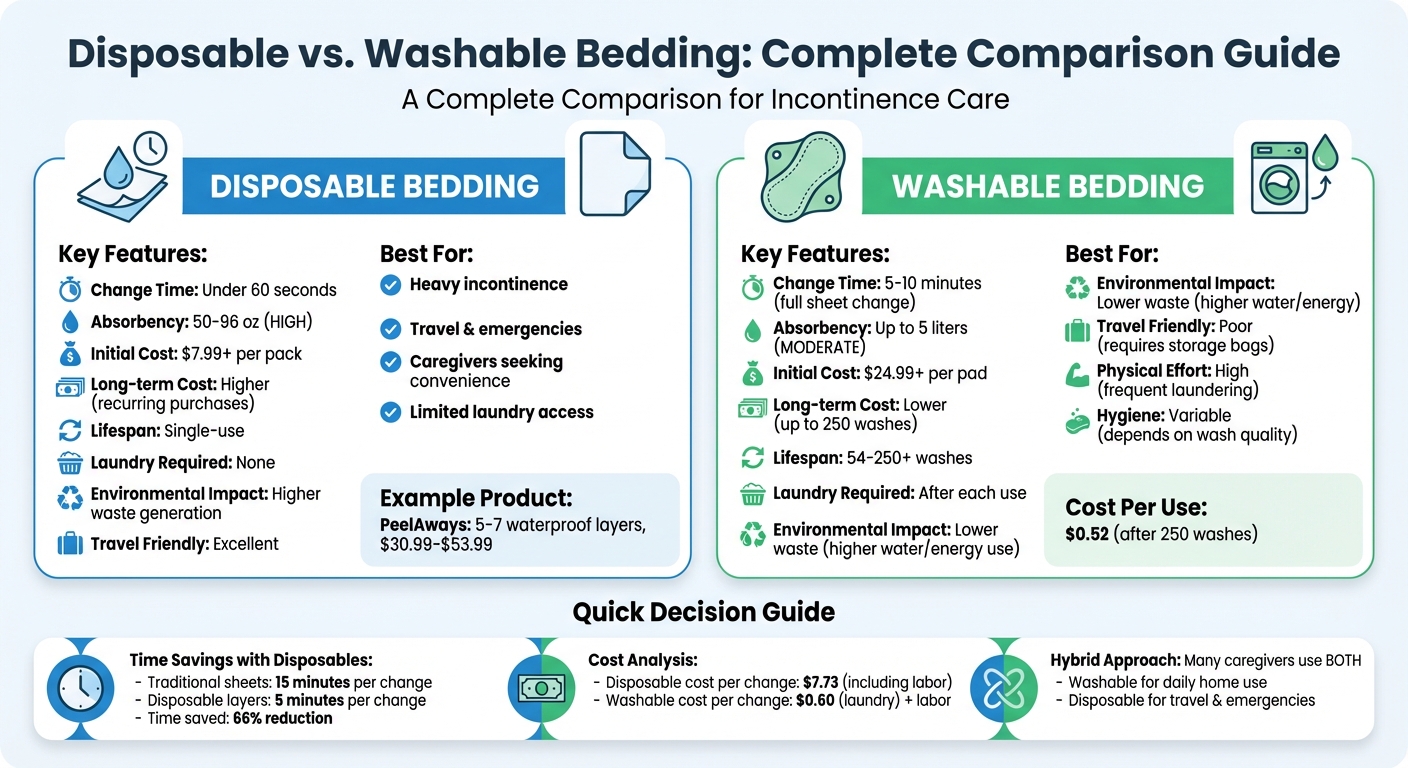
Disposable vs Washable Bedding Comparison Chart
Disposable Bedding: Benefits and Drawbacks
Benefits of Disposable Bedding
Disposable bedding offers a practical solution for those seeking convenience, especially during unexpected nighttime accidents. Forget late-night laundry marathons - these sheets allow for super-fast changes, taking less than 60 seconds compared to the usual 5–10 minutes required for traditional sheets [3]. That time savings can feel like a lifesaver when every minute of sleep matters.
Another major perk is the reduced physical strain. Unlike traditional sheets that require lifting the mattress and wrestling with fitted corners, multi-layer disposable systems let you switch out layers without moving the person at all. This feature can be a game-changer for caregivers, helping to ease back strain and reduce the physical toll of frequent bedding changes [3]. For families dealing with daily accidents, this convenience can make caregiving more manageable.
Hygiene is another strong point. Each fresh layer provides an immediate, odor-free surface, eliminating the need to store soiled linens [1] [2]. Many high-quality disposable options use air-permeable materials that help keep skin dry by minimizing heat buildup. Some even offer up to twice the absorbency of standard cloth pads, making them ideal for moderate to heavy incontinence [2]. On top of that, they’re portable - perfect for travel, hospital stays, or even RV living, where laundry facilities might not be available [2] [3].
Despite these advantages, disposable bedding does have its downsides.
Drawbacks of Disposable Bedding
The biggest downside is the ongoing cost. Unlike washable bedding, which can be reused for months or years, disposable bedding requires constant replenishment. A single set can cost between $30 and $54, and these recurring expenses can add up quickly, especially for those dealing with frequent accidents [2].
There’s also the environmental impact to consider. Since each soiled layer is discarded, disposable bedding generates more waste compared to reusable options [2]. Additionally, running out of clean layers at the wrong time can leave you unprepared, which makes maintaining a steady inventory essential.
Occasionally, heavy accidents may cause seepage, requiring immediate removal to prevent saturation of the next layer [3]. Another limitation is that some disposable fitted sheets are designed to fit mattresses only 6–12 inches deep, which may not work for all beds [1] [3].
Example: PeelAways Disposable Bedding
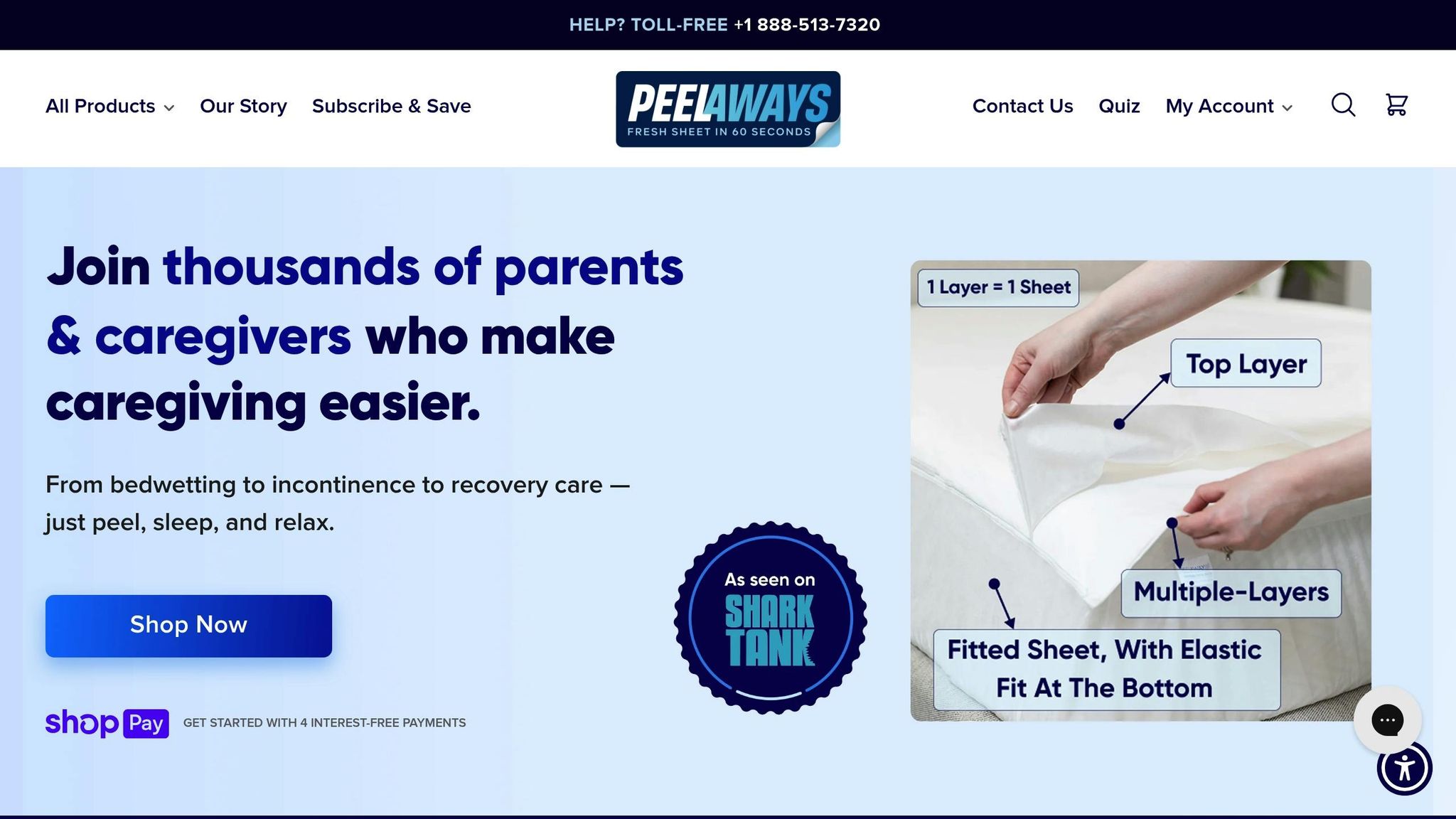
PeelAways is a standout example of disposable bedding that combines convenience with thoughtful design. Their patented multi-layer system includes 5 to 7 waterproof layers, each capable of lasting 7–10 days if not soiled. Made from a bamboo–rayon–polyester blend, these sheets are soft, breathable, and free from vinyl, PVC, and phthalates [1] [3].
PeelAways has earned the trust of over 12,000 customers, boasting an impressive 4.61 out of 5-star rating from 252 verified reviews [3]. Brooklyn Shields, a caregiver and mom, shared her experience:
As a mom and a caregiver, these sheets have been a great addition to make my day easier. quicker bed changes and less laundry.
The product is versatile, catering to elder care, special needs, potty training, and medical recovery in various settings, such as homes, hospitals, and RVs [3].
| PeelAways Size | Layers | Dimensions | Depth | Price |
|---|---|---|---|---|
| Crib | 5 | 52" × 28" | 6" | $30.99 |
| Cot | 7 | 75" × 30" | 6" | $34.99 |
| Twin | 5 | 75" × 39" | 6" | $34.99 |
| Twin XL | 5 or 7 | 80" × 39" | 9" | $34.99–$41.99 |
| Full | 5 | 75" × 54" | 12" | $43.99 |
| Queen | 5 | 80" × 60" | 12" | $47.99 |
| King | 5 | 80" × 78" | 12" | $53.99 |
PeelAways also offers savings options: a 15% discount for subscriptions and additional discounts of 5% for bundles of three units or 10% for six units [3]. For those needing extra security, sheet straps or clips can help keep the corners in place throughout the night [1] [3].
Washable vs Disposable Bedpads
Washable Bedding: Benefits and Drawbacks
Choosing washable bedding means weighing the benefits of long-term savings and environmental impact against the challenges of maintenance and convenience. While disposable options offer quick and easy solutions, washable bedding provides a more sustainable and cost-efficient alternative, though it does require more effort.
Benefits of Washable Bedding
Washable bedding can save money over time, especially for those dealing with frequent accidents. For instance, high-quality washable underpads start at about $24.99 [2]. These underpads can last for up to 250 washes, bringing the cost per use down to just $0.52 - far lower than the ongoing expense of disposable options [4][7].
There’s also the environmental aspect. Reusable bedding significantly reduces landfill waste. A striking example: if all 51.4 million inpatient procedures in the U.S. in 2010 had used reusable linens, the healthcare industry could have saved over $76 million while cutting waste [6].
Comfort is another highlight. Washable bedding, often made from cloth or bamboo blends, feels softer and quieter compared to the plastic-backed materials used in disposables. They also hold up better under the physical demands of caregiving, such as repositioning, where disposables might tear [7].
Still, these advantages come with some notable challenges.
Drawbacks of Washable Bedding
One of the most common complaints about washable bedding is the maintenance it requires. These products demand thorough laundering, including hot water cycles and pre-treatment for stains [4]. A user, Zeny, shared her frustrations:
The manufacturer says to wash each pair separately & do not mix with other laundry... That all added up to 5 pre-treatment washings... Almost 5 hours to wash 5 pairs.
Additionally, frequent heavy-duty laundry cycles can drive up utility bills, with some caregivers reporting increases of over $100 per month [5].
Absorbency is another limitation. Washable bedding typically holds about 8 teaspoons (approximately 1.35 fl oz or 40 mL) of liquid, making it suitable only for light to moderate accidents [5]. If not cleaned properly, odors and bacteria can become a problem, so it’s crucial to change pads immediately when they get wet [5].
Changing washable fitted sheets can also be more labor-intensive [3]. Traveling with washable bedding adds another layer of inconvenience, as soiled items need to be stored in waterproof bags. Caregiver Jean F. shared her workaround:
I bought 4 so I can cycle them in and out and never have an urgent need to do laundry. For some, this may seem small, but if you know, you know!
While these issues may seem minor, they can add up, making washable bedding less practical for some users.
Comparison Table: Disposable vs. Washable Features
| Feature | Disposable Bedding | Washable Bedding |
|---|---|---|
| Initial Cost | Low (around $7.99+) | High (around $24.99+) |
| Long-Term Cost | Higher (constant replacement) | Lower (up to 250+ washes) [4] |
| Absorbency | High (up to 50–96 oz) [4] | Lower (best for light/moderate) [5] |
| Convenience | High (toss after use) | Low (requires regular laundering) |
| Hygiene | High (fresh every time) | Variable (depends on wash quality) |
| Durability | Low (prone to tearing) [7] | High (designed for repositioning) [7] |
| Environmental Impact | Higher waste generation | Lower waste (but higher water/energy use) [5] |
| Travel Friendliness | Excellent (portable, disposable) | Poor (requires storage of soiled items) [5] |
sbb-itb-45288fe
What to Consider When Choosing Between Disposable and Washable Bedding
When deciding between disposable and washable bedding, there’s no universal answer. Your choice will depend on your specific needs, budget, and lifestyle. Let’s break it down.
Absorbency and Performance
How well bedding performs under pressure is a major consideration. High-quality disposable underpads are designed with advanced channels that quickly spread liquid, making them 3x faster at absorbing and 2x more absorbent than standard supermarket brands. This means fewer layers are needed [2][8].
Washable pads, on the other hand, can hold up to 5 liters (5,000ml) of liquid, making them suitable for light to moderate incontinence. However, they may not provide the same level of leak protection as disposables [2][8]. As NorthShore Care Supply puts it:
Washable incontinence products provide eco-friendly reusability, while disposables deliver maximum absorbency and convenience [2].
Disposables often feature air-permeable materials to reduce heat and keep skin dry, while washables offer a soft, cloth-like feel. However, reusable bedding can trap odors and stains if not washed properly. Considering the average person sheds 1.5 grams of dead skin cells daily, reusable pads should be washed in hot water at least weekly to prevent bacteria buildup [9]. These differences in performance directly impact both convenience and cost.
Cost and Budget
The cost of bedding varies depending on how long you plan to use it. Disposable underpads start at $7.99 per pack, while washable pads begin at $24.99 [2].
Labor costs also play a role. Changing traditional linens takes about 15 minutes, compared to just 5 minutes for disposable peel-off layers - a 66% reduction in time. At a labor rate of $25 per hour, that’s $6.25 for traditional bedding changes versus just $2.08 for disposables per change [10]. Additionally, laundry costs average about $0.60 per pound, while disposal costs for a single disposable pad are around $0.15. Altogether, the cost per use for disposables is approximately $7.73 [10].
Washable pads, though higher upfront, can be more economical over time if you’re prepared to handle frequent washing. They typically last through about 54 washes before needing replacement [10]. Many caregivers find a hybrid approach works best: washable pads for daily home use and disposables for travel or high-stress situations [2][8].
Environmental Impact
Environmental concerns are another factor to weigh. Disposables add to landfill waste, which can be a drawback if reducing waste is a priority [8]. As Incontinence Choice notes:
Disposable products aren't the best option if you're trying to cut back on waste. If sustainability matters to you, washable pads might be a better fit [8].
However, washables require significant water and energy for frequent laundering, especially since hot water is recommended to kill bacteria and dust mites [9]. Disposables, while generating waste, save on water and energy that would otherwise be used for washing [1][10].
For those concerned about chemicals, some modern disposables, like PeelAways, are free from Vinyl, PVC, Phthalates, and fire retardants [1]. Eco-conscious caregivers can conserve water by waiting to wash a full load, but soiled items should still be cleaned promptly to manage hygiene and odors [2][9].
Convenience and Lifestyle Fit
Your daily routine and living situation should heavily influence your choice. Disposables are ideal for quick changes, reducing exposure to bodily fluids during laundry, and are perfect for travel, hospital stays, or situations without easy access to laundry facilities [1][2][8].
Washables, on the other hand, are better suited for long-term home care where laundry facilities are readily available [8]. Some washable pads come with "tuck-in sides" to prevent shifting during the night, a feature less common in disposables [8]. However, traveling with washables requires storing soiled items in waterproof bags until they can be washed [8].
For busy caregivers or professional settings, the 10-minute time savings per change with disposables can outweigh their higher per-unit cost [10]. Many caregivers find success with a hybrid approach: washable pads for predictable daily use and disposables for outings or emergencies [8]. Some retailers even offer a 10% discount on recurring orders for incontinence supplies, which can help with ongoing costs [8].
Conclusion: Choosing the Right Bedding for Your Situation
When it comes to deciding between disposable and washable bedding, there’s no universal answer - it all boils down to your specific needs and priorities. Whether you value convenience, long-term savings, or reducing waste, the right choice will depend on your unique circumstances.
Disposable bedding, such as PeelAways, shines in situations where speed and hygiene are key. For those managing heavy incontinence, frequent travel, or late-night accidents, the ability to swap out sheets in under a minute without stripping the entire bed can be a game-changer [1]. Caregivers often find disposables especially helpful, as they cut down on physical effort and eliminate the endless cycle of washing and drying [1][2].
On the other hand, washable bedding offers a different kind of practicality. It’s ideal for long-term use in homes with easy laundry access and works well for managing light incontinence. While it does require cleaning after each use, washable bedding can be a more environmentally conscious and budget-friendly option over time [2].
Many caregivers find that a hybrid approach works best. Washable pads might handle day-to-day needs, while disposable options like PeelAways are kept on hand for emergencies or travel [2]. By considering factors like absorbency, cost, and environmental impact, you can find a balance that works for you. The goal is to choose bedding that simplifies your routine and fits seamlessly into your lifestyle.
FAQs
What are the pros and cons of disposable vs. washable bedding for incontinence care?
Choosing between disposable and washable bedding for incontinence care really comes down to what matters most to you - whether it’s convenience, hygiene, or long-term cost.
Disposable bedding, such as Peelaways, is all about simplicity and cleanliness. Its multi-layer, peel-away design lets you remove a soiled layer to instantly reveal a fresh one beneath. No need for laundry, lifting mattresses, or worrying about cross-contamination. This makes it a great option for heavy incontinence, frequent changes, or situations where hygiene and quick cleanups are essential - like elder care, post-surgery recovery, or even potty training.
On the other hand, washable bedding can save money over time and is often seen as a more eco-conscious choice. However, it does require regular washing, which might not be as convenient. Plus, washable options tend to work better for lighter incontinence and may not provide the same level of absorbency or leak protection as their disposable counterparts.
The best option depends on your situation. If convenience and handling heavy incontinence are top priorities, disposable bedding is likely your go-to. But if you’re managing lighter needs and care about reducing waste, washable bedding could be the better fit.
What are the environmental impacts of disposable and washable bedding?
The environmental impact of bedding depends on whether it’s disposable or washable, with factors like waste production, resource consumption, and durability playing key roles.
Disposable bedding is designed for single use, which means it generates more waste and contributes heavily to landfills. Its production and transportation also require a significant amount of energy and raw materials, resulting in a larger carbon footprint.
On the other hand, washable bedding can be reused, reducing waste over time and making it a more environmentally friendly choice. However, laundering washable bedding involves the use of water, detergent, and energy. The overall impact depends on how efficiently it’s washed and how long it lasts.
In general, washable bedding proves to be a greener option when used thoughtfully, while disposable bedding offers convenience but at the expense of greater waste and resource use.
Is it possible to use both disposable and washable bedding together effectively?
Combining disposable and washable bedding can be a smart way to handle incontinence care. Disposable sheets make changes quick and easy while helping maintain hygiene, and washable bedding adds a layer of comfort for everyday use.
Take Peelaways, for instance. These disposable sheets come with a multi-layer peel-away design, so you can simply remove a soiled layer without the hassle of lifting the mattress or doing laundry. This mix of options offers convenience, cleanliness, and flexibility, making it a great choice for elder care, medical recovery, or even potty training.
Comments
0



SAVE MONEY & WATER
Professionals & Institutions save a fortune on labor/laundry.

SUPERIOR COMFORT
The first thing our customers notice is how soft our sheets are.

100% WATERPROOF
Each layer is 100% Waterproof, perfect for spills and accidents

SAVE TIME
Change the sheet in under 1 minute without stripping the bed.

Leave a comment