
Disposable Sheets vs. Traditional Bedding

Changing bedding after incontinence incidents doesn’t have to be a 15-minute chore. Disposable multi-layer sheets, like PeelAways, cut that time to just 60 seconds, saving caregivers hours of work annually. They also reduce laundry loads by 50–80% and help prevent skin issues by keeping surfaces dry. Here’s how they compare to traditional setups:
Quick Comparison:
| Feature | Disposable Sheets | Traditional Bedding |
|---|---|---|
| Time per bed change | ~60 seconds | 10–20 minutes |
| Laundry required | None | High |
| Skin moisture control | Excellent | Moderate to poor |
| Mattress protection | Built-in waterproof layer | Requires separate covers |
| Cost per use | ~$7.73 | $6.25+ (labor + laundry) |
Switching to disposable sheets simplifies care, reduces physical strain, and improves hygiene. Whether you’re a family caregiver or managing a care facility, this solution can save time and effort while improving comfort for those in need.
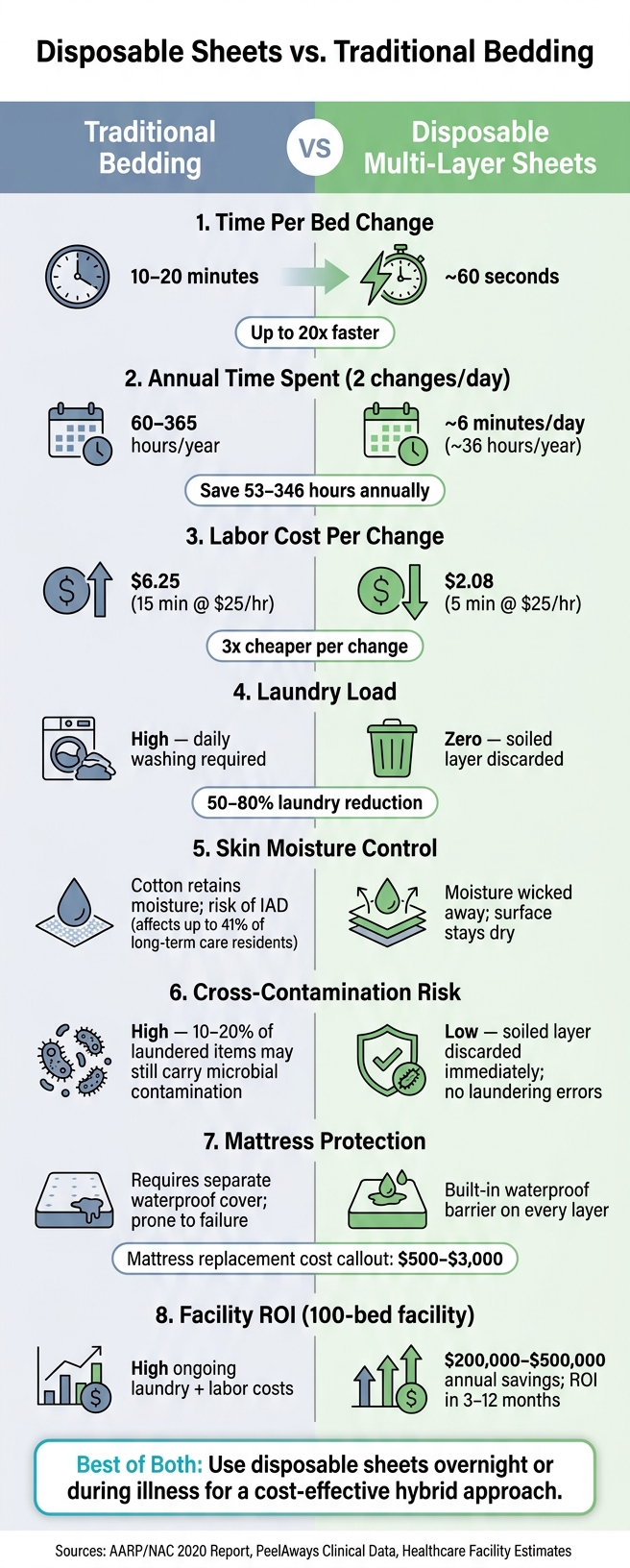
Disposable Sheets vs. Traditional Bedding: Time, Cost & Hygiene Compared
What Is Traditional Bedding in Incontinence Care?
Traditional bedding for incontinence care relies on a multi-layered system designed to protect the mattress while keeping the patient comfortable. This setup typically includes a waterproof mattress protector, fitted and flat sheets, and an absorbent bed pad. After an incontinence episode, all affected layers must be removed, washed, and replaced before the bed can be used again.
Components of Traditional Bedding
The system starts with a waterproof mattress protector, often made with polyurethane or vinyl backing, to shield the mattress from fluids. On top of this, standard fitted and flat sheets are added for comfort. The final layer is an absorbent bed pad (also known as an underpad or "chuck"), strategically placed where accidents are most likely to occur. These pads typically feature a soft top layer for comfort, an absorbent core to trap liquids, and a waterproof backing to prevent seepage onto the sheets below.
Some caregivers add extra measures, like quilted mattress covers for additional protection or waterproof pillow and duvet protectors to extend the system’s effectiveness. While these layers provide a barrier against leaks, they also require considerable upkeep and cleaning.
Standard Bed Change Workflow
When an incontinence incident occurs, the process of changing the bed is both time-consuming and physically demanding. Caregivers must strip all soiled layers, lift and remove the mattress protector, transport the laundry for washing, and then dry and remake the bed. For bed-bound individuals, this process is even more complex, involving careful repositioning to ensure safety during the change. On average, healthcare facilities estimate that a single bed change takes about 15 minutes, though the range can vary between 10 and 20 minutes.
Challenges of Traditional Bedding
This approach presents several challenges, both in terms of time and hygiene. With caregivers often performing one to three bed changes per day, the annual time spent on this task can range from 60 to 365 hours. Additionally, about 70% of caregivers report that incontinence care significantly increases their laundry workload, and 65% say the overwhelming nature of these tasks is one of the hardest parts of caregiving.
The layered setup, while functional, can lead to inefficiencies. For instance, bed pads often shift during sleep, moving away from the areas that need protection most. Clinical reviewer Rachel Nall, MSN, CRNA, highlighted this issue:
"The biggest issues I saw with these pads... was their constant migration up to the upper or middle back - and not where you needed them to be, which is under the buttocks." - Rachel Nall, MSN, CRNA
There are also concerns about skin health. Prolonged exposure to damp bedding can increase the risk of pressure sores and skin breakdown. Furthermore, the durability of underpads diminishes over time, with even high-quality options retaining only about 85% of their absorption capacity after 100 washes. This decline in performance adds another layer of complexity to managing incontinence care effectively.
sbb-itb-45288fe
What Are Disposable Multi-Layer Sheets?
Disposable multi-layer sheets are designed with five to seven soft, breathable, and completely waterproof layers. When one layer gets soiled, caregivers can simply peel it away to reveal a clean, fresh layer underneath. This eliminates the hassle of stripping the bed, doing emergency laundry, or lifting a heavy mattress. Let’s explore the design, functionality, and efficiency of disposable vs. washable bed sheets in more detail.
Design and Features
These sheets are built to combine comfort and practicality. Each layer is crafted to provide softness, absorb moisture, and offer dependable fluid protection. Made from a bamboo/rayon blend, the fabric is 32% softer than traditional bedding. Plus, they’re free from vinyl, PVC, phthalates, and fire retardants, making them a safer option.
A waterproof membrane is integrated into every layer, so there’s no need for a separate mattress protector. Unlike loose bed pads that can shift during sleep, these fitted sheets stay securely in place, ensuring a comfortable and hassle-free experience.
How They Work
Using these sheets is incredibly simple. If an accident happens, caregivers can peel away the soiled layer by pulling down one corner, revealing a fresh layer in less than 60 seconds. This process doesn’t require repositioning the patient or rushing to do laundry.
What’s even better? One person can handle the sheet change - even with one hand. In contrast, changing a traditional sheet while a patient is in bed typically requires two caregivers and can take up to 15 minutes. These sheets save time and effort, making them a practical choice for caregivers.
PeelAways as a Leading Example

PeelAways is a patented disposable sheet system that embodies this concept. Lou Leibhaber, former Chief Operating Officer of Lehigh Valley Hospital and Health Network, highlighted its impact:
"On average, it can take two nurses up to 15 minutes to change a sheet while the patient is in the bed. With Peelaways, it can take one nurse less than a minute."
PeelAways offers a range of options, from Crib-A-Peel to King sizes, catering to different care settings. These sheets can cut laundry loads by 50–80% while protecting mattresses. They’re available at peelaways.com, on Amazon, and through Medline for business-to-business facilities. Plus, readers can enjoy 10% off at checkout using the code BLOGS10.
Time Savings and Workflow Comparison
Switching from traditional bedding to disposable multi-layer sheets can dramatically reduce bed-change time - from 15–20 minutes to about 60 seconds. This time reduction is especially valuable during frequent or nighttime incidents.
Traditional Bedding vs. Disposable Sheets: Step-by-Step
Changing traditional bedding involves several steps: gathering supplies, repositioning the patient, removing soiled linens, cleaning the surface, remaking the bed, and managing the laundry. For solo caregivers assisting someone with limited mobility, this process can stretch to 20–30 minutes at home.
In contrast, disposable multi-layer sheets simplify the workflow. With gloves on, you peel back the soiled layer from one corner, discard it, and instantly reveal a clean, waterproof layer. While patient care and incontinence product changes remain necessary, the bedding itself is refreshed in seconds.
| Task | Traditional Bedding | Disposable Multi-Layer Sheets |
|---|---|---|
| Gather supplies & linens | 3–5 minutes | Under 1 minute |
| Strip and remove soiled layers | 4–6 minutes | 60 seconds (peel top layer) |
| Remake the bed | 5–8 minutes | Not needed (fresh layer already in place) |
| Laundry handling | Additional hours per shift | None |
| Total bed-change time | 15–30 minutes | 1–3 minutes |
This streamlined process significantly reduces the workload, which is particularly beneficial in larger care settings.
Impact on Caregivers and Facilities
The time saved with disposable sheets benefits both individual caregivers and care facilities. For example, a home caregiver managing two daily bed changes with traditional bedding might spend about 40 minutes a day - adding up to over 4 hours a week or 200 hours a year. Disposable sheets cut this routine to just 6 minutes daily.
In a 20-bed care facility where 10 residents require two changes per day, traditional bedding can consume 5 hours of staff time daily. Disposable sheets reduce that to about 1 hour, freeing up 4 hours daily for more direct resident care.
Nighttime incidents highlight another advantage. Stripping a bed at 2 a.m. can fully wake the patient, disturb others, and exhaust the caregiver. A quick 60-second peel minimizes disruption, allowing everyone to settle back to sleep faster. This approach not only saves time but also eases the emotional and physical strain on caregivers.
Hygiene and Skin Health
Disposable sheets don't just save time - they also play a key role in maintaining hygiene and protecting skin health. These are critical considerations in incontinence care. Traditional bedding often traps moisture against the skin, which can lead to infections and skin damage. Disposable multi-layer sheets address this by allowing caregivers to remove soiled layers immediately, keeping the skin drier and reducing risks.
Preventing Cross-Contamination
One of the standout benefits of disposable multi-layer sheets is their ability to minimize cross-contamination risks by eliminating the need for laundering. Traditional bedding requires multiple handling and washing steps, each of which can increase the spread of bacteria. Studies show that even after laundering, 10–20% of "clean" items in some facilities still carry microbial contamination due to overloaded or low-temperature wash cycles.
Pathogens like C. difficile, MRSA, and E. coli can survive on fabrics and mattress surfaces for months if not properly cleaned. With a peel-away sheet system, the soiled layer is discarded immediately, and the fresh layer underneath remains untouched by bodily fluids. This eliminates potential errors in the laundering process.
"Each layer is 100% Waterproof, perfect for spills and accidents." - PeelAways
Skin Comfort and Moisture Control
Prolonged exposure to moisture can lead to incontinence-associated dermatitis (IAD), a painful condition that affects up to 36% of adults in acute care and 41% of residents in long-term care. Additionally, macerated skin is 1.7–2.4 times more likely to develop pressure injuries, making moisture control a top priority for individuals who are bedbound.
Traditional cotton sheets absorb moisture but hold it against the skin, which can exacerbate these issues. Caregivers often can't change bedding immediately after every incident, especially during late-night hours, leaving dampness to linger. Disposable multi-layer sheets are designed to wick moisture away from the skin, helping to prevent IAD. Plus, the fabric is free from harsh chemicals like vinyl, PVC, phthalates, or fire retardants, making it a safer option for sensitive or fragile skin.
These sheets also help protect the mattress - a crucial hygiene concern in incontinence care.
Mattress Protection
Mattress contamination is a persistent challenge. Once urine or bacteria seep into the mattress core, surface cleaning can't fully eliminate odors or microbes. Traditional setups often rely on separate waterproof covers or encasements, but these can fail at the edges, degrade over time, or be bypassed during heavy soiling.
Disposable multi-layer sheets solve this problem with a built-in waterproof barrier on every layer. When the top layer is removed, the next layer is already in place, continuing to protect the mattress without any additional setup. This continuous protection is especially valuable in long-term care facilities, where replacing a mattress can cost anywhere from $500 to $3,000.
| Hygiene Factor | Traditional Bedding | Disposable Multi-Layer Sheets |
|---|---|---|
| Cross-contamination risk | High - multiple handling and laundering steps | Low - soiled layer discarded immediately |
| Skin moisture exposure | Cotton stays damp; risk of IAD and maceration | Moisture wicked into absorbent core; surface stays drier |
| Mattress protection | Depends on separate cover; prone to failure | Built-in waterproof barrier on every layer |
| Odor control | Relies on timely washing and hot-water cycles | Soiled layer removed; odor eliminated |
| Pathogen survival risk | Pathogens can survive suboptimal wash cycles | No laundering cycle; soiled layer discarded |
This seamless protection not only promotes hygiene but also reduces the workload for caregivers, making it a practical choice for both homes and care facilities.
Caregiver Convenience and Stress Reduction
Disposable sheets do more than enhance hygiene - they also lighten the physical and emotional load on caregivers. By eliminating the labor-intensive steps of traditional bed changes, caregivers can simply peel away a soiled layer, reducing both physical effort and stress.
Physical Demands of Bed Changes
Changing a bed after an incontinence incident can be physically draining. Traditional methods involve multiple repositionings, bending over the bed, and hauling heavy, wet linens to the laundry. For family caregivers, who often lack professional training, these tasks can increase the risk of injury. The statistics speak volumes: in 2020, nursing assistants had a nonfatal injury and illness rate of 283.5 cases per 10,000 full-time workers, compared to just 78.4 for workers across all private industries. When these incidents occur several times a day or night, the physical toll quickly adds up, leading to exhaustion, pain, and even long-term injuries. This challenging routine highlights the need for streamlining incontinence care tasks to improve safety and efficiency.
Simplified Workflow with Disposable Sheets
Disposable sheets transform a 15–20 minute process into a task that takes about 60 seconds. There’s no need to lift the mattress, fully reposition the individual, or manage loads of laundry. Instead, a caregiver shifts the person just enough to peel away the soiled layer, instantly revealing a clean surface. While other caregiving tasks remain, refreshing the bedding becomes a quick and straightforward step.
The benefits are especially noticeable during nighttime care. A traditional 2:00 a.m. bed change - turning on lights, repositioning the person, and remaking the bed - can take up to 20 minutes. This often leaves both the caregiver and the care recipient too awake to fall back asleep easily. With a peel-away system like PeelAways, that same task takes less than a minute, minimizing disruption. Over time, these shorter nighttime interruptions help reduce sleep debt, which is closely tied to caregiver irritability, poor decision-making, and burnout.
For family caregivers managing two nighttime episodes and one daytime change, this time-saving approach can free up 40–45 minutes daily, or roughly 4–5 hours per week. In skilled nursing facilities, where CNAs care for 10–12 residents, cutting even 8–10 minutes per change can save several hours per shift. This extra time can be redirected to more meaningful tasks, like resident engagement or preventive care, instead of laundry.
Caregiving Contexts in the U.S.
Caregiving in the U.S. is often a balancing act, with many caregivers juggling full-time jobs alongside their responsibilities. According to a 2020 AARP/National Alliance for Caregiving report, 61% of family caregivers work full- or part-time, and 23% provide over 41 hours of care weekly. Among these caregivers, 36% report high levels of stress, with incontinence care frequently cited as a major contributor. It’s also one of the main reasons families turn to nursing homes for support.
For home caregivers, disposable multi-layer sheets significantly reduce the daily laundry workload and make nighttime accidents far less daunting. Knowing that a cleanup can be completed in under a minute - without the hassle of washing wet sheets at 3:00 a.m. - can ease the emotional strain of caregiving. For facility staff, the advantages include faster room turnovers, smoother shift changes, and less physical wear and tear over the course of a demanding day.
PeelAways offers a range of sizes tailored to different needs, from Twin XL (7 layers, $41.99) for hospital and long-term care beds to Queen ($47.99) and King ($53.99) options for home use. These products help caregivers spend less time on cleanup and more time focusing on what truly matters: providing care and support.
Cost and Resource Breakdown
When comparing traditional bedding to disposable multi-layer sheets, it's essential to look beyond the upfront cost. While traditional bedding may seem cheaper initially, factoring in laundry, labor, and wear-and-tear costs reveals a different story. Disposable sheets often emerge as the more cost-effective option, particularly in high-frequency incontinence care scenarios.
Costs of Traditional Bedding
Traditional bedding comes with both visible and hidden expenses. For example, a standard linen sheet and pillowcase set costs about $22.00 upfront and typically lasts through 54 washes. This translates to a per-use replacement cost of approximately $0.41.
Laundry expenses add up quickly. At an average of $1.00 per pound, and with each resident generating about 3 pounds of laundry daily, the annual laundry cost per resident totals around $1,095. Labor is another significant factor - each bed change takes about 15 minutes, costing $6.25 in labor (at $25/hour).
Mattress replacement is often overlooked but adds to the overall cost. Poorly protected mattresses may need replacing every 3–5 years, compared to 7–10 years for mattresses that are well-protected.
Costs of Disposable Sheets
Disposable sheets simplify the cost structure. Each sheet costs about $5.50, with an additional $0.15 disposal fee. Labor costs are significantly reduced to $2.08 per change - just 5 minutes of work compared to the 15 minutes required for traditional bedding. This results in a labor saving of $4.17 per change.
Additionally, disposable sheets reduce laundry volume by an estimated 50–80% in high-use settings, eliminating laundry costs entirely for each change. Here's a quick comparison of the costs:
| Cost Factor | Traditional Bedding | PeelAways Disposable Sheets |
|---|---|---|
| Initial sheet cost | ~$22.00/set | ~$5.50/sheet |
| Labor per change | $6.25 (15 min at $25/hr) | $2.08 (5 min at $25/hr) |
| Laundry cost | $0.60/lb | $0.00 |
| Disposal cost | N/A | ~$0.15/sheet |
| Total cost per use | $0.41 + laundry + labor | ~$7.73 (all-in) |
For home caregivers handling one or two incidents per night, disposable sheets offer a predictable per-use cost. This eliminates the variability of utility bills and replacement expenses while reducing physical effort and streamlining care routines.
Return on Investment for Facilities
In large facilities, the savings are even more pronounced. A 100-bed facility could save between $200,000 and $500,000 annually in laundry costs alone, with a return on investment (ROI) achieved in just 3–12 months. These savings come from three main areas: fewer laundry cycles, reduced labor per bed change, and longer mattress lifespans.
To put it in perspective, reducing laundry by just 50% in a 100-bed facility and saving $4.17 in labor per change across two daily changes per resident adds up to over $300,000 in annual savings. This figure doesn’t even account for secondary benefits like fewer mattress replacements or reduced physical strain on staff, which can lower workers' compensation risks. Caregivers can also reclaim 40–45 minutes daily, allowing them to focus more on direct resident care instead of linen management.
The best ROI is achieved by targeting high-acuity residents, overnight shifts, and short-term recovery periods - times when incontinence is most common, and staffing is often stretched thin. Whether used selectively or across an entire facility, disposable multi-layer sheets transform bedding from a logistical challenge into a predictable, manageable expense. This makes them a practical choice for facilities focused on efficiency and cost management in incontinence care.
When Traditional Bedding Still Works
Traditional bedding can be a good option when incontinence is rare, laundry services are readily available, or care needs are only temporary. Below are some specific situations where sticking with traditional bedding makes sense.
Low Incontinence Frequency
If accidents happen no more than once a week, traditional bedding can usually handle the job. Changing the bed in about 15 minutes isn't too disruptive at that rate. Plus, high-quality reusable waterproof sheets are designed to endure up to 300 washes without losing their protective qualities. For lighter to moderate leakage - less than 3 cups per incident - pairing a standard waterproof mattress protector with regular sheets is often enough.
Beyond the low frequency of incidents, the practicality of traditional bedding also depends on how well other factors are managed.
Settings with Strong Laundry Support
One of the main challenges of traditional bedding is the added laundry. However, in environments where laundry is already well-supported - like homes with a dedicated caregiver, facilities with on-site laundry staff, or households that can easily manage flexible laundry schedules - this challenge becomes less of an issue. When washing, drying, and folding are routine and not overwhelming, traditional bedding remains a practical choice. This is especially true if bed changes are limited to once or twice a day and happen during daytime hours when help is available.
Using Disposable Sheets Selectively
Another effective strategy is combining traditional bedding with disposable sheets during higher-risk times. For example, caregivers often add disposable multi-layer sheets overnight, during illnesses, or while traveling when laundry access is restricted. This hybrid approach keeps costs manageable while offering the convenience of a quick 60-second sheet removal when needed most. To make this work, ensure the disposable sheet is properly positioned to provide full coverage throughout the night.
Summary and Key Takeaways
Choosing between disposable multi-layer sheets and traditional bedding comes down to balancing efficiency, hygiene, and caregiver workload. Both options address specific needs in managing incontinence, and the decision largely depends on how frequently accidents occur, the available laundry resources, and the physical and emotional demands on caregivers.
Time, Hygiene, and Convenience: A Quick Comparison
Switching to disposable sheets can reduce bed-changing time from 10–20 minutes to just about 60 seconds. Over a year, this saves anywhere from 53.92 to 346.75 hours. Plus, disposable sheets help prevent cross-contamination. On the other hand, traditional bedding involves multiple steps, including laundering and remaking the bed, which can leave residual moisture and increase the risk of pathogen transfer, even with careful handling. These time and hygiene advantages also contribute to lower overall costs.
Cost and Practical Considerations
Labor costs highlight the difference: traditional bedding costs around $6.25 per change compared to $2.08 with disposable sheets (assuming a $25/hour wage). This makes traditional bedding nearly three times more expensive per change. For households, this means saving time and effort. For care facilities managing dozens of changes daily, the savings can range from $200,000 to $500,000 annually on laundry costs. Beyond financial benefits, disposable sheets help reduce caregiver fatigue, which is critical given the physical demands of care.
Traditional bedding remains a good option when accidents are infrequent and laundry processes are efficient, making it a cost-effective choice in those scenarios.
Finding the Right Fit for Your Needs
For caregivers managing one to three bed changes daily, disposable multi-layer sheets can significantly cut down on physical effort, reduce laundry needs by 50–80%, and protect mattresses without requiring an additional waterproof cover.
A hybrid approach works well for many - using traditional bedding as a base and adding disposable sheets during the night or when dealing with illness. PeelAways multi-layer disposable sheets make this process easier with their peel-away design, allowing for quick changes in under a minute. Whether caring for a loved one at home or managing a facility, this solution simplifies the workload.
To make care more affordable, PeelAways offers blog readers an exclusive 10% discount. Use code BLOGS10 at checkout to save on PeelAways multi-layer disposable sheets. This discount can also be combined with subscriptions and bundle deals, helping you save even more while streamlining care.
You can purchase PeelAways directly on Amazon or through their website.
FAQs
How many layers are in a disposable sheet set?
A disposable sheet set usually comes with 5 to 7 layers. These layers can be easily peeled off one at a time, offering a fresh and clean surface without the effort of washing or changing traditional bedding.
Are disposable multi-layer sheets comfortable for sensitive skin?
Disposable multi-layer sheets, such as those offered by PeelAways, are crafted from soft, breathable materials like bamboo and rayon. These fabrics are gentle on the skin and free from harsh chemicals. Importantly, they contain no Vinyl, PVC, Phthalates, or fire retardants, making them a safe choice for individuals with sensitive skin. Designed with both comfort and practicality in mind, these sheets are ideal for maintaining hygiene and simplifying caregiving tasks.
When does it make sense to use disposable sheets only at night?
Using disposable sheets at night offers a practical solution for maintaining cleanliness and saving time, especially in situations involving frequent accidents or incontinence. These sheets make it possible to change bedding in just 60 seconds, cutting down on laundry and reducing the risk of cross-contamination. They help ensure the bed stays clean throughout the night, making life easier for caregivers. This is particularly useful during hectic schedules or when traditional bedding changes would be too time-consuming.
Comments
0



SAVE MONEY & WATER
Professionals & Institutions save a fortune on labor/laundry.

SUPERIOR COMFORT
The first thing our customers notice is how soft our sheets are.

100% WATERPROOF
Each layer is 100% Waterproof, perfect for spills and accidents

SAVE TIME
Change the sheet in under 1 minute without stripping the bed.

Leave a comment