
Disposable Fitted Sheets vs. Mattress Protectors: Full Comparison

It’s 2am. The sheets are soaked again. Your loved one is embarrassed, your back hurts, and you have to be up in four hours. If this is your night right now, I know how heavy that moment feels.
A disposable fitted sheet helps you change the bed in about 60 seconds. A waterproof mattress protector helps keep the mattress dry, but you still have to strip and remake the bed. If leaks happen often, disposable fitted sheets usually make nights easier. If you only want a barrier under regular bedding, a mattress protector may be enough. Many homes do best with both.
- 60 seconds vs. 15–20 minutes for a bed change
- 5–7 waterproof layers in one PeelAways set
- 50%–80% less laundry in homes with repeat accidents
- 28,000+ reviews and a 4.8-star rating
- Sizes from crib to king
| Option | Main job | Best for |
|---|---|---|
| Disposable fitted sheets | Fast bed changes after leaks | Frequent nighttime accidents, post-surgery care, bedwetting |
| Mattress protector | Keeps fluid off the mattress | Long-term mattress protection |
| Both together | Fast cleanup plus backup barrier | Heavy leaks, repeat changes, high-stress nights |
Here’s the short version from someone who has done the 2am sheet changes too many times: one saves the mattress, the other saves your night.
Disposable Bed Sheet Incontinence Bed Pad Peelaways
sbb-itb-45288fe
How Do Disposable Fitted Sheets and Mattress Protectors Work in Real-Life Care?
It’s 2 a.m. The bed is wet again. You’re half asleep, your loved one is upset, and the last thing you want is a full sheet change in the dark.
In nighttime incontinence care, bedwetting, hygiene management, and post-surgery recovery, the big difference comes down to speed versus barrier protection. One gives you a clean sleep surface in seconds. The other helps shield the mattress, but the cleanup is still on you. That gap matters most at night, when every extra minute feels heavy.
How PeelAways Supports 60-Second Bed Changes
When an accident hits at 2 a.m., PeelAways can cut a bed change from 15 to 20 minutes down to under 60 seconds. If you’ve ever wrestled with wet sheets while someone waits, cold and embarrassed, you know how much that matters.
Each sheet comes with 5 to 7 waterproof layers, and if accidents happen often at night, you can stack those layers on the bed ahead of time so a clean one is already waiting underneath. After a leak, you peel off the soiled top layer and throw it away. No stripping the whole bed. No starting over from scratch.
Each layer is 100% waterproof, so moisture on the top layer does not pass through to the layers below. The fabric is soft, quiet, and less noticeable during sleep.
That’s the key difference. Disposable fitted sheets don’t just sit there as backup. They help during the accident itself, when speed, dignity, and getting everyone back to sleep matter most.
You can find PeelAways at peelaways.com/shop and on Amazon. If you want to read more from people living this every day, take a look at other articles on peelaways.com, too.
What Mattress Protectors Guard Against - and What They Do Not Replace
A mattress protector helps block wound leakage, incontinence, and spills from reaching the mattress. That part matters. Nobody wants fluid getting into the mattress itself.
But here’s the part people learn the hard way: a mattress protector does not give you a fresh sleep surface after a leak. The wet sheets and bedding on top still have to come off. You still need to strip the bed, deal with laundry, and remake it all, which usually takes 15 to 20 minutes.
So yes, a mattress protector guards the mattress. What it does not replace is the hands-on cleanup after the bed is already wet.
Next, compare how each option performs on absorbency, comfort, hygiene, laundry, and cost.
Side-by-Side Comparison: Absorbency, Mattress Protection, Comfort, Laundry, Hygiene, and Cost
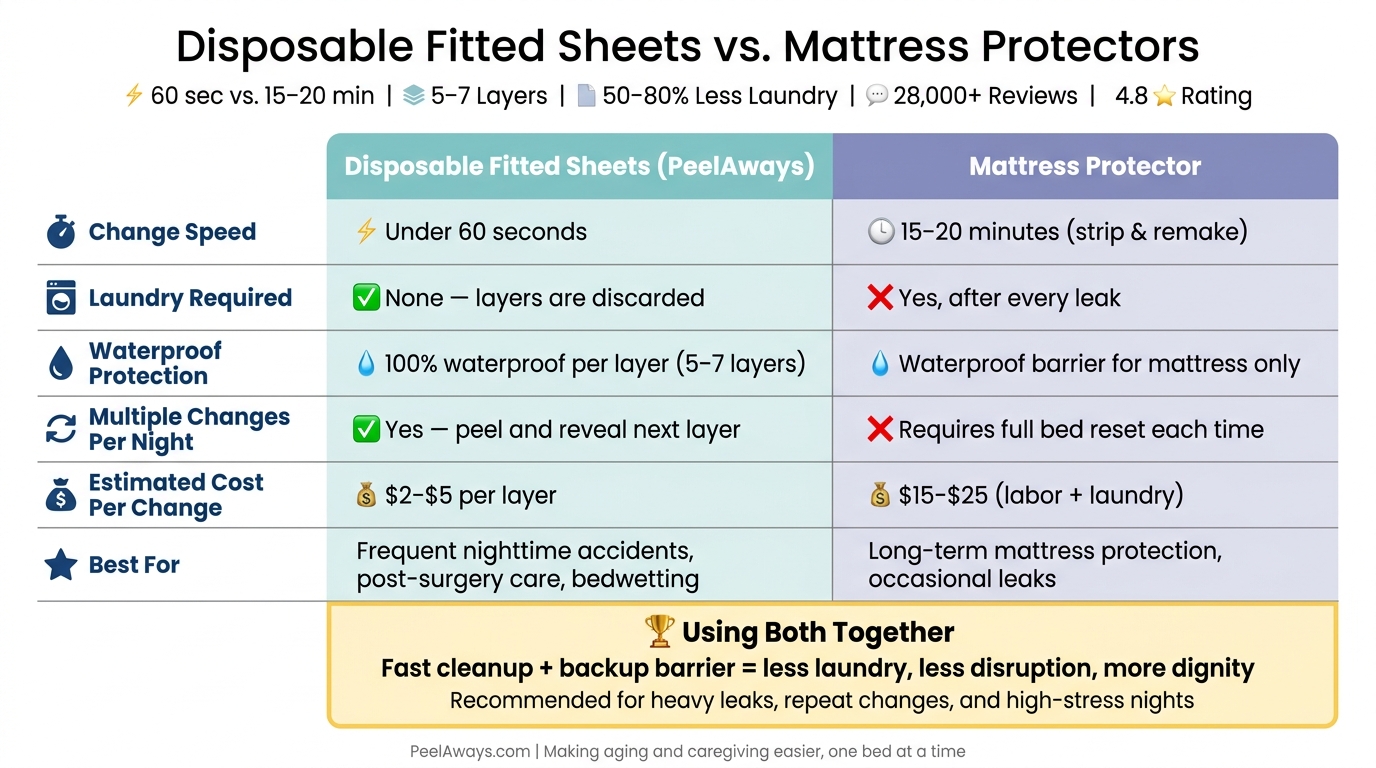
Disposable Fitted Sheets vs. Mattress Protectors: Side-by-Side Comparison
It’s the middle of the night. The bed is wet again, your loved one is tired and upset, and you’re standing there doing the math in your head: strip the bed, start the laundry, remake everything, try to settle them back down. That’s the moment this comparison matters.
With the basics clear, here’s how the two options compare in actual care at home. Not in theory. In the messy, sleep-deprived moments that hit hardest.
Which Option Handles Overnight Accidents and Multiple Changes Better?
When leaks happen more than once in a night, disposable fitted sheets usually make life much easier. Each layer peels away, so you get a dry sheet underneath without starting from scratch. A mattress protector can stop the mattress from getting wet, but after every leak, you still have to do a full bed change.
| Feature | Disposable Fitted Sheets (PeelAways) | Mattress Protector |
|---|---|---|
| Change Speed | Under 60 seconds | 15–20 minutes (strip and remake) |
| Laundry needed | None - layers are discarded | Yes, after every leak |
| Waterproof barrier | 100% per layer | Waterproof barrier |
| Multiple Changes Per Night | Yes - peel and reveal next layer | Requires full bed reset each time |
| Estimated cost per change | $2–$5 | $15–$25 (labor and laundry) |
That time gap is no small thing. Sixty seconds versus 15 to 20 minutes can feel like the difference between getting back to bed and losing the rest of your night.
PeelAways is one of those things I wish more people knew about sooner. It was made for this exact problem: 5–7 waterproof fitted layers in one setup, so you can remove the top layer and move on fast. If you use diapers or incontinence pads, it fits right into that routine. Making aging and caregiving easier, one bed at a time. You can see the full product line at peelaways.com/shop or check the Amazon listing for PeelAways.
It’s also not some obscure product no one has tried. PeelAways has 28,000+ reviews, a 4.8-star rating, and comes in sizes from crib to king.
Which Option Is More Comfortable, Discreet, and Dignified?
This part gets missed a lot, but it matters. A bed doesn’t just need to stay dry. It also needs to feel like a bed, not a reminder that something hard is happening.
PeelAways are quieter and more sheet-like than many plastic-backed protectors, with less heat and crinkle. They use a soft bamboo, rayon, and polyester blend and are free from Vinyl, PVC, Phthalates, and fire retardants, making them better suited to sensitive skin or healing surgical wounds. The bed looks like a normal sheet setup.
That last part matters more than people think. Many caregivers report less embarrassment because the bed looks and feels more like a normal sheet setup. For someone already dealing with incontinence, surgery, or limited mobility, that can take a little sting out of a rough night.
If you want more on keeping the bed setup simpler and less stressful, it also helps to read other guides on PeelAways blog and PeelAways care articles.
What Does Each Option Actually Cost Over Time?
At first glance, disposable fitted sheets can seem like the pricier pick. That’s fair. You’re paying more upfront.
But once repeated accidents enter the picture, the math shifts. Laundry costs money. Your time has value. So does sleep. And repeated washing, drying, stripping, and remaking can wear out bedding and mattresses faster than most people expect.
Disposable fitted sheets cost more upfront, but repeated accidents can make them cheaper overall by reducing laundry, labor, and mattress wear. Bulk packs and HSA/FSA eligibility can reduce the per-use cost.
For a home where leaks happen once in a while, a mattress protector may be enough. For a home where the bed gets changed over and over, PeelAways can save a lot more than just money. It can save your back, your time, and a little dignity in the middle of the night.
When Should You Use Disposable Fitted Sheets, a Mattress Protector, or Both?
It’s 2am. The bed is wet again, your loved one is half-asleep and upset, and you’re already bracing for another full sheet change. In moments like that, the choice gets simple fast: you need the setup that makes this easier right now.
Choose disposable fitted sheets when speed matters and laundry is piling up. Choose a mattress protector when your main job is guarding the mattress for the long haul. Use both when you need fast cleanup and backup protection.
When Disposable Fitted Sheets Are the Better Choice
Disposable fitted sheets make the most sense when accidents happen often and cleanup needs to be fast. If you’re dealing with nighttime incontinence, post-surgery recovery, or potty training accidents, being able to change a layer in under 60 seconds can feel like a lifeline.
That’s where PeelAways stands out. A caregiver can remove the soiled top layer without moving the person in bed, which matters a lot when it’s dark, everyone’s tired, and the last thing you want is a 15-to-20-minute bed change. It’s one of those things you don’t fully get until you’ve had to change wet sheets in the middle of the night with an aching back.
If your top problem is speed, less mess, and less laundry, disposable fitted sheets are usually the better pick. PeelAways was built for exactly that, with 5-7 layers, sizes from crib to king, and 28,000+ reviews with a 4.8-star rating. If you use diapers or incontinence pads, this kind of setup just makes life easier.
You can see them on peelaways.com/shop or on Amazon.
When a Mattress Protector Is the Right Call
A mattress protector is the right call when your first goal is keeping the mattress safe over time. Think of it as the base defense. It stays on the bed and helps block leaks before they soak into something expensive, heavy, and miserable to clean.
This works well for home care, bedwetting, disability care, or elder care where mattress protection is the main concern. Put simply: if you want a steady barrier sitting underneath everything else, a mattress protector earns its place.
Still, when accidents happen a lot, a protector alone doesn’t solve the hardest part. The mattress may stay safer, but you still have to deal with the full cleanup, the wet bedding, and the disruption. That’s where the speed of a disposable fitted sheet can matter more.
Why Using Both Together Often Works Best
For a lot of people, using both ends up being the setup that makes the most sense. The mattress protector stays underneath as backup. The disposable fitted sheet sits on top and handles the fast change.
It’s a simple system, but it takes a load off:
- The mattress gets a second line of defense
- The top layer can be removed fast after an accident
- Laundry drops
- The person in bed deals with less disturbance and less embarrassment
That last part matters. So much of caregiving is physical, but some of the hardest parts are emotional. A quicker, calmer cleanup helps protect dignity, not just sleep.
This combo is often a strong fit for post-surgery recovery too. The protector helps with any leakage that gets through, while the disposable sheet gives you a fresh sleeping surface with each layer change. If you need both speed and mattress protection, layering the two is often the way to go.
If you want to read more, these guides can help: PeelAways blog, another article on peelaways.com, and shop PeelAways here. Tagline says it well: Making aging and caregiving easier, one bed at a time.
Conclusion: Choose Based on Change Speed, Laundry Load, and Level of Protection Needed
It’s 2am. The bed is wet again. You’re tired, your loved one is upset, and the last thing you want is a full sheet change and another load of laundry.
After comparing waterproof mattress pads and disposable sheets based on absorbency, comfort, laundry, and cost, the choice comes down to three things: change speed, laundry load, and how much backup protection you need. No setup will prevent every accident. But the right one can make cleanup a lot less disruptive.
If your main problem is slow bed changes, disposable fitted sheets make sense. If your main concern is keeping the mattress safe over time, a mattress protector does that job. And if accidents happen often, using both gives you fast cleanup plus backup coverage.
That’s why the choice is pretty simple: speed, protection, or both.
PeelAways multi-layer disposable sheets were made for moments like this. Each layer is waterproof, and when there’s a mess, you peel off the top layer and there’s a clean one underneath. No stripping the bed. No hauling sheets to the washer in the middle of the night.
For frequent nighttime accidents, a multi-layer disposable fitted sheet can cut cleanup time and take some pressure off the person doing the care. PeelAways is the one I wish I’d found sooner: 5-7 layers, sizes from crib to king, 28,000+ reviews, and a 4.8-star rating. If you already rely on diapers or incontinence pads, this kind of setup can make the whole night easier.
You can find PeelAways on peelaways.com/shop and on Amazon. For more help, take a look at other guides on PeelAways, like how PeelAways work and caregiving tips from the blog.
Making aging and caregiving easier, one bed at a time.
Blog readers save 10% with code BLOGS10 at checkout. Available on peelaways.com and Amazon. Free shipping on orders over $100.
FAQs
Do disposable fitted sheets go over or under a mattress protector?
Yes. Disposable fitted sheets can go over a mattress protector.
That setup makes life a lot easier when you're already dealing with enough. The disposable sheet has its own waterproof layer, but a waterproof mattress protector under it adds one more line of defense in case anything gets through.
A simple bed setup looks like this:
- Waterproof mattress protector on the mattress
- Standard fitted sheet over the protector
- Multi-layer disposable sheet on top for fast changes
That top layer is the one you’ll be grateful for at 2am. Instead of stripping the whole bed, you remove the soiled layer and move on. Much less mess. Much less laundry.
How many overnight changes can one fitted sheet setup handle?
Each PeelAways fitted sheet comes with 5 to 7 waterproof layers built right in. So when the bed gets wet in the middle of the night, you’re not starting from scratch every time. One setup can cover as many overnight changes as the number of layers in that sheet.
After an accident, you just peel off the soiled top layer and there’s a clean, dry one underneath. The whole change takes under 60 seconds. No stripping the bed. No remaking it half-asleep.
Are disposable fitted sheets worth it for occasional accidents?
It’s 2am. The bed is wet, your shoulders are tight, and the thought of stripping sheets again makes you want to cry. If even one accident can throw off your whole night, this tradeoff matters more than people think.
It comes down to what costs you more: money over time, or the strain of one more cleanup.
Traditional waterproof sheets usually make more sense on price if accidents don’t happen often. But there’s still work attached to them. You’re washing, drying, and remaking the bed every time.
Disposable multi-layer sheets like PeelAways can be worth it when even occasional accidents mean stress, lost sleep, or a painful bed change. Instead of doing the whole routine, you peel off the soiled layer in under 60 seconds and move on.
That difference can feel huge when you’re exhausted. Not just for you, but for the person in the bed too.
Comments
0



SAVE MONEY & WATER
Professionals & Institutions save a fortune on labor/laundry.

SUPERIOR COMFORT
The first thing our customers notice is how soft our sheets are.

100% WATERPROOF
Each layer is 100% Waterproof, perfect for spills and accidents

SAVE TIME
Change the sheet in under 1 minute without stripping the bed.

Leave a comment