
Adult Bedwetting: Medical Causes, Treatments, and Management Solutions

Adult bedwetting affects 2-3% of adults, often signaling underlying issues like hormonal imbalances, sleep disorders, or neurological conditions. Treatments range from medications like desmopressin to lifestyle changes like fluid management and bladder training. Products like PeelAways disposable bed sheets simplify care, cutting laundry by up to 80% while maintaining hygiene and dignity.
Managing this condition involves understanding its causes and using practical solutions to improve quality of life.
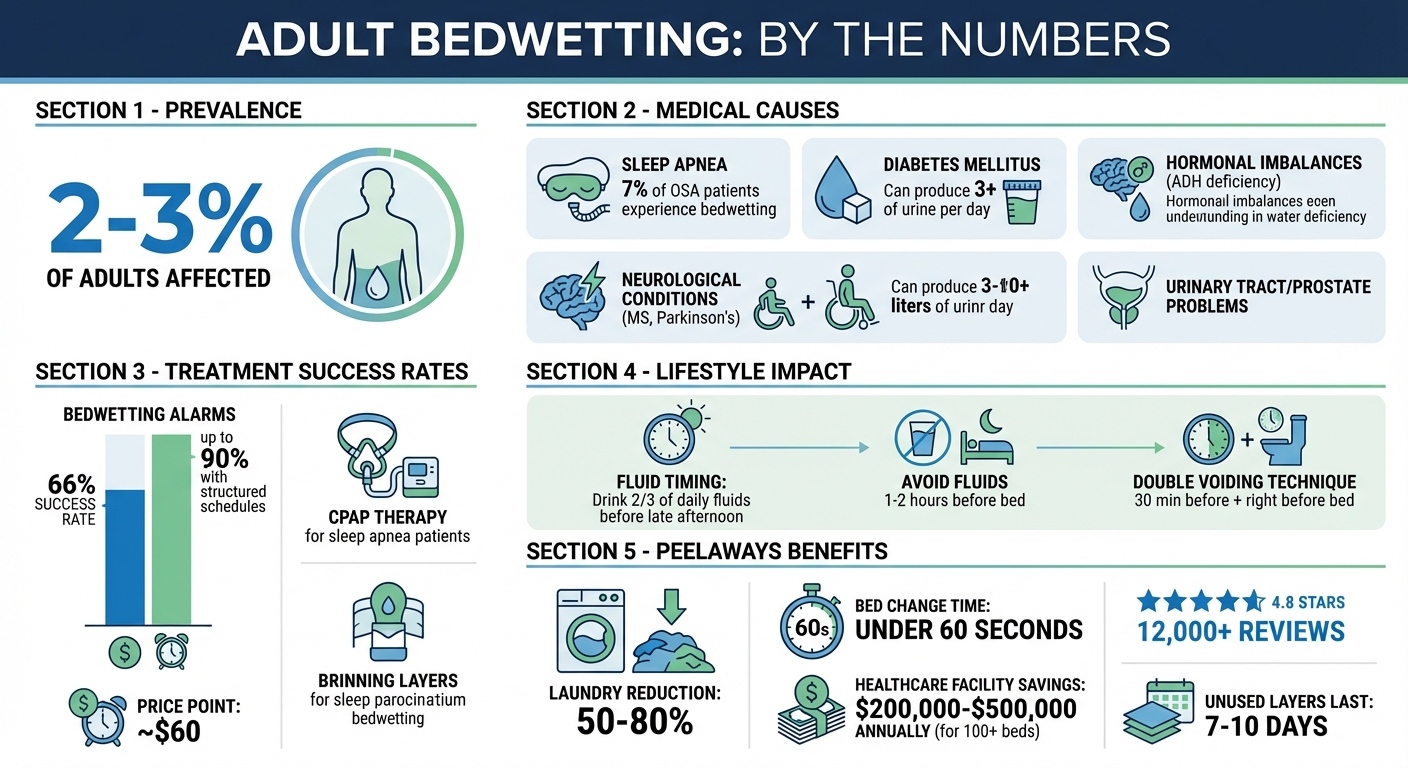
Adult Bedwetting Statistics: Causes, Treatments, and Management Solutions
How to get rid of bedwetting in adults? - Dr. Ravish I R
sbb-itb-45288fe
Medical Causes of Adult Bedwetting
Adult bedwetting is often linked to specific medical conditions rather than behavioral factors. Bladder control during sleep depends on a finely tuned system of hormones, nerve signals, and organ function. When any part of this system malfunctions - whether due to hormonal imbalances, nerve issues, or changes in sleep patterns - it can lead to nocturnal enuresis. Below, we explore the key medical causes behind adult bedwetting.
Hormonal Imbalances
At night, your body produces antidiuretic hormone (ADH), also known as vasopressin, to slow down urine production. This process helps you sleep through the night without needing to wake up. However, if your body doesn’t produce enough ADH, or if your kidneys don’t respond to it, urine production can overwhelm your bladder.
A condition called diabetes insipidus highlights the effects of ADH deficiency. In this disorder, either ADH levels are too low, or the kidneys fail to respond, causing excessive water loss through frequent urination. This is different from diabetes mellitus, where high blood sugar forces the kidneys to produce large amounts of urine to flush out the excess sugar - sometimes exceeding 3 liters per day in untreated cases. Both conditions can cause frequent nighttime accidents due to the sheer volume of urine, though they stem from distinct mechanisms.
Sleep disruptions can further exacerbate these issues, compounding the risk of bedwetting.
Sleep Disorders
Conditions like obstructive sleep apnea (OSA) can lead to bedwetting in a unique way. During apnea episodes, where breathing temporarily stops, the heart releases atrial natriuretic peptide (ANP), which increases urine production. This directly counteracts the effects of ADH. Studies reveal that about 7% of individuals with obstructive sleep apnea experience bedwetting as a secondary symptom.
Additionally, poor breathing and disrupted sleep patterns interfere with the body's ability to wake up when the bladder is full. The pelvic floor muscles may relax during deep sleep, leading to involuntary urination. Addressing sleep apnea often resolves this issue, highlighting the strong link between sleep disorders and bedwetting.
Neurological Conditions
The brain and spine play a critical role in bladder control, and conditions that affect these areas can lead to involuntary urination. Disorders like multiple sclerosis (MS), Parkinson's disease, and seizure disorders disrupt the communication between the brain and bladder. This can cause the bladder muscles, known as detrusor muscles, to contract at inappropriate times, a symptom commonly associated with overactive bladder (OAB).
If adult bedwetting occurs suddenly and is accompanied by other neurological symptoms, it’s important to seek medical advice promptly, as it may indicate an underlying neurological condition.
Urinary Tract and Prostate Problems
Issues within the urinary system can also contribute to nighttime accidents. In men, an enlarged prostate (BPH) or prostate cancer can obstruct the urethra or irritate the bladder, leading to overflow incontinence during sleep. Other bladder-related conditions, such as cancer, stones, or overactive bladder, can also cause leakage at night.
Urinary tract infections (UTIs), while temporary, can lead to inflammation and an urgent need to urinate, sometimes resulting in bedwetting. Additionally, some adults have a small functional bladder capacity, where the bladder feels full prematurely, causing frequent urination during the day and accidents at night.
Other Contributing Factors
Chronic constipation can physically press on the bladder, reducing its capacity and interfering with nerve signals that regulate urination. Certain medications, such as sleeping pills and antipsychotics like Clozapine and Risperidone, can also play a role by either irritating the bladder or impairing your ability to wake when the bladder is full.
If you notice bedwetting episodes after starting a new medication, it’s worth discussing with your healthcare provider. Keeping a bladder diary that tracks your fluid intake, types of beverages, and nighttime incidents can help pinpoint possible triggers and guide treatment.
Treatment Options for Adult Bedwetting
Treating adult bedwetting often involves addressing the root causes through medications, surgeries, or specific therapies. Many adults see improvement with a personalized approach tailored to their condition. As the Cleveland Clinic explains, "If an underlying condition caused bedwetting, treating that condition will stop or reduce bedwetting". These treatments aim to tackle the underlying issues - whether hormonal, structural, or functional - that contribute to nighttime incontinence. A doctor will recommend a plan based on the specific cause, such as hormonal imbalances, bladder dysfunction, or structural abnormalities.
Medications
Several medications can help reduce or manage bedwetting episodes:
- Desmopressin acetate (DDAVP): This synthetic form of the antidiuretic hormone (ADH) reduces nighttime urine production. Taken as a pill about an hour before bed, it’s especially helpful for those whose bodies don’t produce enough natural ADH.
- Anticholinergic drugs: Medications like oxybutynin and tolterodine relax the bladder muscles, preventing spasms and increasing bladder capacity. These are often prescribed for overactive bladder conditions.
- 5-alpha reductase inhibitors: For men with an enlarged prostate, drugs like finasteride (Proscar) shrink the prostate gland, relieving urinary obstruction.
- Antibiotics: Used to treat urinary tract infections, these eliminate bacteria and reduce inflammation, which can contribute to bedwetting.
- Imipramine: A tricyclic antidepressant that improves bladder capacity and sleep patterns. However, it’s less commonly used due to potential cardiac side effects.
When medication and less invasive treatments don’t provide sufficient relief, surgical options may be considered.
Surgical Procedures
Surgery is typically reserved for cases where other treatments fail or when structural issues are the primary cause of bedwetting. Some common procedures include:
- Sacral nerve stimulation: This involves implanting a device that sends electrical signals to the bladder muscles, helping to control spasms. It’s particularly useful for people with overactive bladder who don’t respond to medication.
- Clam cystoplasty: Also known as bladder augmentation, this surgery enlarges the bladder by adding a patch of intestinal tissue, increasing its capacity and stability.
- Detrusor myectomy: In this procedure, part of the bladder muscle is removed to reduce involuntary contractions.
- Transurethral prostatic resection (TURP): For men with severe prostatic obstruction, this procedure restores normal urine flow by removing part of the prostate.
Before considering surgery, doctors often recommend imaging tests and bladder function studies. Patients may also be asked to keep a 72-hour bladder diary to track voiding patterns, which helps determine if surgery is necessary.
Treating Underlying Conditions
In addition to direct treatments, addressing the root cause of bedwetting is essential for long-term success. For instance:
- Obstructive sleep apnea: Continuous positive airway pressure (CPAP) therapy can improve breathing and sleep quality, which often reduces bedwetting. Healthline notes that "Treating sleep apnea with continuous airway pressure therapy will help you breathe and sleep better. It can also reduce secondary symptoms, such as bedwetting". Approximately 7% of people with obstructive sleep apnea experience bedwetting, making CPAP a key treatment option.
- Diabetes management: Controlling blood sugar levels through lifestyle changes, medications, or insulin can help reduce excessive urine production.
- Neurological disorders: Conditions like multiple sclerosis or Parkinson’s disease can disrupt nerve signals between the brain and bladder. Proper management of these disorders often leads to improved bladder control.
Treating these underlying conditions not only helps with bedwetting but also boosts overall health. If bedwetting begins suddenly in adulthood, it’s important to seek medical evaluation right away to rule out serious conditions like diabetes, bladder cancer, or neurological disorders.
Lifestyle Changes to Manage Adult Bedwetting
While medical treatments can address underlying causes, certain lifestyle adjustments provide practical ways to manage bedwetting. Small changes like monitoring fluid intake, bladder training, and tackling stress or constipation can make a noticeable difference.
Fluid Management and Diet Changes
When it comes to fluid intake, timing is just as important as quantity. Aim to drink about two-thirds of your daily fluids before late afternoon, and avoid drinking anything 1–2 hours before bedtime.
Be mindful of what you consume. Caffeine and alcohol are known to irritate the bladder and increase urine production. Similarly, spicy foods, artificial sweeteners, and tomato-based products can trigger bladder spasms.
Another helpful habit is double voiding - urinating once about 30 minutes before bed and again right before sleep. This ensures your bladder is as empty as possible, working hand-in-hand with other strategies to improve bladder control.
Behavioral Techniques
Strengthening your bladder's capacity takes practice. Gradually increasing the time between daytime bathroom visits can help train your bladder to hold more urine over time.
Pelvic floor exercises, often called Kegels, are another effective tool. These exercises involve contracting the muscles used to stop urination mid-stream, holding the contraction for five seconds, and then relaxing. Repeating this 10–15 times, three times a day, can strengthen the muscles controlling urine flow.
For nighttime accidents, bedwetting alarms can be particularly useful. These devices sense moisture and wake you up at the first sign of wetness, encouraging you to use the bathroom. Priced around $60, they can condition your brain to respond to bladder signals during sleep. Studies show success rates of up to 66%, with structured waking schedules achieving even higher rates - sometimes exceeding 90%.
Stress and Constipation Management
Stress can interfere with the nerve signals between your brain and bladder, affecting control. The Incontinence Institute emphasizes that:
Adult bed-wetting is a medical condition that can be managed through home remedies and with the help of an experienced healthcare provider.
Techniques like deep breathing, meditation, or light exercise can help alleviate stress. For more severe cases, professional support may be necessary, especially after traumatic events.
Constipation is another factor to consider. A full rectum can press against the bladder, reducing its capacity and disrupting nerve signaling. To combat this, increase your fiber intake with fruits, vegetables, and whole grains. Pair this with proper hydration earlier in the day to regulate bowel movements, which often leads to better bladder control.
How PeelAways Simplifies Bedwetting Management

PeelAways offers a straightforward and efficient solution for streamlining incontinence care tasks. These disposable bed sheets feature a multi-layer design that allows for a complete bed change in less than 60 seconds - no lifting required. This innovation cuts laundry needs by 50–80% for families and can save healthcare facilities with 100 or more beds between $200,000 and $500,000 annually. Beyond the practical benefits, PeelAways also helps preserve the dignity of users and caregivers alike.
Benefits of PeelAways Disposable Bed Sheets
PeelAways sheets are available in 5- or 7-layer options, depending on the size. When a layer becomes soiled, you simply peel it away, leaving a clean sheet underneath. Each layer includes a 100% waterproof barrier that guards against leaks, spills, and odors.
The sheets are made from a soft, breathable material that feels like traditional bedding. This design allows air to circulate while effectively blocking liquids, keeping sleepers cool and comfortable. Free from vinyl, PVC, phthalates, and fire retardants, they are also gentle on sensitive skin. Unused layers can last 7–10 days, offering flexibility in managing care.
Jalene Stanger, a caregiver for two teenagers with special needs, shared her experience:
"These have saved my sanity! With 2 incontinent special needs teenagers... these have relieved a lot of stress. They hold a LOT of liquid and are easy to use and tear away. No more 15 loads of laundry and wet mattresses!"
PeelAways has received glowing feedback, earning a 4.8-star average rating from over 12,000 customers. It was also named "Caregivers' #1 Product of the Year".
Product Options and Pricing
PeelAways offers various sizes to accommodate different bed types:
- Crib-A-Peel (52" x 28" x 6") – 5 layers for $30.99
- Cot (75" x 30" x 6") – 7 layers for $34.99
- Twin (75" x 39" x 6") – 5 layers for $34.99
- Twin XL (80" x 39" x 9") – 5 layers for $34.99 or 7 layers for $41.99
- Full (75" x 54" x 12") – 5 layers for $43.99
- Queen (80" x 60" x 12") – 5 layers for $47.99
- King (80" x 78" x 12") – 5 layers for $53.99
Bulk options start at $371.88 for 12-packs, and orders over $100 include free shipping. A subscription plan offers a 15% discount, and new customers can take advantage of a 30-day money-back guarantee. To find the right size, use the "Find My Size" quiz on the PeelAways website. For added security, sheet straps are available to keep the fitted sheets in place.
These features not only make personal care more manageable but also reduce the workload in caregiving environments.
Impact on Caregivers and Facilities
PeelAways dramatically cuts the time and effort required for bedding changes. Traditional methods often involve stripping the bed, lifting the mattress, doing heavy laundry, and remaking the bed - a process that takes 15–20 minutes. With PeelAways, the entire change can be done in under 60 seconds, with no heavy lifting.
For families, managing incontinence often means 4 to 6 extra loads of laundry each week. PeelAways helps reduce water, electricity, and detergent usage, while healthcare facilities can see a return on their investment in just 3 to 12 months.
The single-use, peel-away layers also improve hygiene and infection control. Each layer is removed without touching the clean one beneath it, minimizing the risk of cross-contamination. This aligns with the goal of reducing caregiver stress while maintaining patient dignity.
Ronda, another caregiver, highlighted the impact on independence:
"When he has an accident he now can take care of it himself and put a new top sheet on his bed. No more scrubbing, no more smell, and no more embarrassment."
Conclusion
Managing adult bedwetting becomes more achievable when its underlying causes are properly addressed. By combining targeted medical treatments - like desmopressin or anticholinergics - with lifestyle changes such as fluid management and bladder retraining, individuals can improve their quality of life and alleviate the emotional toll of this condition. Whether stemming from hormonal imbalances, sleep disorders, neurological concerns, or urinary tract issues, there are effective strategies to help.
In addition to medical and behavioral approaches, practical solutions can make nightly routines less stressful. For instance, PeelAways disposable, multi-layer sheets offer a hassle-free way to keep beds clean. With each waterproof layer peeling away to reveal a fresh sheet, you can refresh your bed in under a minute, significantly reducing laundry by up to 80% while maintaining dignity and convenience.
Take advantage of an exclusive 10% discount using code BLOGS10. This offer applies to subscriptions and bundles, making care more affordable and easy to manage.
You can find PeelAways on Amazon or directly at PeelAways.com.
FAQs
When should an adult see a doctor for bedwetting?
Adults experiencing persistent, frequent, or sudden episodes of bedwetting should seek advice from a doctor. Such patterns could point to an underlying medical issue that requires attention. A healthcare professional can determine possible causes and suggest suitable treatments or management options.
What tests might a doctor order to find the cause?
Doctors often start by reviewing your medical history and conducting a physical exam. They may also request specific tests, such as a 72-hour bladder diary, blood tests, or a urine dipstick analysis. These steps help pinpoint possible causes of adult bedwetting, whether it's due to underlying health issues or specific triggers.
How can I prevent skin irritation and odors after nighttime accidents?
To help minimize skin irritation and odors after nighttime accidents, it's important to act quickly. Start by changing any wet bedding and clothing as soon as possible. Clean the skin gently using mild, fragrance-free soap and water - this helps protect against irritation and infections.
To manage odors, make it a habit to wash bedding regularly. Consider using waterproof mattress covers or disposable bed sheets like PeelAways for added convenience. Ensure bedding is thoroughly dried and aired out to maintain a fresh and comfortable sleeping environment.
Comments
0



SAVE MONEY & WATER
Professionals & Institutions save a fortune on labor/laundry.

SUPERIOR COMFORT
The first thing our customers notice is how soft our sheets are.

100% WATERPROOF
Each layer is 100% Waterproof, perfect for spills and accidents

SAVE TIME
Change the sheet in under 1 minute without stripping the bed.

Leave a comment